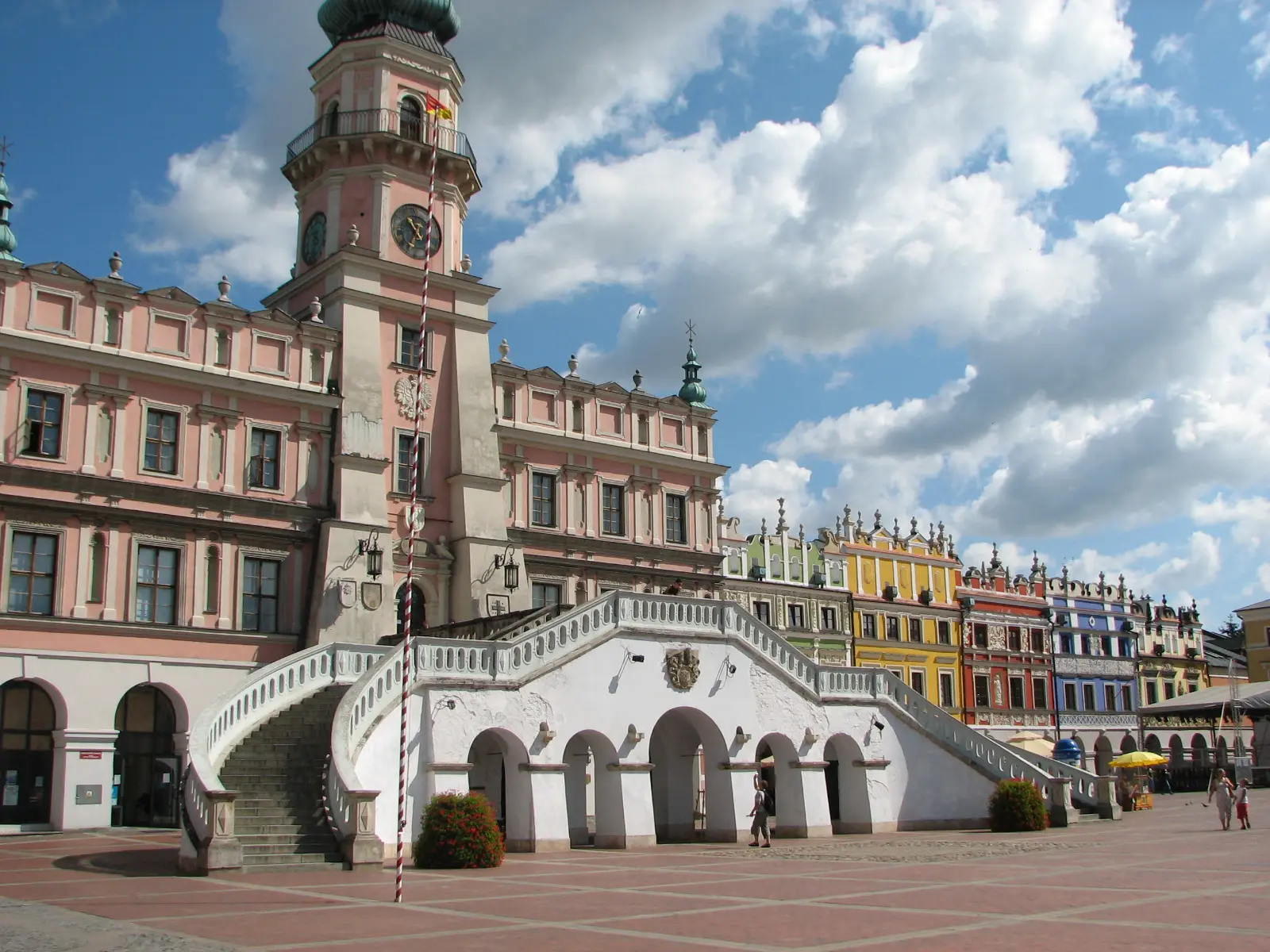
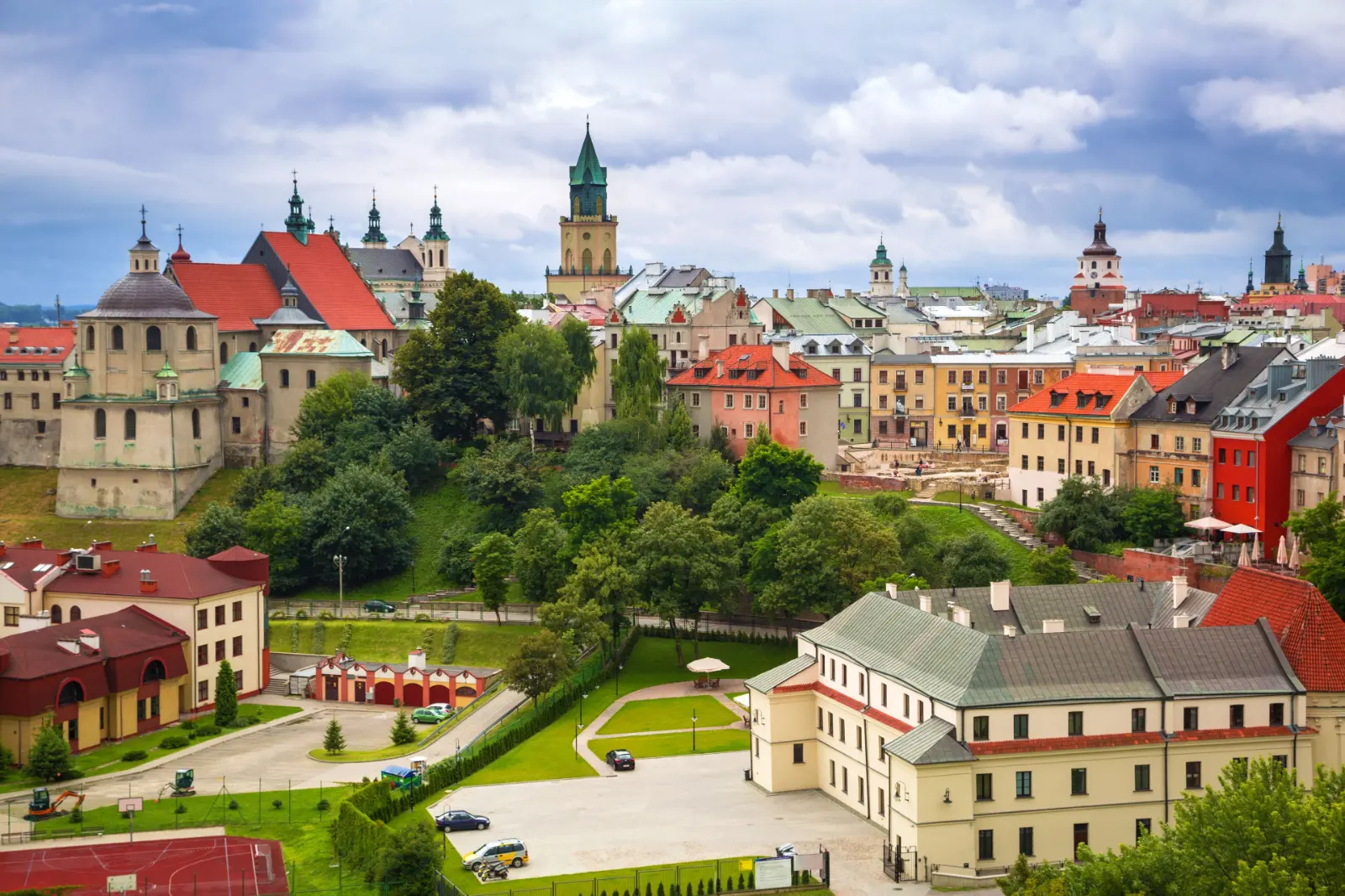
Colorful arcaded townhouses and a symmetrical grand market square straight from an Italian dream. Slow travel through Zamość — the pearl of Polish Renaissance.
Why Zamość, differently
Zamość is one of the few Polish cities that was designed from scratch — by one man, according to one vision. In the 16th century, Jan Zamoyski, Grand Hetman of the Crown, decided to build an ideal city — and hired Italian architect Bernardo Morando to do it. The result is Zamość — a city with a harmonious, symmetrical layout, inscribed on the UNESCO list as a pearl of Polish Renaissance.
Slow travel through Zamość is a journey through geometry. Instead of racing from monument to monument, it is worth sitting on the Great Market Square, looking at the arcades and understanding that this city was **planned** — it did not grow organically, like most Polish cities. Every townhouse, every street, every square has its place in a greater whole.
What to see
Zamość is compact — the main sights are within walking distance. The entire Old Town is surrounded by defensive walls worth walking all the way around.
Great Market Square and townhouses
- Great Market Square — the heart of Zamość, one of the most beautiful market squares in Poland. A square plaza (100 × 100 m), surrounded by colorful arcaded townhouses, with the Town Hall in the centre. A UNESCO World Heritage site.
- Town Hall — a Baroque-Renaissance building with a characteristic clock tower and fan-shaped stairs. Worth climbing the tower — a view over the whole city and defensive walls.
- Armenian townhouses — a group of townhouses on the northern side of the market, once inhabited by Armenians. Characterised by richly decorated attics and reliefs.
- House Under the Angel — one of the most beautiful townhouses in Zamość, with a characteristic angel figure at the top.
- Morando House — a townhouse once belonging to the city's architect, Bernardo Morando.
Cathedral and churches
- Cathedral of the Resurrection and St Thomas the Apostle — a Renaissance church from the 17th century, one of the most important in the region. The interior delights with harmony and peace.
- St Catherine's Church — a Baroque church with rich interior decoration, former Armenian church.
- Synagogue — a Renaissance synagogue from the early 17th century, one of the best-preserved in Poland. Today a museum of Jewish culture.
- St Nicholas Church — former Greek Catholic church, today Orthodox. Interior with an iconostasis.
Defensive walls and bastions
- Defensive walls — Zamość is surrounded by an almost complete ring of walls with bastions. Worth walking all the way around (~2 hours) — different views of the city from each side.
- Bastion VII — the best-preserved bastion, with an exhibition on the history of fortifications. Here you can see how modern (for the 17th century) defensive art worked.
- Lublin Gate and Lviv Gate — the two main city gates, preserved in their original state. Worth climbing one of them to see the panorama of the city from above.
- Zamość Rotunda — a former artillery bastion on the outskirts of the city. A historically difficult place — during World War II and the Nazi occupation it was a site of execution. Today a martyrdom museum.
Museums and lesser-known corners
- Zamość Museum — in Armenian townhouses, with an exhibition about the history of the city and region.
- Arsenal — a former military building, today a museum with a collection of weapons and art.
- Zamość Academy — a former university, the third in Poland (after Kraków and Vilnius), founded in 1594.
- Salt Market and Water Market — two smaller squares next to the Great Market Square, less known but worth a walk.
When to go
- May and June — the best time. The city blooms, fewer crowds, long days. Stable weather.
- September and October — second best. Autumn colours, clear air, fewer tourists.
- July and August — peak season. Great Market Square crowded, but the city has summer energy. Come on a weekday.
- November and December — the city is quiet but cold. You can sightsee without crowds, but check whether restaurants and museums are open.
- Winter — January to March Zamość can be covered in snow, which adds charm. Few tourists, but some attractions may be closed.
Getting there
- By car: ~1.5 hours from Lublin (DK17), ~2 hours from Rzeszów, ~4 hours from Warsaw, ~4 hours from Kraków.
- By train: Zamość has a railway station, with connections from Lublin, Rzeszów, Warsaw and other cities.
- By bus: PKS and private operators from Lublin, Rzeszów and other cities.
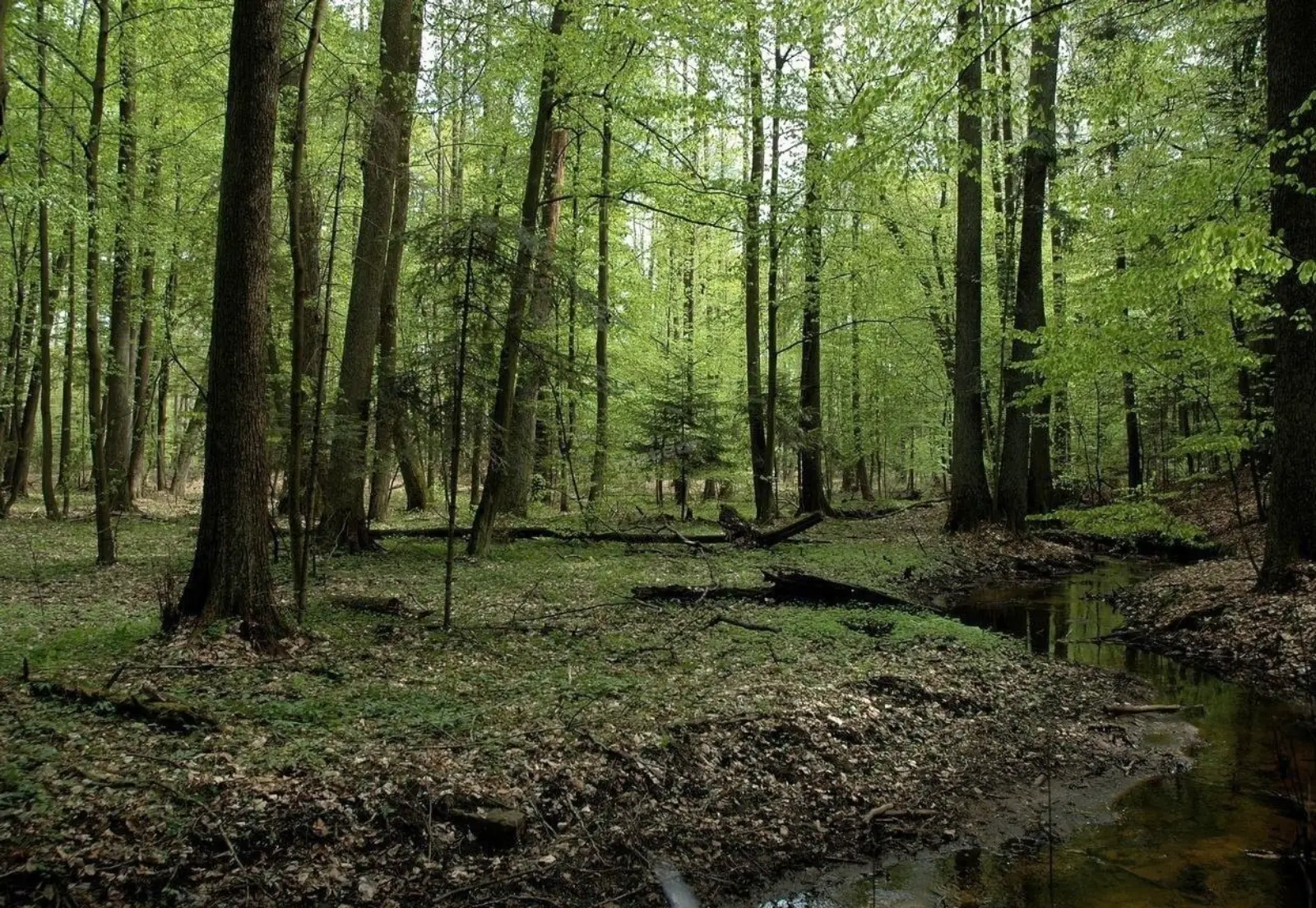
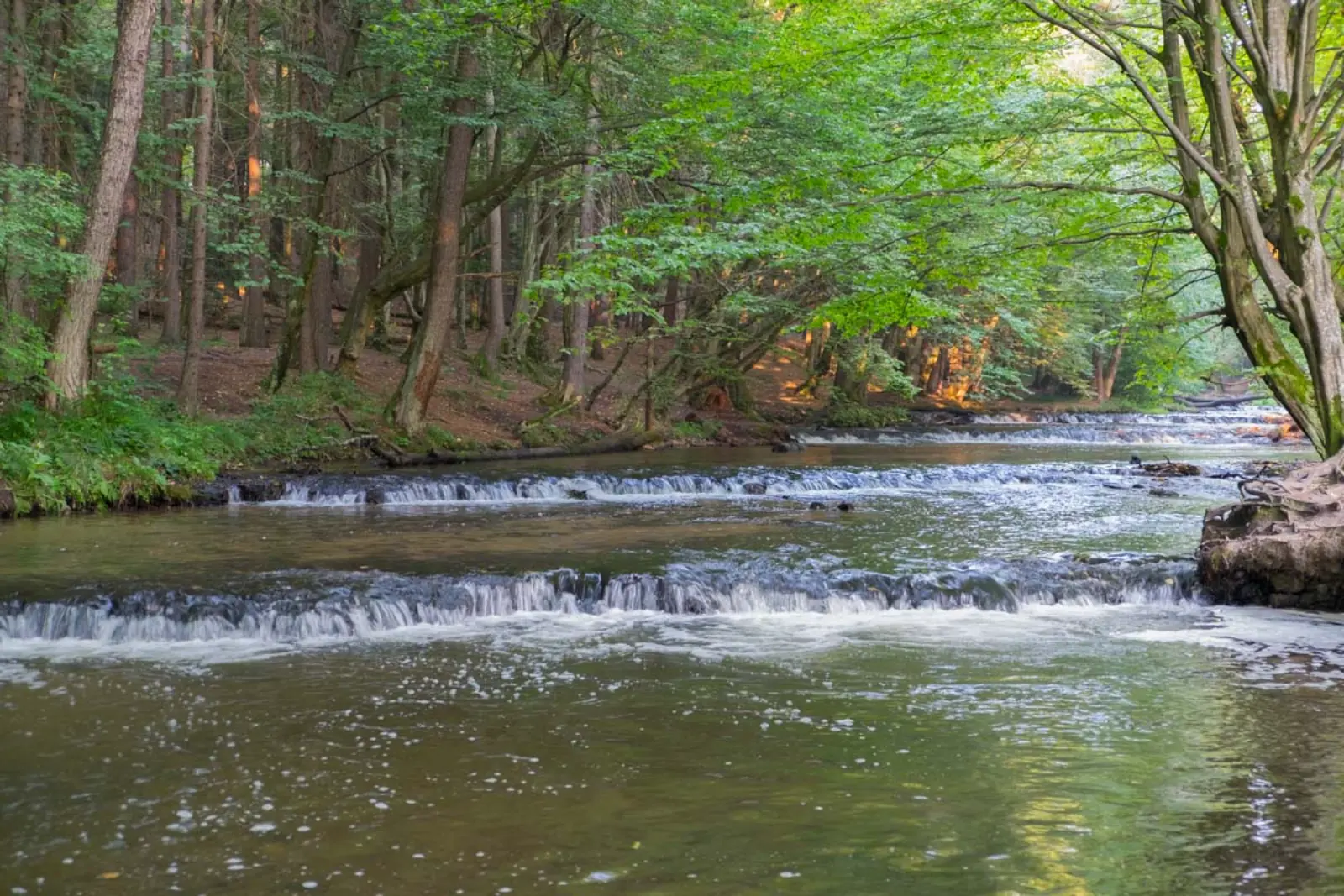
Within Zamość you do not need a car — the centre is compact and most sights are within walking distance. But to explore Roztocze (~30 km), a car or bike helps a lot.
How much time you need
A weekend (1–2 days) is the minimum — Great Market Square, cathedral, defensive walls. Enough for a first impression.
Two to three days is realistic for a first visit. One day for the city itself, one for the walls and bastions, one for a trip to Roztocze (Szumy, Zwierzyniec) or to Lublin.
A week is overkill for Zamość alone, but sensible if you combine it with the whole Roztocze, Lublin and Kazimierz Dolny.
What to eat and where to sleep
- Lublin cebularz — flat yeast dough with onion and poppy seeds. Sold at markets and bakeries throughout the Lublin region.
- Pierogi with bryndza — delicate pierogi with sheep cheese, a speciality of the Polish-Ukrainian borderland.
- Roztocze trout — fresh, grilled or from the grate, with horseradish and lemon. Available in Zamość restaurants.
- Duck with apples — a Lublin cuisine classic, available in restaurants on the market square.
- Krupnik — barley groat soup with vegetables and meat. In the Lublin version with dried mushrooms.
- Beer from local breweries — several small craft breweries operate in Zamość.
Accommodation: Great Market Square and surroundings (most convenient, in townhouses, expensive), streets adjacent to the centre (cheaper, close to attractions), hotels and guesthouses outside the walls (quieter, cheaper), agritourism farms in Roztocze (for those who want to combine the city with nature). Zamość has several good hostels in the centre and guesthouses in townhouses.
Practical tips
- Bookings — Zamość Museum and the Zamość Rotunda require online booking in season. Cathedral and synagogue — no booking.
- Guided tours — Zamość has a rich history worth learning with a guide. Especially the defensive walls and bastions — without context, they lose half their charm.
- Defensive walls — walking the walls takes ~2 hours. Plan it for early afternoon, when the light is best.
- Crowds — Great Market Square is crowded in season (May–September). Rise early (7–8 a.m.) and start sightseeing before the crowds.
- Coffee — Zamość has several good cafés on the market square and side streets. Worth sitting under the arcades and enjoying the view.
- Mobile signal — good throughout the centre.
- Parking — central Zamość has a paid parking zone. Large car parks outside the walls, then a 5–10 min walk. Leave the car and explore on foot.