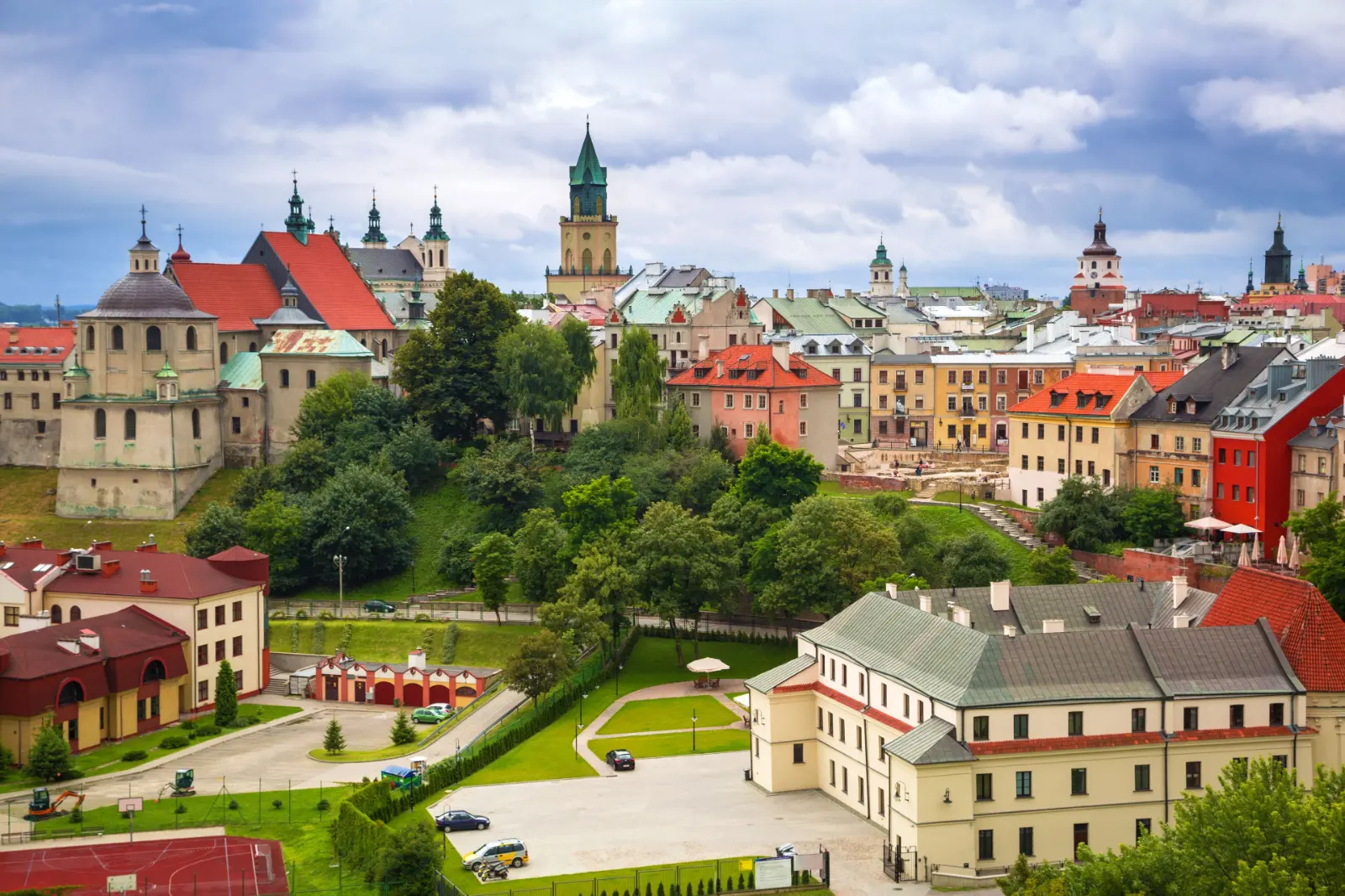
Lublin is the largest city in eastern Poland. Old Town, Castle, Majdanek. Slow travel through the Lublin region.
Why it's worth it
Lublin is the largest city in eastern Poland and one of the oldest cities in Poland — it received city rights in 1317. It lies on the Bystrzyca river, in the Lublin voivodeship, at the crossroads of Polish, Ukrainian, and Jewish cultures. Lublin is a city that has everything: a beautiful Old Town, Renaissance townhouses, Baroque churches, a castle, cathedrals, and unique Jewish heritage (yeshiva, cemetery, synagogue). Add to that the villages and small towns of the Lublin region — Kazimierz Dolny, Zamość, Nałęczów — among the most beautiful in Poland.
Slow travel through Lublin and the Lublin region is a journey through a landscape that surprises with its diversity. The region has a city, villages, small towns, castles, churches, synagogues, and fields — all within a few dozen kilometres. It is worth spending 3–4 days here to truly feel this landscape. The best way to explore Lublin is on foot, and the region by car — public transport from Lublin is good, but between small towns it can be weak.
What to see
Lublin and the Lublin region are divided into three main parts: Lublin (centre), Kazimierz Dolny and surroundings (west), and Zamość and Roztocze (south). Exploring the region takes 3–4 days.
Lublin
- Old Town — Renaissance townhouses, Kraków Gate, Market Square. Worth it for architecture.
- Lublin Castle — a castle with the Holy Trinity Chapel, one of the most valuable monuments in Poland. Worth it for architecture.
- Majdanek — a former concentration camp, now a museum. Worth it for history.
Kazimierz Dolny and surroundings
- Kazimierz Dolny — a small town on the Vistula, with a market square, townhouses, and castle hill. Worth it for architecture.
- Nałęczów — a spa with a spa park, one of the oldest in Poland. Worth it for health.
- Puławy — a town with the Czartoryski palace and park. Worth it for architecture.
Zamość and Roztocze
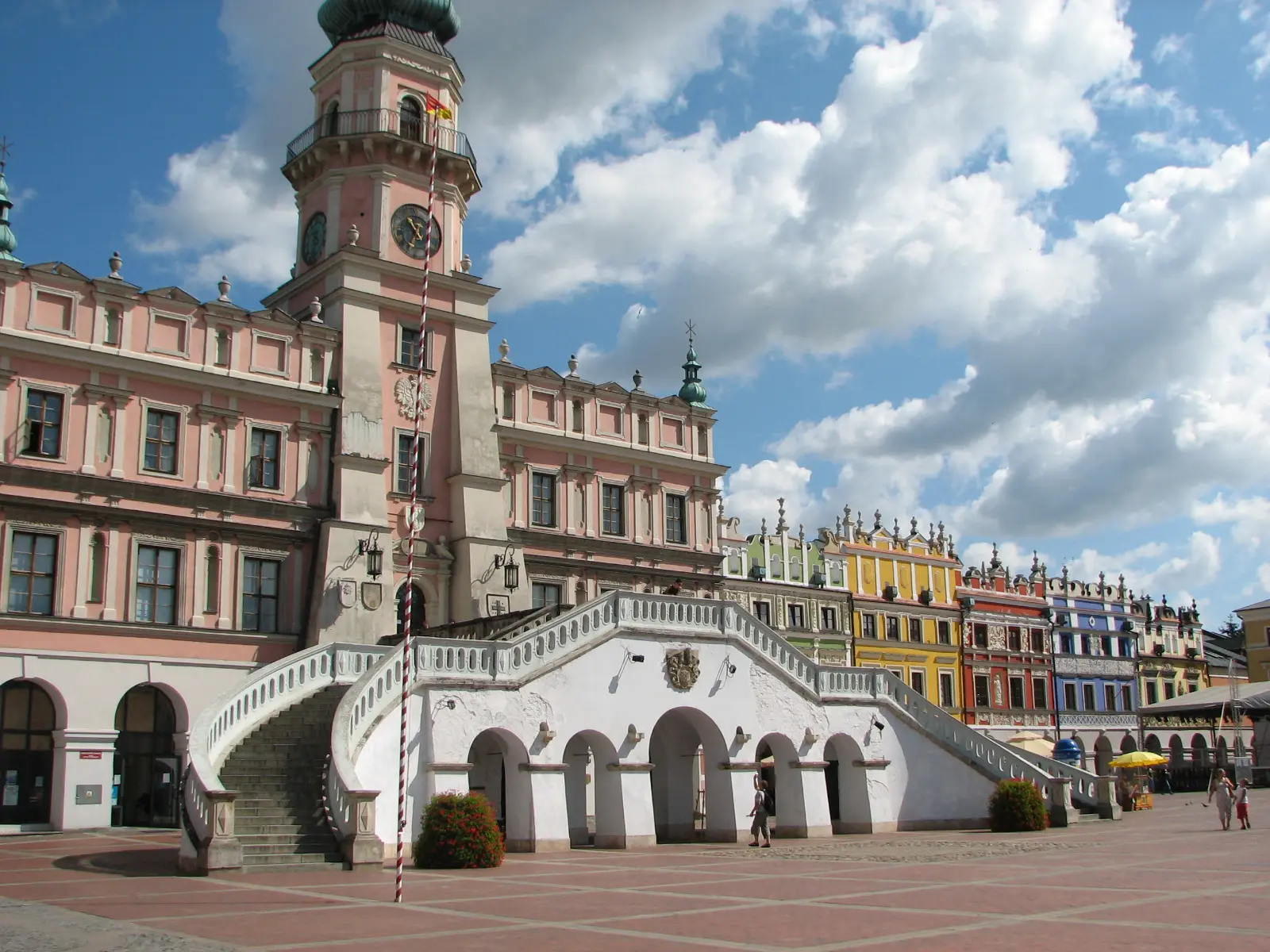
- Zamość — a Renaissance town, UNESCO-listed. Worth it for architecture.
- Roztocze — a hilly region with loess ravines. Worth it for the landscape.
- Zwierzyniec — a small town with a Baroque church and a former brewery. Worth it for architecture.
When to go
- May and June — the best time for slow travel. Warm, green, few tourists.
- July–August — festival season (Carnaval Sztukmistrzów, Jagiellonian Fair). Worth it for events, but crowded.
- September–October — second best. Autumn colours, fewer people.
- November–March — the city is sleepy in winter, but museums and galleries are open. Worth it for those seeking silence.
Getting there
- By car: ~2 hours from Warsaw (S17), ~3 hours from Kraków (DK19), ~2 hours from Rzeszów (S19).
- By train: Lublin has a railway station, with connections from most Polish cities (Warsaw, Kraków, Wrocław).
- By bus: PKS and private carriers serve most towns and small towns.
Lublin is best explored on foot — the city is small, and attractions are close together. The Lublin region is best explored by car — attractions are scattered over a large area.
How much time you need
A weekend (2 days) is the minimum — Lublin, Kazimierz Dolny.
Three days is realistic for a first visit. Lublin, Kazimierz Dolny, Nałęczów, Zamość.
A week lets you explore the whole region — from Lublin to Roztocze, with numerous stops.
What to eat and where to sleep
- Cebularz lubelski — an onion flatbread, regional speciality.
- Pierogi with buckwheat — a regional version of pierogi, available at inns.
- Lublin żurek — rye sour soup with white sausage.
- Beer from Lublin breweries — several craft breweries in the region.
Accommodation: Lublin (city, more options), Kazimierz Dolny (small town, guesthouses), Zamość (town, more options), Nałęczów (spa, guesthouses).
Practical tips
- Guided tours — Lublin's history is complex, take a guide in the Old Town and Castle.
- Festivals — Carnaval Sztukmistrzów (July) and Jagiellonian Fair (August) are the biggest events in the region. Book accommodation in advance.
- Shopping — buy cebularz, honey, cheese, and cold cuts directly from local producers.
- Opening hours — some attractions (museums, synagogue) open only in season.
- Weather — weather can be changeable, even in July bring a jacket.
- Signal — good throughout the region, including in small towns.