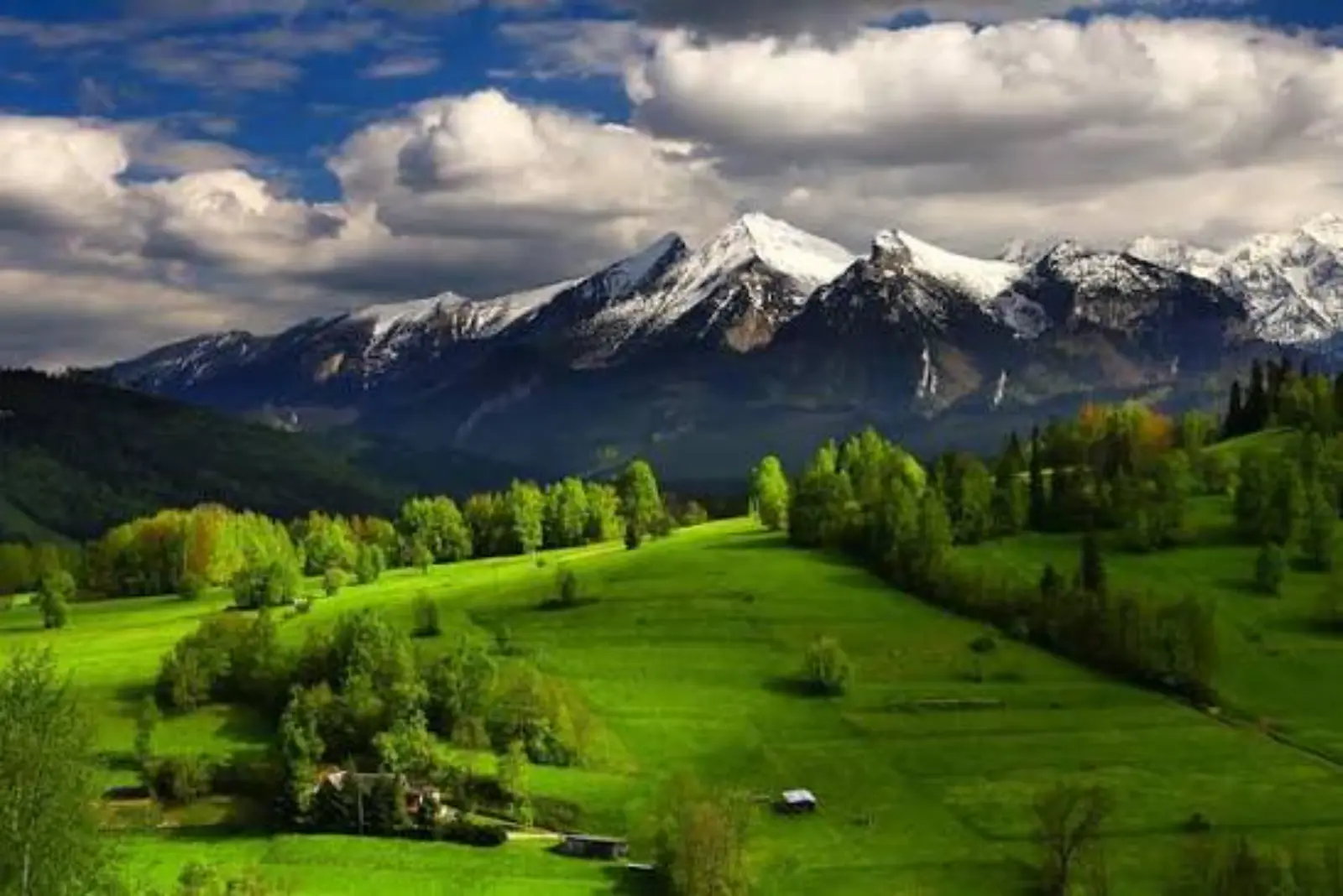
Podhale is the land below the Tatras, cradle of highlander culture. Zakopane, Chochołów, thermal baths. Slow travel through Podhale.
Why it's worth it
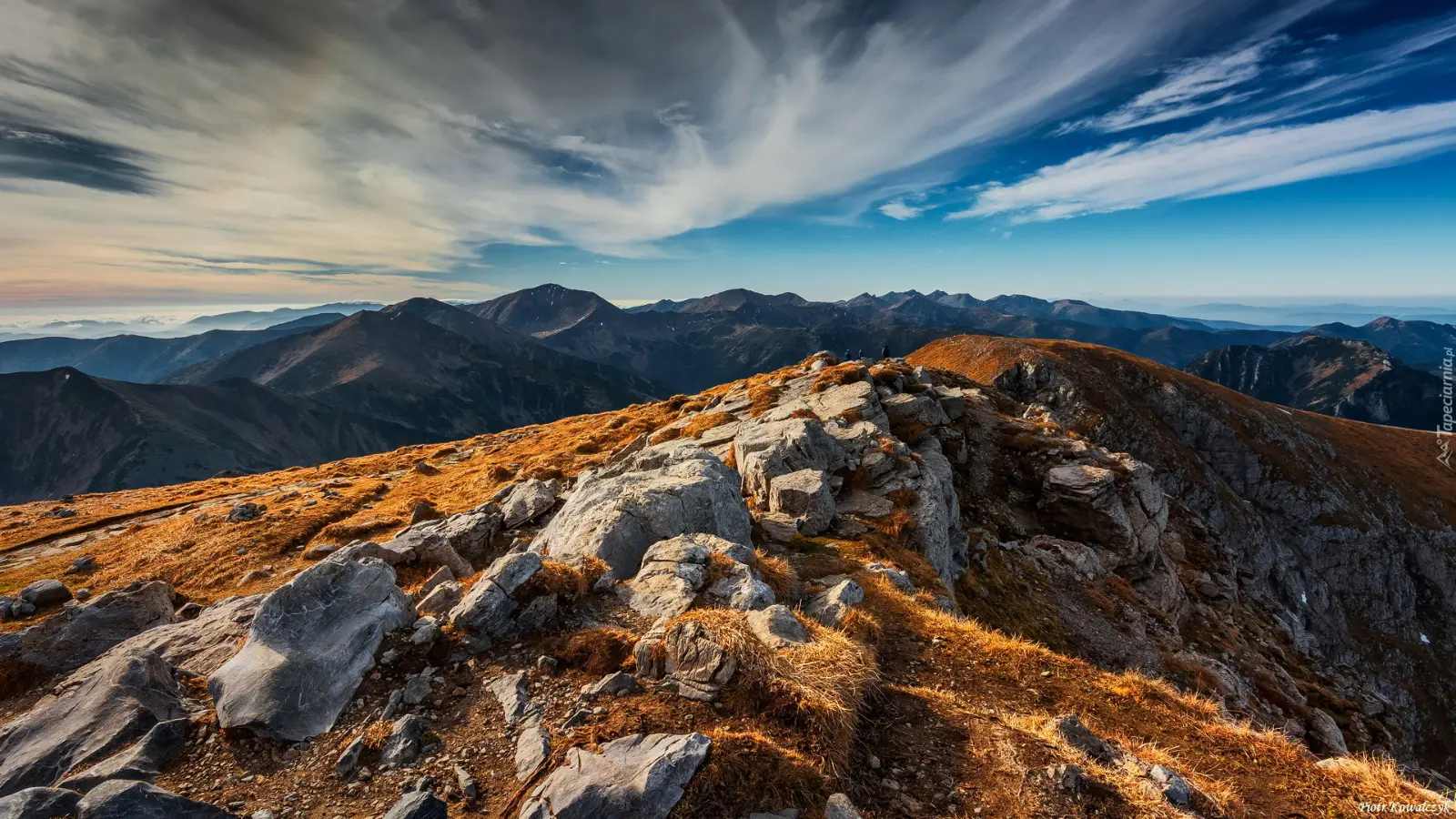
Podhale is a historical-ethnographic region at the foot of the Tatras, in the Małopolska voivodeship. This is a region where highlander culture is still alive — music, dance, costume, dialect, cuisine. Podhale is also a region with very old settlement — the first villages were founded here in the 13th and 14th centuries. Podhale villages have distinctive architecture: wooden houses with tall roofs, with a main room and hallway, often with balconies. Add to that wooden churches — among the most valuable in Poland — and wayside shrines.
Slow travel through Podhale is a journey through a landscape that surprises with its diversity. Podhale has the Tatras, valleys, villages, thermal baths, and towns — all within a few dozen kilometres. It is worth spending 3–5 days here to truly feel this landscape. The best way to explore Podhale is on foot, by bike, or by car — there are about 300 km of hiking and cycling trails. Public transport from Zakopane and Nowy Targ is good (buses, minibuses).
What to see
Podhale is divided into three main parts: Western Podhale (Zakopane), Central Podhale (Nowy Targ), and Eastern Podhale (Bukowina). Exploring the region takes 3–5 days.
Western Podhale
- Zakopane — a town at the foot of the Tatras, with Krupówki and Wielka Krokiew. Worth it for culture and as a base.
- Chochołów — a village with preserved wooden architecture, one of the most valuable in Poland. Worth it for architecture.
- Chochołowska Valley — a valley in the Tatras, with shepherd huts. Worth it for the landscape.
Central Podhale
- Nowy Targ — a town with a market square and church, the centre of Podhale. Worth it for architecture.
- Dębno — a village with a 15th-century wooden church, a UNESCO site. Worth it for architecture.
- Białka Tatrzańska — a village with thermal baths and ski slopes. Worth it for sport.
Eastern Podhale
- Bukowina Tatrzańska — a village with preserved architecture and highlander culture. Worth it for culture.
- Jurgów — a village with a wooden church and open-air museum. Worth it for architecture.
- Łapsze Niżne — a village with a wooden church and castle. Worth it for architecture.
When to go
- May and June — the best time for slow travel. Warm, green, fewer tourists.
- July–August — season for trails and highlander festivals. Worth it for events, but crowded in Zakopane.
- September–October — second best. Autumn colours, fewer people.
- November–April — Podhale in winter is a paradise for skiers. Worth it for winter sports.
Getting there
- By car: ~2 hours from Kraków (DK47), ~3 hours from Katowice (DK47), ~5.5 hours from Warsaw (S7 + DK47).
- By train: Zakopane, Nowy Targ have railway stations, with connections from Kraków and Warsaw.
- By bus: PKS and private carriers from Kraków and Katowice.
Podhale is best explored by car or on foot — the region is vast, and public transport between villages can be sparse. Leave the car at the car park in Zakopane.
How much time you need
A weekend (2 days) is the minimum — Zakopane, Chochołów.
Three days is realistic for a first visit. Zakopane, Chochołów, Nowy Targ, Dębno.
A week lets you explore all of Podhale — from Zakopane to Bukowina, with numerous stops.
What to eat and where to sleep
- Kwaśnica — sour cabbage soup, a highlander classic.
- Oscypek — smoked sheep cheese, available at shepherd huts.
- Bryndza — sheep cheese, available at shepherd huts.
- Karpiel — a highlander dish of cabbage and meat.
- Beer from Podhale breweries — several craft breweries in the region.
Accommodation: Zakopane (town, more options), Nowy Targ (town, more options), Bukowina Tatrzańska (village, guesthouses), Białka Tatrzańska (village, guesthouses).
Practical tips
- Guided tours — highlander culture is rich, take a guide.
- Highlander culture — pay attention to music, dance, and costume, still alive in many villages.
- Shopping — buy oscypek, bryndza, and honey directly from highlanders.
- Thermal baths — the region has several thermal complexes (Termy Chochołowskie, Termy Bania, Termy Bukovina). Book tickets in advance.
- Weather — Podhale weather can be changeable, even in July bring a jacket.
- Signal — good throughout the region, weaker in higher mountain sections.