
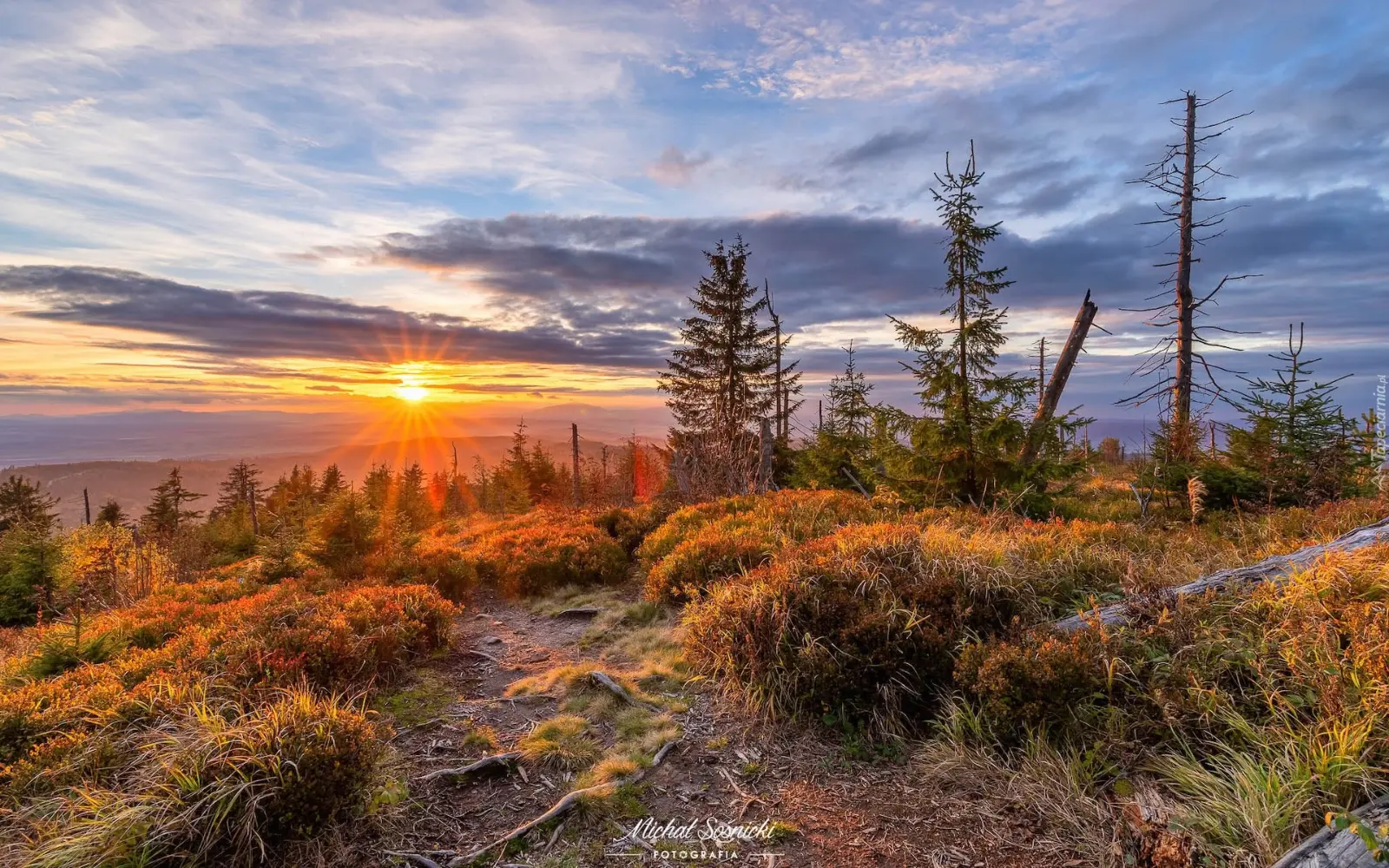
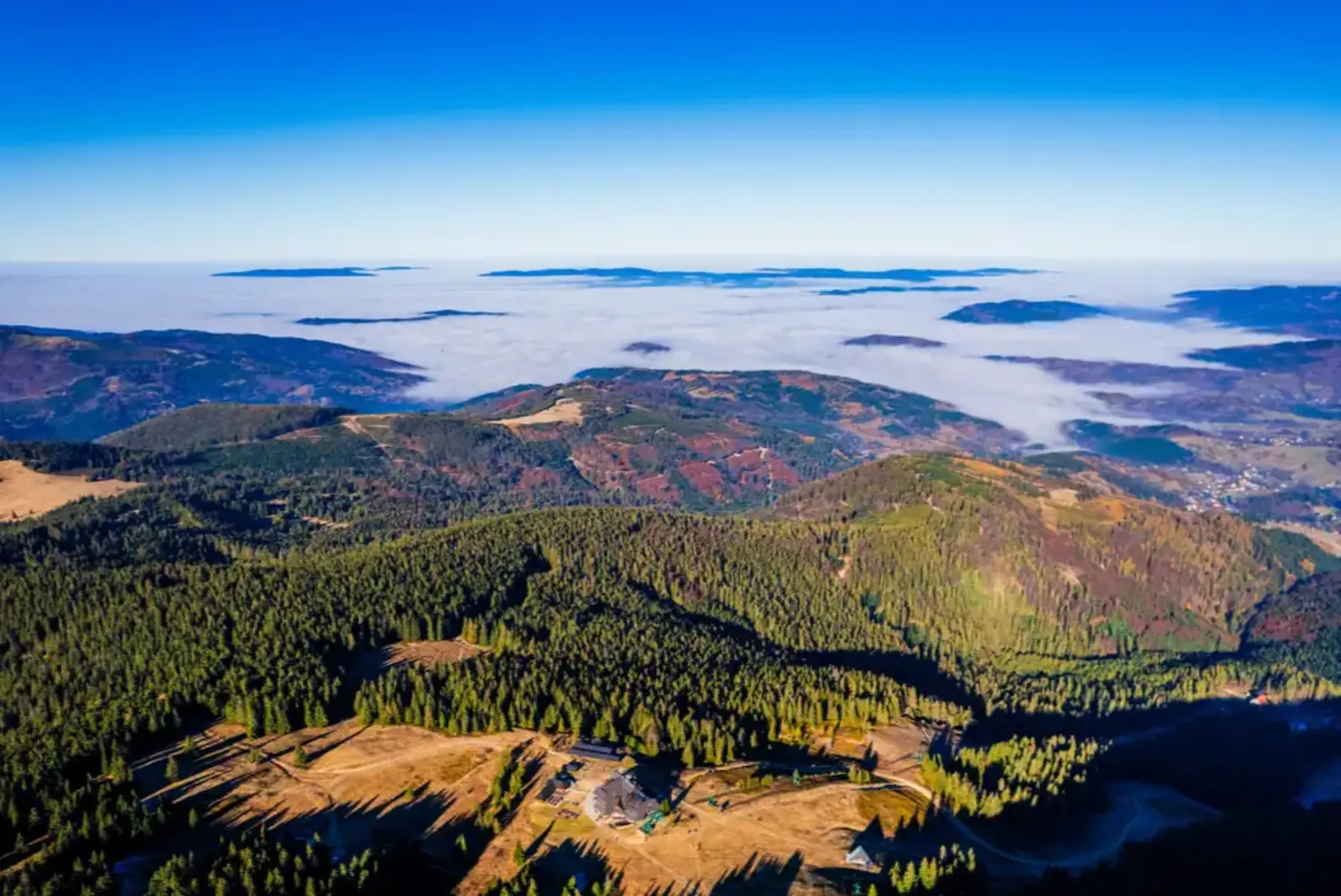
Wooden shepherd huts, panoramic mountain vistas, and gentle trails ideal for an easy start. Slow travel through the Gorce — the most underrated range of the Polish Beskids.
Why the Gorce, differently
The Gorce is a mountain range between the Tatras and the Beskid Wyspowy, often skipped by tourists rushing to Zakopane or the Bieszczady. That is a mistake — the Gorce offer everything best in Polish mountains, only in a quieter version. High meadows, wooden shepherd huts, fir forests and panoramas of the Tatras without crowds and queues.
Slow travel through the Gorce is a journey through pastoral tradition that is still alive here. In spring, sheep graze on the meadows, oscypek and bundz are made in the huts, and shepherds still tell old stories. This is one of the few regions in Poland where pastoralism is not a tourist attraction but a real way of life. The Gorce is a land that rewards those who walk slowly and look carefully.
What to see
The Gorce splits into two main parts: the Proper Gorce (with Turbacz and the highest peaks) and the Lubań Range (less known, in the east). Two to three days are best to visit.
Turbacz and the main ridge
- Turbacz (1,310 m) — the highest peak of the Gorce, with a mountain hut at the top. From Turbacz one of the most beautiful views in Poland opens up — in good weather you can see the Tatras, Pieniny, Beskid Sądecki, Żywiec Beskids, and even Babia Góra. Ascent from Nowy Targ (~4 hours) or Krościenko (~3 hours).
- PTTK Shelter at Turbacz — one of the oldest shelters in Poland (from 1925), with traditional atmosphere and home cooking. Worth staying overnight — in the evening you can listen to highland music around the campfire.
- Hala Długa — an extensive clearing on the Gorce ridge, with a panorama of the Tatras and Pieniny. Worth stopping here longer, especially in summer when sheep graze here.
- Stare Wierchy — a shelter at 970 m, on the route from Nowy Targ to Turbacz. A good place to rest halfway.
Meadows, huts and pastoral tradition
- Hala Turbacz — a pastoral meadow around Turbacz, where sheep graze in summer. You can see shepherds at work and buy fresh oscypek.
- Shepherd huts — wooden huts on the meadows where shepherds make cheese. Worth visiting — many sell oscypek, bryndza and other cheeses.
- Museum of Folk Culture in Rabka-Zdrój — an open-air museum presenting the traditional culture of the Gorce highlanders. Wooden cottages, tools, folk costumes. Worth it for understanding the cultural context.
- Monastery in Ludźmierz — a Marian sanctuary under Turbacz, one of the more important places of worship in the region. Worth stopping on the way to Turbacz.
Lesser-known corners
- Kamienica Valley — the valley of the Kamienica river, with numerous hiking and cycling trails. Less known than the Tatra valleys, but equally beautiful.
- Bór na Czerwonem Reserve — a peat bog near Nowy Targ, with unique vegetation and birdlife. Worth a walk.
- Lubań Range — a lesser-known range in the eastern Gorce, with views of the Pieniny and Tatras. For those who want to avoid crowds.
- Jaworzyna Kamienicka — a clearing with the highest cemetery in the Gorce and a chapel. Worth it for views and history.
When to go
- May and June — the best time for slow travel. Meadows bloom, fewer tourists, long days. Worth a walk among the meadows.
- July and August — peak pastoral season. Sheep graze on the meadows, you can see shepherds at work. More tourists, but still fewer than the Tatras.
- September and October — second best. Autumn colours, clear air, fewer people. September is red deer rutting season.
- November–March — winter in the Gorce is harsh but beautiful. Shelters are open, but trails require proper equipment. For experienced hikers.
Getting there
- By car: ~1.5 hours from Kraków (via Rabka), ~40 minutes from Zakopane, ~1 hour from Nowy Sącz. Access roads to Nowy Targ and Rabka are well-maintained.
- By train: stations in Nowy Targ and Rabka-Zdrój, with connections from Kraków (~2.5 hours), Zakopane (~1 hour). Then bus or taxi to trailheads.
- By bus: PKS and Szwagropol from Kraków and Zakopane to Nowy Targ, Rabka and Krościenko.
Public transport in the Gorce is sparse — a car or bike makes moving between trailheads much easier.
How much time you need
A weekend (2 days) is the minimum — one day for Turbacz, one for a walk through the meadows or Kamienica Valley.
Three days is realistic for a first visit. Turbacz, Hala Długa, Stare Wierchy, a walk through the meadows, a visit to the open-air museum in Rabka.
A week lets you explore the entire Gorce — both ranges, all shelters, pastoral tradition and surrounding towns (Nowy Targ, Rabka, Krościenko).
What to eat and where to sleep
- Grilled oscypek — smoked sheep cheese with cranberry, available at shepherd huts on the meadows. Buy directly from shepherds.
- Bundz — fresh sheep cheese, delicate and slightly sour. Available at shepherd huts.
- Kwaśnica — highland sour cabbage soup with meat. A Beskid cuisine classic, available at the Turbacz shelter.
- Moskole — pancakes of flour and water with additions, served with bryndza or cracklings.
- Grilled trout — from local farms, available in restaurants in Nowy Targ.
- Karpielówka and śliwowica — local liqueurs, available in regional taverns.
Accommodation: Nowy Targ (largest choice, close to trails), Rabka-Zdrój (spa, quiet), Krościenko (near Pieniny), shelters at Turbacz and Stare Wierchy (for those who want to sleep in the mountains), agritourism farms in surrounding villages. Book ahead in season.
Practical tips
- Bookings — book accommodation at the Turbacz shelter in advance, especially on summer weekends.
- Guided tours — during pastoral season (July–September), hire a local guide who will tell you about pastoral tradition and show you the most interesting huts.
- Weather — the Gorce is lower than the Tatras, but the weather changes quickly. Even in July, bring a rain jacket.
- Shoes — sturdy trekking boots are essential on longer trails. For short walks through the meadows, comfortable sports shoes are enough.
- Water — there are springs and streams on the trails, but not all are drinkable. Bring a supply of water.
- Car parks — paid car parks in Nowy Targ, Rabka and at trailheads. In season they fill by 8 a.m.
- Signal — good in Nowy Targ and Rabka, weaker on trails. Have an offline map.