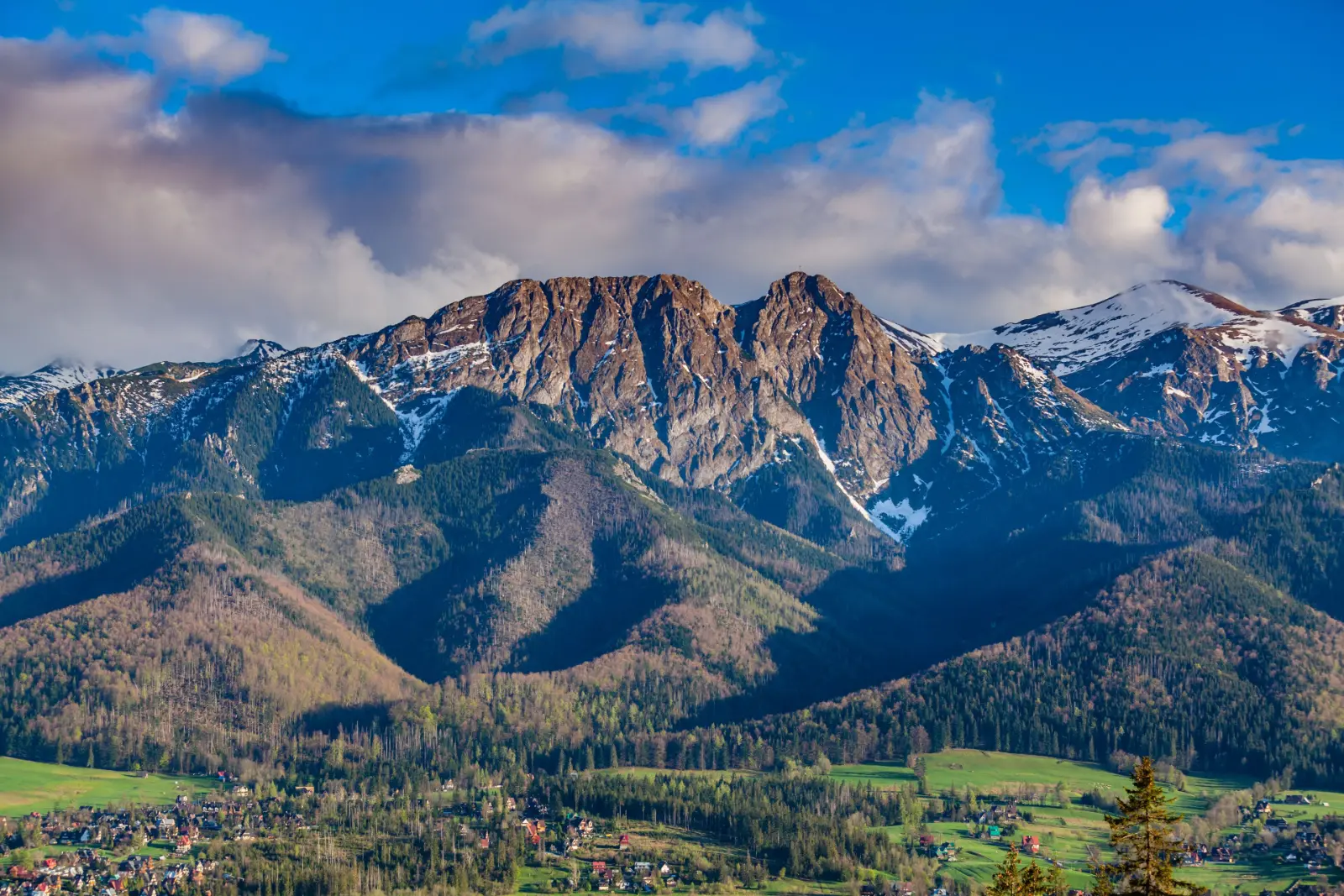
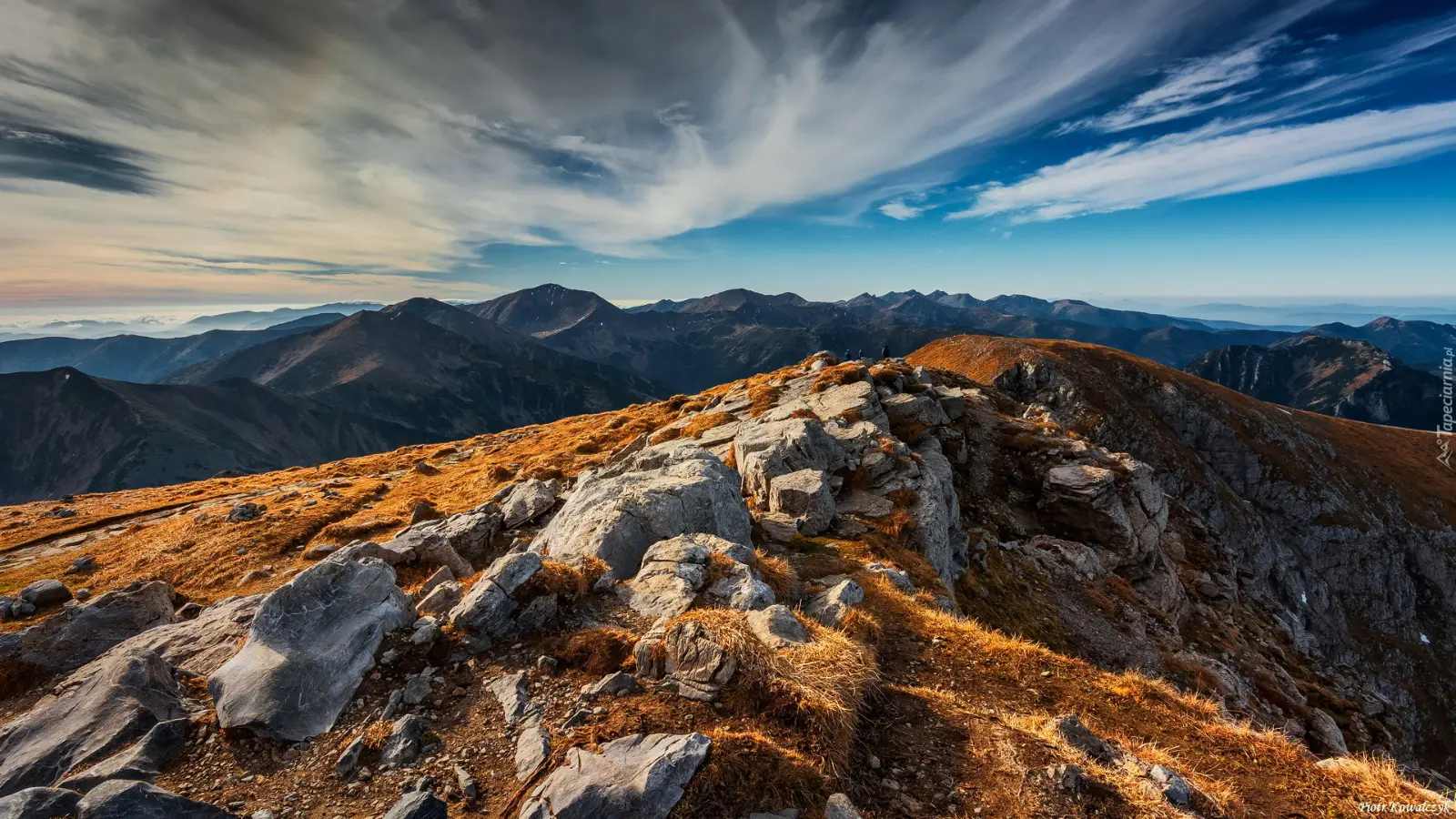
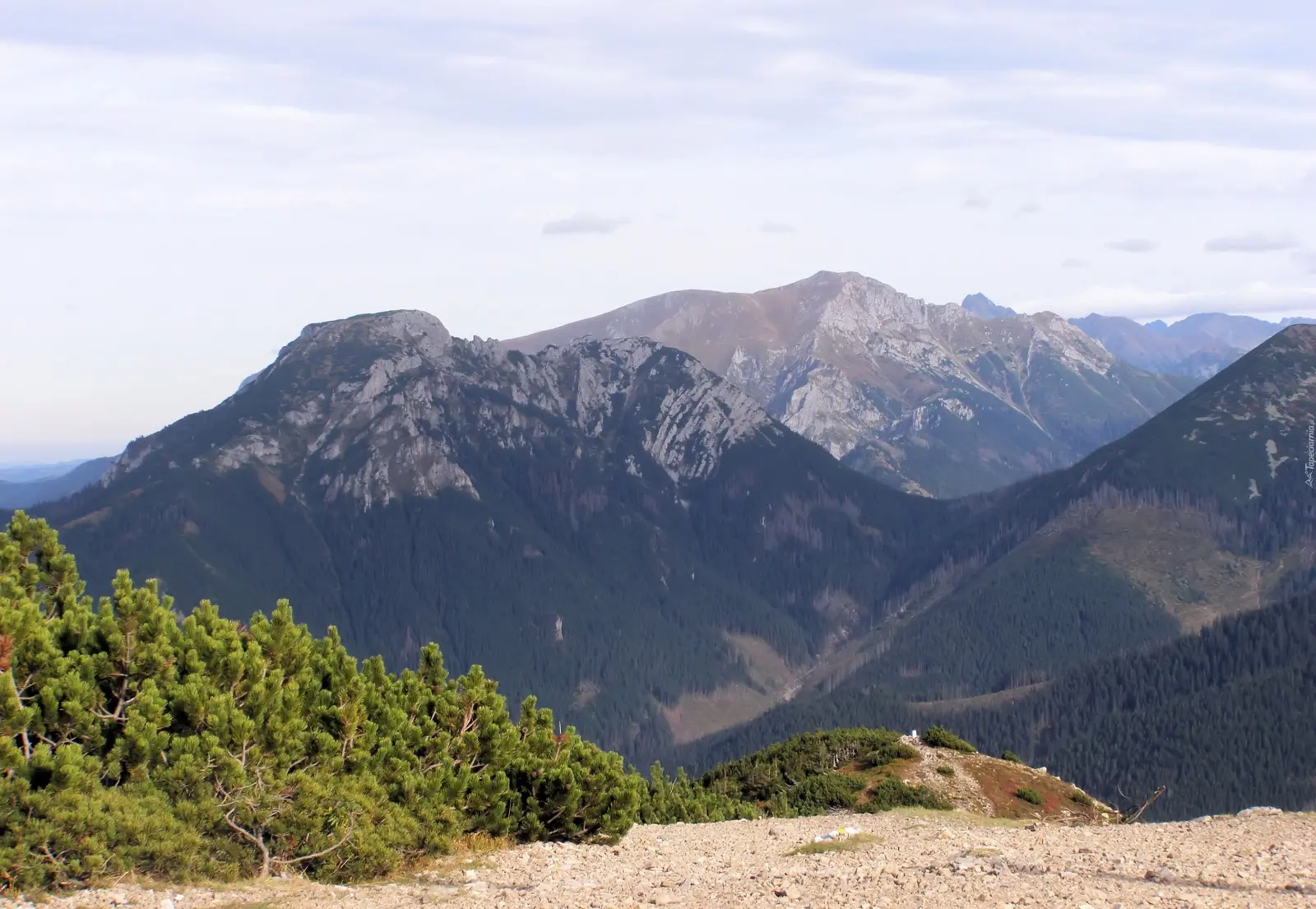
The iconic silhouette of the sleeping knight, mountain stillness and rewarding hikes. Slow travel to Giewont — the most recognisable peak of the Tatras.
Why Giewont, differently
Giewont (1,894 m) is not just a peak — it is a symbol that dominates Zakopane and the hearts of many wanderers. Its silhouette resembles a sleeping knight who, according to legend, waits to wake in Poland's moment of danger. It is the most recognisable Tatra peak — and one of the most crowded.
Slow travel to Giewont means giving up haste. Instead of running from Kuźnice to the summit, spread the hike over a whole day — with breaks for views, a second breakfast, a moment of rest at Hala Kondratowa. This is a mountain that rewards those who slow down. Even in the summer crowd you can find silence — just rise early and start the trail at dawn.
What to see
Giewont splits into several parts: Wielki Giewont (main summit with the cross), Mały Giewont (side peak), Strążyska Valley (western approach), Kondratowa Valley (eastern approach). One day is enough to see it.
Summit and cross
- Wielki Giewont (1,894 m) — the main summit, with a distinctive cross from 1901 (15 m high). The cross commemorates the 500th anniversary of the death of St. Jadwiga, and — as legend says — is meant to protect Poland. Worth seeing up close, but note: there is a metal railing around the cross, and the approach to the summit can be crowded.
- Legend of the sleeping knight — according to legend, inside Giewont sleeps a knight with his army, ready to wake when Poland is in danger. The mountain's silhouette indeed resembles a lying knight — with Giewont as the head and the ridge as the body.
- Views from the summit — panorama of Zakopane, the High, Bielskie and Western Tatras. In good weather you can even see the Slovak Tatras. Views from Giewont are among the most recognisable in Poland.
- Trail to the summit — two main approaches: from Kuźnice via Hala Kondratowa (~3.5 hours) and from Strążyska (~3 hours). The final section (from Kondracka Pass) is exposed — chains and steel clamps help in difficult places.
Strążyska Valley and Kondratowa Valley
- Strążyska Valley — the shortest Tatra valley, entered directly from Zakopane. Leads under Giewont, to the Siklawica waterfall. Easy route, good for a first day.
- Siklawica Waterfall — a waterfall in Strążyska Valley, ~24 m high. Worth seeing, especially after rain when the water is high.
- Kondratowa Valley — a valley leading from Kuźnice, with a PTTK shelter at Hala Kondratowa. Good base for Giewont and a place to rest.
- Shelter at Hala Kondratowa — a shelter at 1,333 m, with traditional atmosphere and home cooking.
Lesser-known corners
- Mały Giewont (1,728 m) — a side peak, less known than Wielki Giewont. Worth seeing if you seek less crowded places.
- Kondracka Pass (1,725 m) — a pass between Giewont and Kopa Kondracka, with a view over the High Tatras. Worth it for lesser-known views.
- Kopa Kondracka (2,005 m) — a peak in the Czerwone Wierchy, accessible from Kondracka Pass. Worth it for lesser-known views and smaller crowds.
- Path above the Regle — a path leading from Kuźnice to Chochołowska Valley, through the northern slopes of the Tatras. Worth a walk with views.
When to go
- May and June — the best time for Giewont. Fewer crowds than July and August, long days, stable weather. Note: snow may still lie in higher parts.
- September and October — second best. Autumn colours, clear air, fewer people. First snow usually in the second half of October.
- July and August — peak season. Giewont crowded, queues at the chains, car parks full. If you must — pick a weekday and start at 5:00 AM.
- Winter — Giewont in winter is very dangerous (avalanches, ice, exposure). Requires experience and proper equipment. For experienced hikers.
Getting there
- By car: ~2 hours from Kraków (S7 via Rabka), ~5–6 hours from Warsaw. On weekends and in season, traffic jams in Zakopane and on the approach to Kuźnice are the norm.
- By train: station in Zakopane, with connections from Kraków (~2.5 hours), Warsaw (~5 hours), Gdynia (~8 hours). From the bus station in Zakopane, minibuses leave for Kuźnice and Strążyska.
- By bus: Flixbus and Szwagropol from Kraków (~2 hours). From the bus station in Zakopane, minibuses leave for Kuźnice, Strążyska and Kir.
Within Zakopane, walk or use local minibuses (routes to Kuźnice, Strążyska, Kir). Parking in Zakopane is paid and difficult — better to leave the car at the hotel.
How much time you need
A weekend (2 days) is the minimum — one day for Giewont, one for a walk around Zakopane or a trip elsewhere.
Three days is realistic for a first visit. One day for Giewont, one for Strążyska Valley and Siklawica waterfall, one for Zakopane.
A week lets you explore the whole Tatras — Giewont, Kasprowy Wierch, Morskie Oko, Kościeliska Valley, Chochołowska Valley.
What to eat and where to sleep
- Grilled oscypek — smoked sheep cheese with cranberry. Buy at shepherd huts on the meadows.
- Kwaśnica — highland sour cabbage soup with meat. A Podhale cuisine classic.
- Moskole — pancakes of flour and water, served with bryndza or cracklings.
- Grilled trout — from local farms, available at taverns along the way.
- Karpielówka and śliwowica — local liqueurs, available at highland taverns.
- Coffee and cake — Zakopane has several good cafés, ideal for a break.
Accommodation: Zakopane (largest choice, but expensive and busy), Kościelisko and Witów (quiet, close to Kościeliska Valley), Murzasichle and Małe Ciche (small villages, guesthouses), Bukowina Tatrzańska (near the thermal baths). PTTK mountain huts in the valleys are cheap but book ahead.
Practical tips
- Bookings — car parks at Kuźnice and Strążyska fill by 6 a.m. in season. Arrive before seven, or park in Zakopane and take a minibus.
- Weather — Tatra weather changes fast. Even in July, snow can fall above 1,800 m. Pack a rain jacket, hat and gloves.
- Trekking boots are essential on the Giewont trail. The final section (from Kondracka Pass) leads through exposed rocks — good grip is needed.
- Crowds — Giewont in July and August is very crowded. Start at 5:00–6:00 AM to avoid the summit crowd.
- Water and food — there are huts in the valleys, but stretches without shops in between. Carry water and snacks.
- Mobile signal — poor in the Tatras, non-existent in some valleys. Download offline maps.
- Tatra NP tickets — required on trails in Tatra National Park. Buy online (tpnp.pl) or at entry kiosks (Kuźnice, Palenica Białczańska, Kir).