Great coffee, islands on the Oder, and wandering without a rigid plan. Slow travel through Wrocław — a city best tasted off the main route.
Why Wrocław, differently
Wrocław can overwhelm — four major tourist routes, crowds on the Market Square, dozens of monuments to tick off. But it has another face: it is one of the most dispersed cities in Poland. No single district holds everything — to feel Wrocław, you have to assemble it from pieces.
Slow travel in Wrocław is above all about changing perspective. Instead of racing from the Racławice Panorama to the Centennial Hall, choose one island on the Oder and spend the whole afternoon there. Instead of hunting all 600 dwarfs — find one, the least known. This is a city that rewards those without a plan.
What to see
Wrocław is best split into parts: Ostrów Tumski and the Old Town, the Oder islands, Nadodrze, and the southern districts (with the Centennial Hall). Each has its own rhythm.
Ostrów Tumski and the Old Town
- Ostrów Tumski — the oldest part of the city, the cathedral island. In the evening, a lamplighter in traditional dress lights the gas lamps (one of the few working gas systems in Europe). St John the Baptist Cathedral with views from its tower; the Church of Our Lady on the Sand.
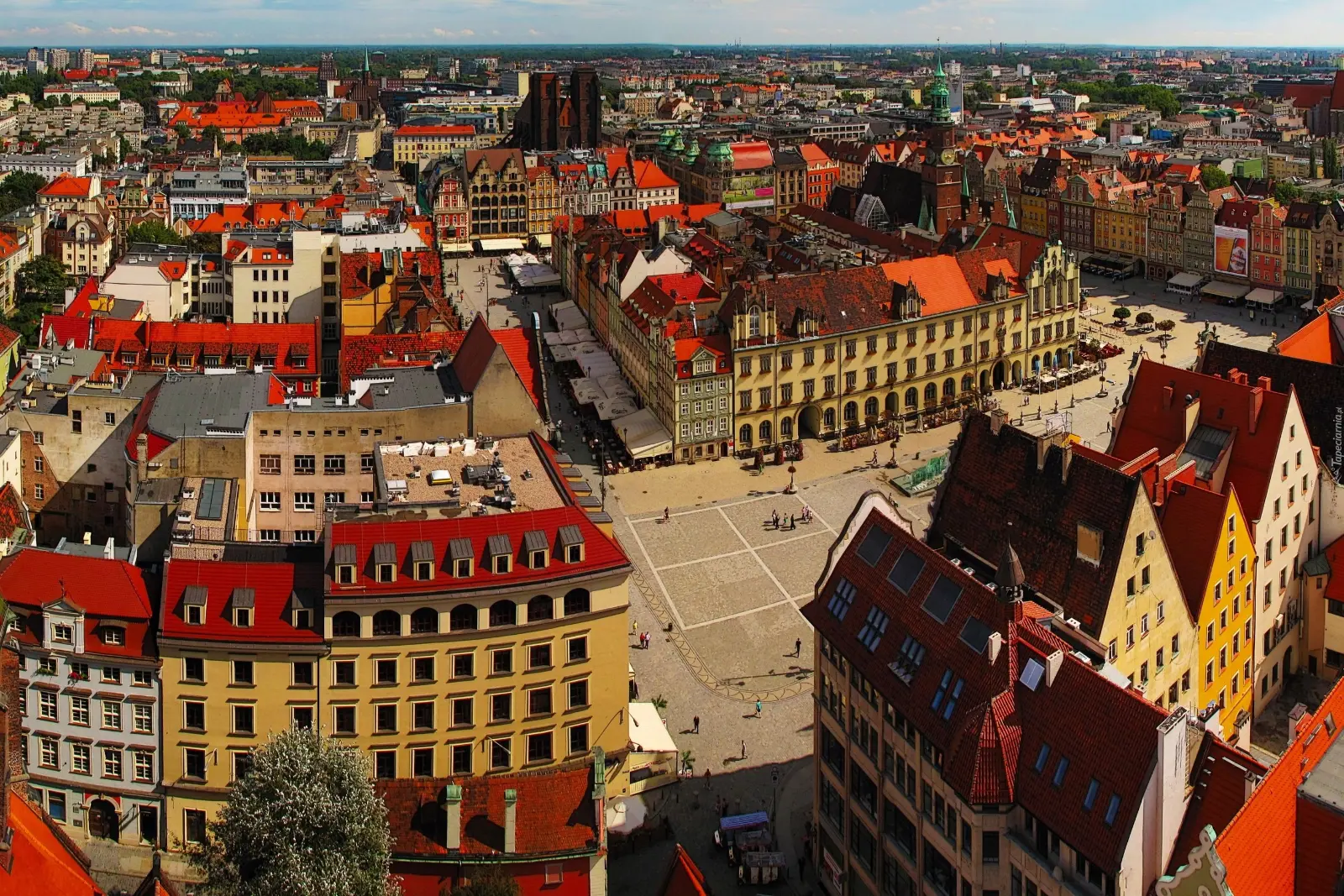
- Main Market Square — one of the largest in Poland, with a Gothic Town Hall and townhouses from different eras. Step into Piwnica Świdnicka — the oldest restaurant in Europe (since 1275).
- Four Denominations District — Św. Antoniego street and surroundings, where a synagogue, a Catholic church, an Orthodox church and a Protestant church stand side by side. A symbol of multicultural Wrocław.
- Wrocław University and the Aula Leopoldina — a Baroque hall with frescoes, one of the most beautiful in Poland. View over the city from the Mathematical Tower.
Oder islands
- Piasek Island — with the Church of Our Lady on the Sand and a former Augustinian monastery. The link between Ostrów Tumski and the Old Town.
- Słodowa Island — in summer, the unofficial meeting point of the city: young people, music, food trucks. Empty and melancholic in winter.
- Opatowicka Island — less known, in the eastern part of the city. Perfect for a quiet walk away from the bustle.
- Bridges — Wrocław has over 100, more than any other city in Poland. The most interesting: Tumski Bridge (with lovers' padlocks), Piaskowy Bridge, Zwierzyniecki Bridge.
Nadodrze
- Nadodrze — a district of restored townhouses and street art. Once poor, now one of the most interesting parts of the city for food and art. Local cafés, craft bakeries, niche galleries.
- Street art in Nadodrze — Wrocław's largest murals, including works by well-known European artists.
Southern districts and the Centennial Hall
- Centennial Hall — an icon of 20th-century architecture, a UNESCO World Heritage site. Built in 1913 with the largest reinforced concrete dome in Europe at the time.
- Pergola and Multimedia Fountain — next to the Hall, with evening fountain shows (May to October).
- Japanese Garden and the Zoo with Afrykarium — one of the oldest zoos in Poland (since 1865). Afrykarium is a unique oceanarium dedicated to African ecosystems.
- Racławice Panorama — a monumental painting (15 × 114 m) from 1894. Online booking recommended.
- Sky Tower — the tallest building in the city, with an observation deck on the 49th floor. Less famous than the cathedral tower, but with a better view over all Wrocław.
When to go
- May and June — the best time. The city blooms, the Oder islands turn green, cafés open their gardens. Fewer crowds than summer.
- September and October — second best. Autumn colours in Szczytnicki Park, evenings still warm, fewer tourists.
- July and August — peak season. Słodowa Island full, Market Square crowded, but the city has summer energy. Come on a weekday.
- November and December — Christmas market on the Market Square (one of the largest in Poland, from late November). Beautiful but very crowded — especially on weekends.
- Winter — January to March is quiet but cold. Wrocław can be covered in snow, which adds charm — especially to Ostrów Tumski and the islands.
Getting there
- By plane: Wrocław-Strachowice airport (WRO). From the airport to the centre by bus 106 or 206 (~35 min).
- By train: Wrocław Główny is one of Poland's largest stations, with direct connections from Warsaw (~3.5 hours), Kraków (~3 hours), Poznań (~2 hours), Gdańsk (~6 hours).
- By car: from Warsaw ~4 hours (S8 and A8), from Kraków ~3 hours (A4), from Poznań ~2 hours (S5 and A8).
- By bus: Flixbus and other operators serve most Polish cities. The bus station is next to the railway station.
Within the city, trams and buses are well developed, but central Wrocław is compact and most sights are within walking distance.
How much time you need
A weekend (2 days) is the minimum — Market Square, Ostrów Tumski, Słodowa Island and an evening in Nadodrze. Enough to feel the city, but not for everything.
Three days is realistic for a first visit. One day for the Old Town and Ostrów Tumski, one for the islands and Nadodrze, one for the Centennial Hall and the Racławice Panorama.
Four to five days lets you add Sky Tower, the Afrykarium, less-known districts (Biskupin, Sępolno) and a day trip to Książ Castle (~1.5 hours from Wrocław) or Wojsławice Arboretum.
What to eat and where to sleep
- Pierogi — on the Market Square and in Nadodrze. Wrocław also has a tradition of pierogi with buckwheat and cottage cheese filling.
- Silesian dumplings (kluski śląskie) — round potato dumplings with a hole, served with sauce and meat. A Lower Silesian classic.
- Wrocław żurek — sour rye soup with sausage and egg. Best in traditional taverns away from the Market Square.
- Beef roulade with red cabbage — German influence, popular in Lower Silesia.
- Specialty coffee — Wrocław has an excellent coffee scene: Cafe Targowa, Kofi Brand, E.Wedel Chocolate Lounge. Nadodrze is full of small roasters.
Accommodation: Market Square and Old Town (most convenient, but expensive), Nadodrze (atmosphere, cheaper, close to cafés), Ostrów Tumski (quiet but limited infrastructure), Słodowa Island area (student vibe). Wrocław has some of the best hostels in Poland — worth considering, especially for a weekend.
Practical tips
- Bookings — the Racławice Panorama and Afrykarium require online booking in season. Centennial Hall — only for guided visits.
- Dwarfs — there are over 600 in the city. Don't chase them all — pick a route (around the Market Square, or in Nadodrze) and collect along the way.
- Public transport — time-based tickets (15, 30, 60, 90 min, 24h) from machines and apps. Trams and night buses run 24/7.
- Słodowa Island in summer — crowded, loud, full of people until late. Not for those seeking quiet. For a peaceful evening, choose Opatowicka Island or the Oder embankments on the Ostrów Tumski side.
- Christmas market — from late November to 23 December. Huge crowds, high prices, but worth it for the atmosphere. Quieter on weekdays.
- Tap water — Wrocław tap water is good; you can refill bottles at street fountains (zdrojki).
- Parking — central Wrocław has a paid parking zone, spaces are hard to find. Leave the car at a P+R lot (e.g. by the Municipal Stadium) and take a tram.