Słowiński National Park is a land of moving dunes, lakes, and Baltic coastline. Łącka Dune, Lake Łebsko. Slow travel on the Baltic.
Why it's worth it
Słowiński National Park is one of two coastal parks in Poland (alongside Woliński). It lies on the central coast, between Łeba and Rowy. It protects a unique landscape: moving dunes, coastal lakes, Baltic pine forests, and peat bogs. The park's greatest attraction are the moving dunes — among the largest in Europe, moving at up to 10 m per year, burying the forest. The highest, Łącka Dune, is about 42 m above sea level. Add to that Lake Łebsko — the third-largest lake in Poland, with brackish water and rich birdlife.
Slow travel through Słowiński National Park is a journey through a landscape that surprises with its desert-like quality. There are no mountains here, no rocky cliffs — there are dunes, sea, lakes, and forests. It is worth spending 2–3 days here to truly feel this landscape. The best way to explore the park is on foot or by bike — there are about 140 km of hiking and cycling trails. Public transport is weak, so rent a car or come with your own.
What to see
Słowiński National Park is divided into three main parts: the dunes (centre), Lake Łebsko (east), and the Baltic coast (north). Exploring the park takes 2–3 days.
Moving dunes
- Łącka Dune — the highest dune in the park (42 m), with a viewpoint. Worth it for views.
- Czołpińska Dune — a dune by the sea, with numerous bird tracks. Worth it for nature.
- “Łącka Dune” trail — a nature trail through the dunes, with a viewpoint. Worth it for views.
Lake Łebsko
- Lake Łebsko — the third-largest lake in Poland, with brackish water. Worth it for birds.
- “Dune” trail — a trail around the lake, with viewpoints. Worth it for nature.
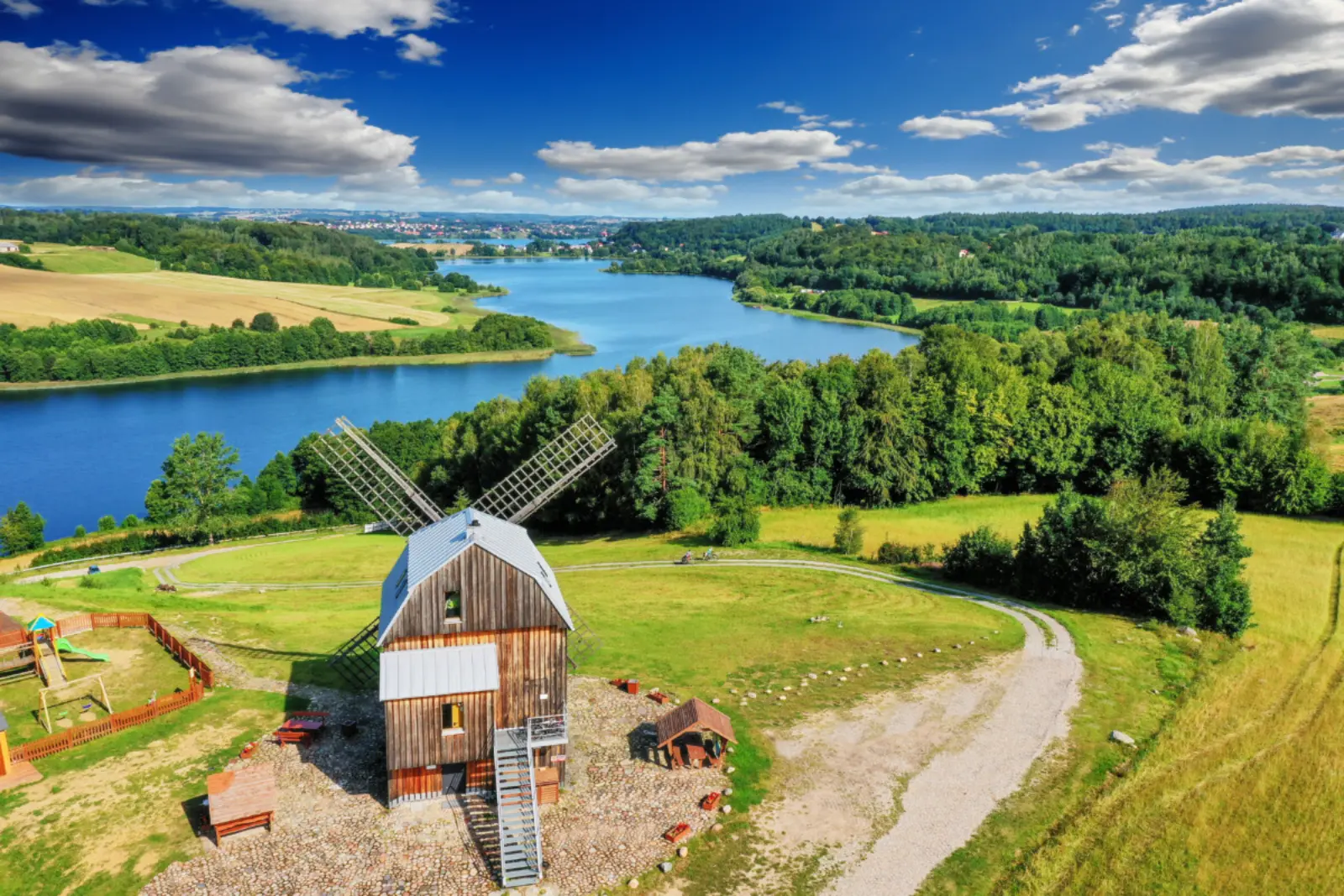
- Kluki village — a village with the Slovincian open-air museum, one of the most interesting in the region. Worth it for culture.
Baltic coast
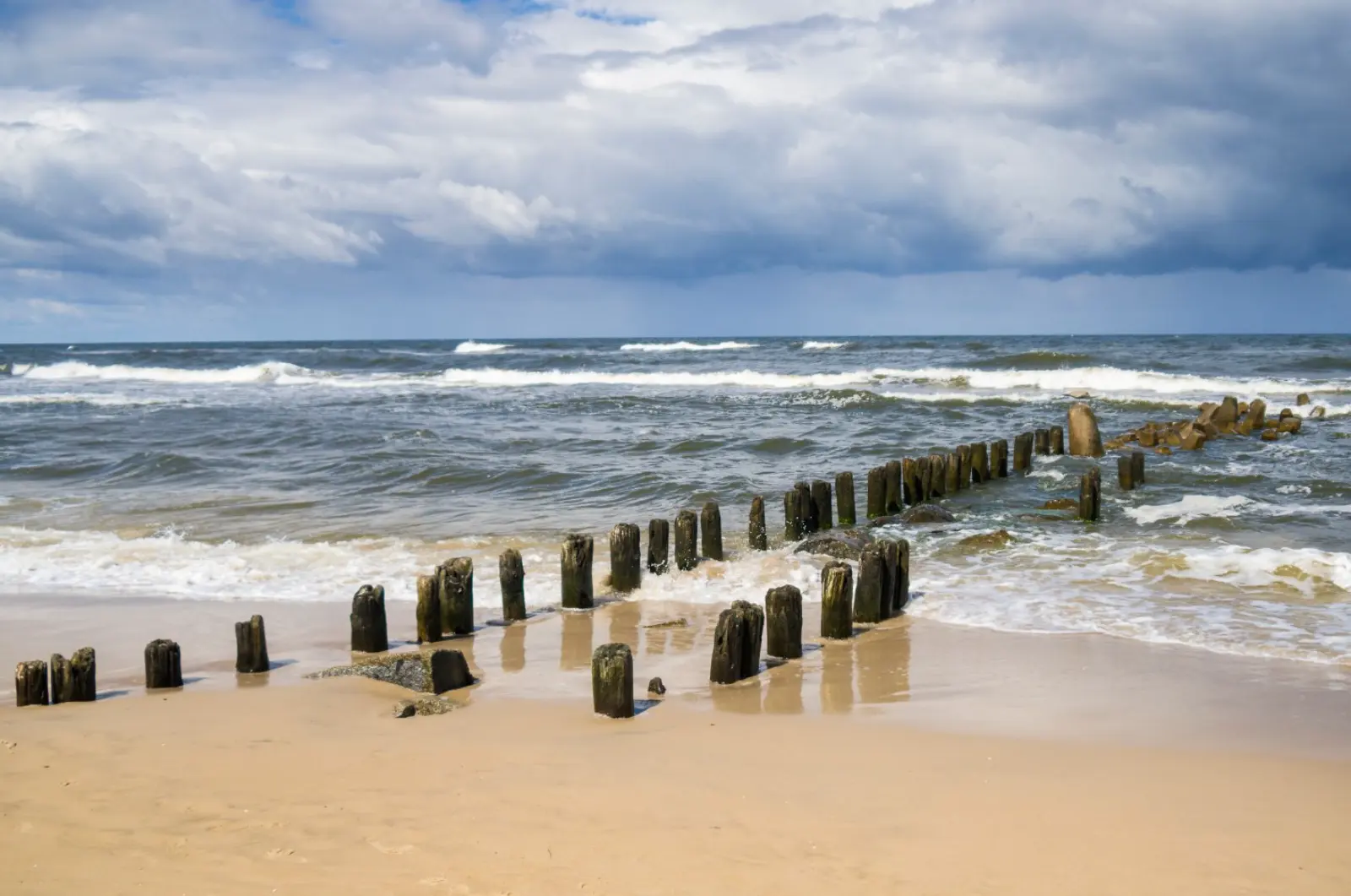
- Rowy beach — a wide sandy beach, one of the most beautiful on the coast. Worth it for swimming.
- Czołpino lighthouse — an 1875 lighthouse, with a viewpoint. Worth it for views.
- Smołdzino village — a village with a church and a former palace. Worth it for architecture.
When to go
- May and June — the best time for slow travel. Warm, green, few tourists.
- July–August — beach and swimming season. Worth it for the sea, but crowded in Rowy and Łeba.
- September–October — second best. Autumn colours, fewer people, migrating birds.
- November–March — the park is accessible in winter, but cold and windy. Worth it for those seeking silence.
Getting there
- By car: ~1.5 hours from Gdańsk (DK6), ~3 hours from Szczecin (DK6), ~5 hours from Warsaw (S7 + DK6).
- By train: Łeba, Słupsk have railway stations. Then rent a car or bike.
- By bus: PKS serves Łeba, Rowy, Smołdzino.
Słowiński National Park is best explored on foot or by bike — the park is well marked, and trails are well maintained. Leave the car at the car park in Rąbka or Smołdzino.
How much time you need
A weekend (2 days) is the minimum — Łącka Dune, Lake Łebsko, Rowy beach.
Three days is realistic for a first visit. Łącka Dune, Lake Łebsko, Rowy beach, Czołpino lighthouse, Kluki.
A week lets you explore the whole park and surroundings — from Łeba to Rowy, with numerous stops.
What to eat and where to sleep
- Smoked fish — from smokehouses in Łeba and Rowy.
- Baltic herring — a coastal classic, available at fish shops.
- Fish soup — from local fish, available at inns.
- Beer from Pomeranian breweries — several craft breweries in the region.
Accommodation: Łeba (small town, more options), Rowy (village, guesthouses), Smołdzino (village, agritourism), numerous agritourism farms in villages.
Practical tips
- Guided tours — the park has rich nature, take a guide.
- Moving dunes — walking on the dunes outside marked trails is forbidden. Stick to the paths.
- Shopping — buy honey, cheese, and cold cuts directly from farmers.
- Opening hours — some trails are closed during the bird breeding season. Check before your trip.
- Weather — coastal weather can be changeable, even in July bring a jacket and a hat.
- Signal — good in towns, weaker in the park. Have an offline map.