ARTICLE • October 14, 2026
Łódź and around — a weekend in a city rebuilding itself
Łódź gets skipped: too close to Warsaw to count as a trip, too unobvious to make the lists. Yet it is one of the few Polish cities where the industrial past was not demolished but turned into culture.
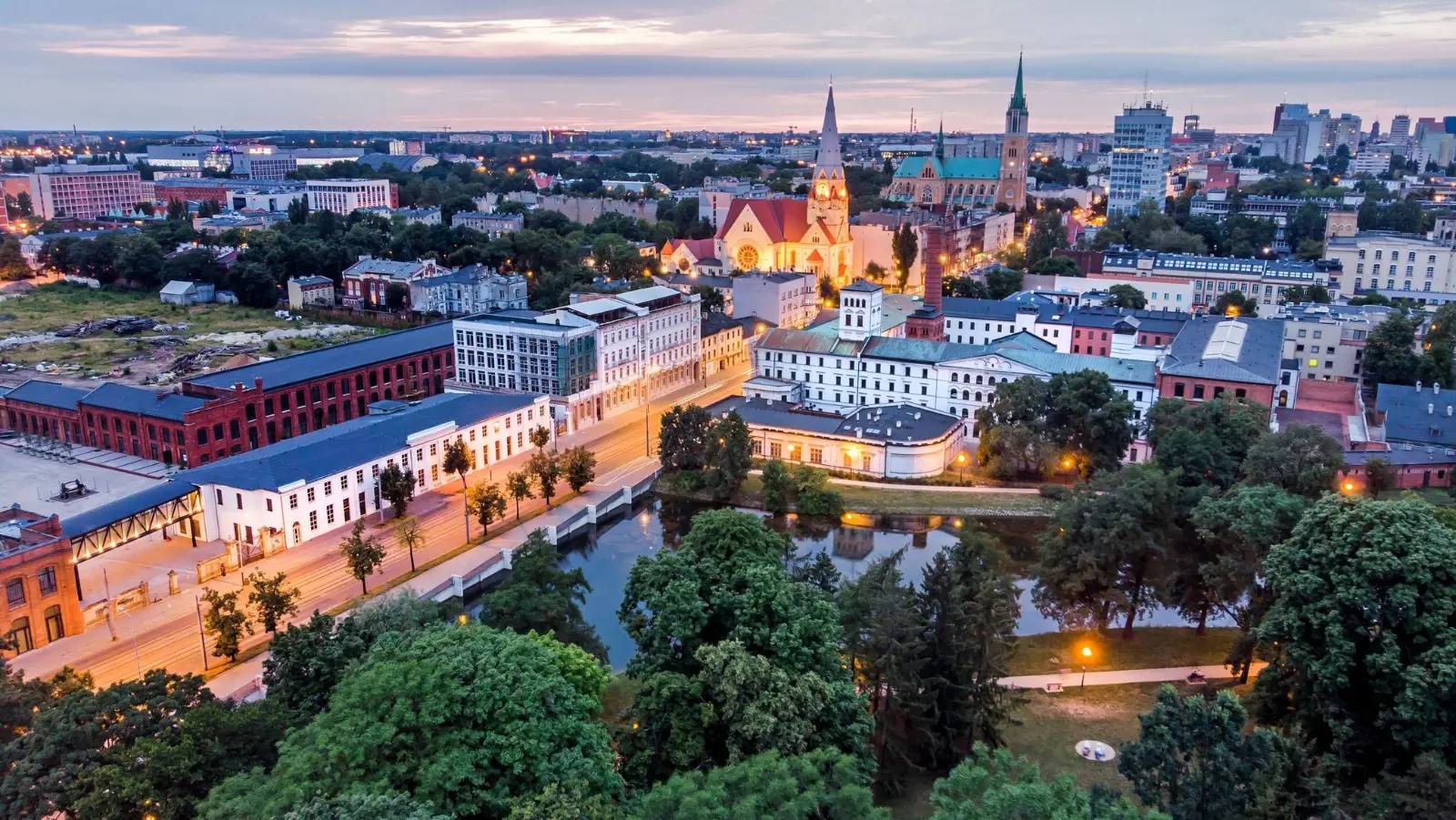
You do not come to Łódź for an old town. There is no market square with a town hall that everything revolves around. Instead there is a city built on factories — and that is its most interesting part. One weekend is enough to see how the industrial past has become museums, galleries and parks.
Why Łódź rather than another city with a square
Piotrkowska is not a promenade in the Krakowskie Przedmieście sense — it is the former main street of a factory city, several kilometres long, lined with tenements that remember nineteenth-century industrialists. Walk it without a destination and look at the courtyards: many have been restored and turned into cafés.
Manufaktura is the former factory complex of Izrael Poznański — today a museum, a shopping centre and a square with fountains in one. The building is worth seeing even if you are not shopping.
EC1 — a former power station, now a science and culture centre. A brick industrial hall where you can easily spend half a day if technology and exhibitions interest you.
Day 1 — the city from the inside
Start on Piotrkowska and Off Piotrkowska — a courtyard turned into restaurants and studios. Then head for Księży Młyn: a nineteenth-century factory estate with workers' housing and a school, looking like a city within a city. Next, Park Źródliska and its palm house — where locals escape the city.
Come back to Piotrkowska in the evening. The street lives differently after dark — fewer tourists, more residents.
Day 2 — Las Łagiewnicki and green Łódź
One of the most interesting things about Łódź is that there is a large forest within the city limits. Las Łagiewnicki is one of the largest forest complexes inside a Polish city — with enough trails to forget you are in an agglomeration.
In the middle of the forest stands the Franciscan monastery in Łagiewniki — a pilgrimage site, but simply a quiet one. Step in for a moment even if you are not religious: it is one of the places that explain why Łódź has two faces.
Day 3 — around Łódź
If you have a third day, leave the city. The arboretum in Rogów is the oldest dendrological garden in Poland — a collection of trees and shrubs from around the world, especially beautiful in autumn. Nieborów and Arkadia near Łowicz are a palace and an English-style garden, one of the best-preserved layouts of its kind in the country.
The other direction — Spała on the Pilica and Lake Sulejów, if you want water and a beach instead of architecture.
Practical
Trains reach Łódź from most large cities, and public transport is enough in town — the Łódź destination page gathers what matters. A car is useful only on the third day, when you leave the city.
Łódź works all year, but spring or early autumn shows it best. Summer can be hot and empty, winter grey — the museums stay open either way.
Who this trip is for
For people who like cities with history but not necessarily with crowds. For those who would rather see a place changing than admire it in perfect condition. Łódź is not a postcard — and that is exactly why it is worth seeing.