A charming market square, cozy bistros, and a relaxed tempo that invites you back again. Slow travel through Olsztyn — the capital of Warmia and Masuria.
Why Olsztyn, differently
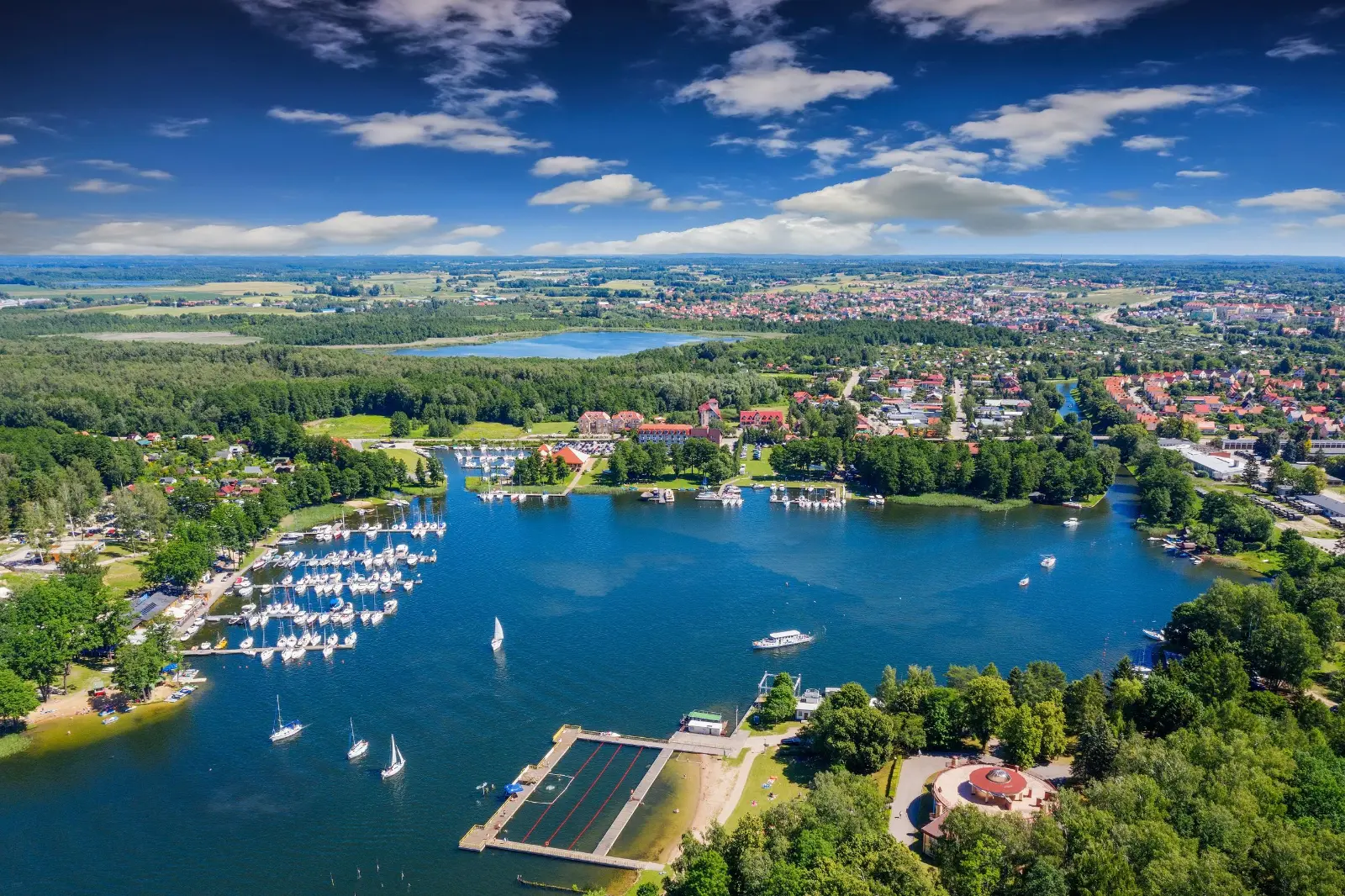
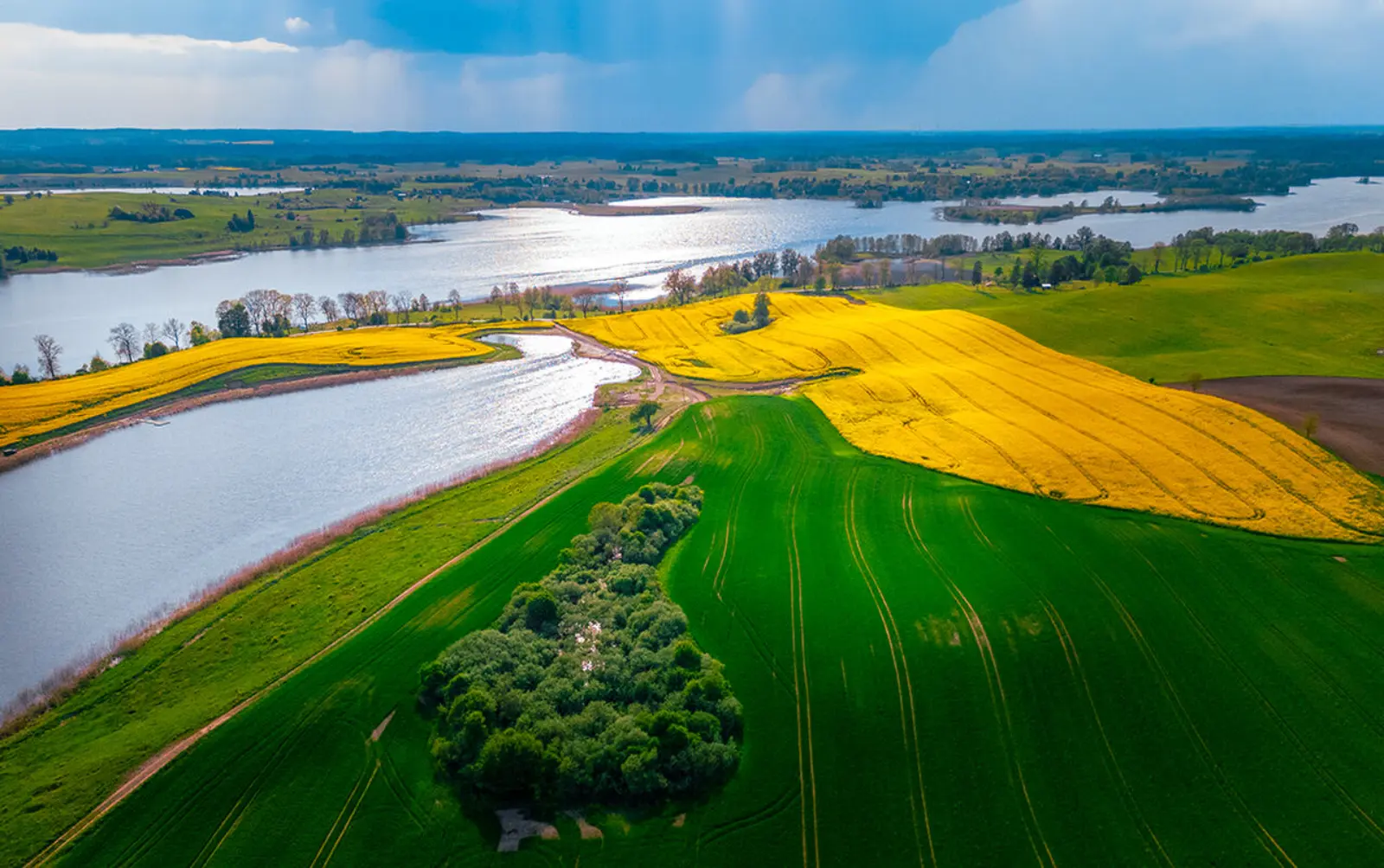
Olsztyn is a city that proves urban planning can go hand in hand with nature. Here, lakes intrude into the urban fabric, offering residents and visitors havens of peace right in the center. The City Forest, Lake Ukiel, the Łyna river — all this makes Olsztyn one of the greenest cities in Poland.
Slow travel through Olsztyn is a celebration of small things. Instead of racing from monument to monument, sit on the market square, drink coffee, look at the townhouses. A walk along the Łyna, the river that cuts through the city, is an ideal way to calm down. Watching ducks swimming in clear water and listening to the rustle of trees, you can forget you are in a city and feel like you are in a small riverside village. Olsztyn is a land where history meets nature.
What to see
Olsztyn is compact — the main sights are within walking distance. One day is enough to see it, but it is worth staying longer to feel the atmosphere.
Market square and Old Town
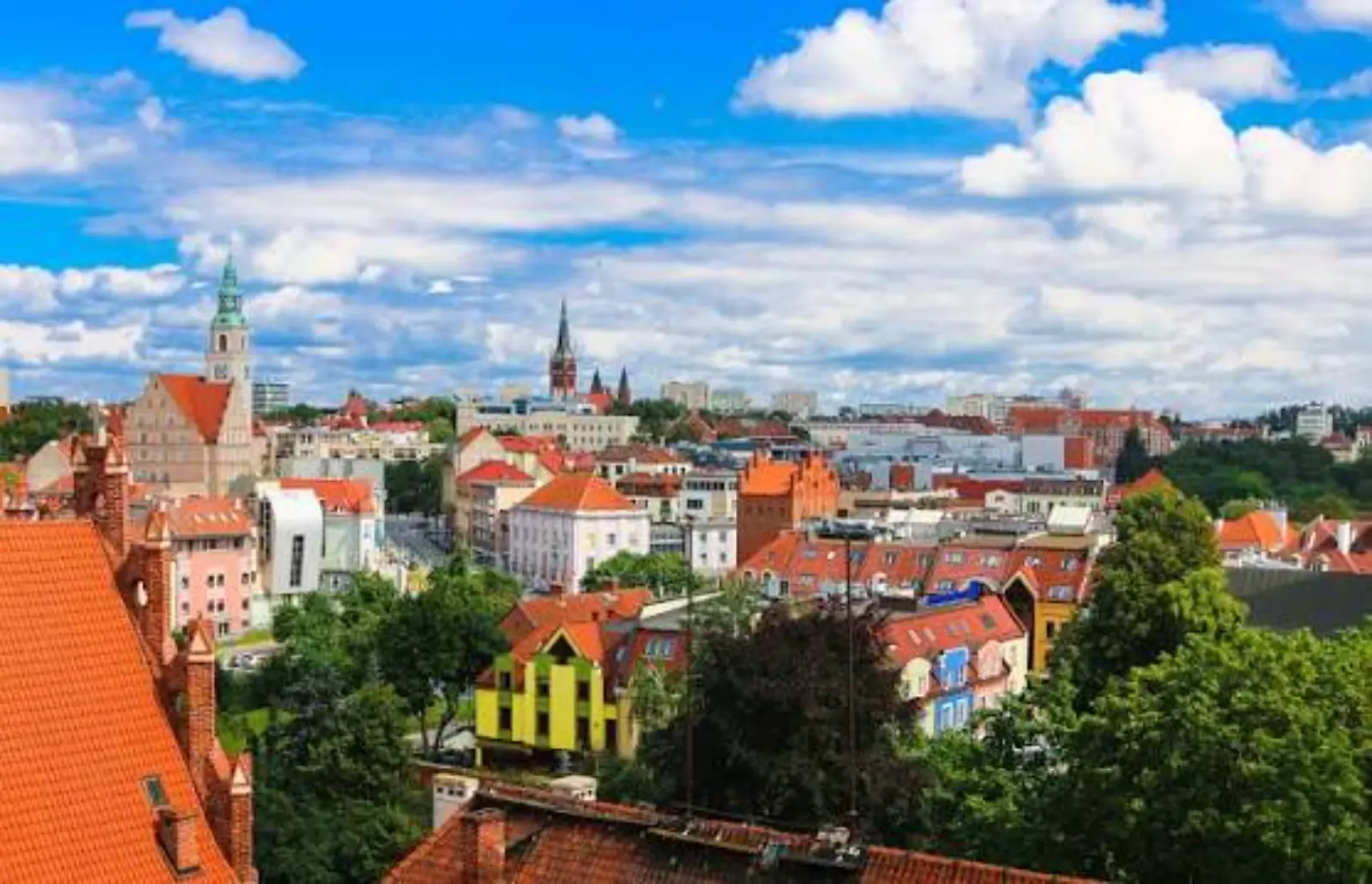
- Main Market Square — the heart of Olsztyn, surrounded by townhouses from different eras. In the centre, the town hall with a distinctive tower. Look at the townhouses — each has a different story.
- Town Hall — a Neo-Gothic building from the 19th century, in the centre of the market square. Worth climbing the tower — a view over the town and surroundings.
- High Gate — the only preserved town gate in Olsztyn, from the 14th century. Worth seeing from the outside.
- Clock townhouse — one of the most interesting townhouses in Olsztyn, with a distinctive sundial.
Warmian Chapter Castle and cathedral
- Warmian Chapter Castle — a Gothic castle from the 14th century, where Nicolaus Copernicus administered. Today the seat of the Museum of Warmia and Masuria, with an exhibition about the region's history. Worth visiting with a guide.
- St. James's Cathedral — a Gothic temple from the 14th century, one of the most important in the region. The interior delights with vaults and altars.
- St. James's Co-Cathedral — former Warmian cathedral, today a co-cathedral. Worth it for architecture and history.
- High Gate — a former town gate, today the seat of cultural institutions.
Lakes and parks
- Lake Ukiel — the largest lake within Olsztyn's borders, with a beach, water equipment rental and cycling paths. Worth a walk and rest.
- City Forest — a forest complex within the city, with numerous hiking and cycling trails. Worth a walk and contact with nature.
- Central Park — a park in the city centre, with alleys and old trees.
- Łyna — the river cutting through the city, with walking boulevards. Worth a walk along the river.
Museums and lesser-known corners
- Museum of Warmia and Masuria — in the chapter castle, an exhibition about the region's history. Worth visiting.
- Olsztyn Planetarium — one of the oldest planetariums in Poland, with astronomy shows.
- Museum of Nature — in a former palace, an exhibition about the nature of Warmia and Masuria.
- Podzamcze Park — a park around the castle, with a view of the Łyna. Worth a walk.
- Castle Island — an island on the Łyna, with a castle and park. Worth a walk.
Surroundings (day trips)
- Frombork — the town of Copernicus, ~50 km from Olsztyn. Worth it for the cathedral and history.
- Lidzbark Warmiński — a small town with a bishops' castle, ~50 km from Olsztyn.
- Olsztynek — a small town with a Gothic church and open-air museum, ~30 km from Olsztyn.
- Lake Pluszne — a lake in the area, ~30 km from Olsztyn. Worth a walk and swim.
When to go
- May and June — the best time. The city blooms, fewer tourists, long days. Worth a walk by the lake.
- September and October — second best. Autumn colours, clear air, fewer people.
- July and August — peak season. Market square crowded, but the city has summer energy. Come on a weekday.
- November–March — the city is quiet but wintry. Worth it for those who want to see Olsztyn without crowds.
Getting there
- By car: ~2.5 hours from Warsaw (S8 and DK16), ~2 hours from Gdańsk (S7 and DK16), ~2.5 hours from Białystok.
- By train: Olsztyn Główny is an important rail hub, with direct connections from Warsaw (~2.5 hours), Gdańsk (~2.5 hours), Kraków (~6 hours).
- By bus: PKS and private operators from most Polish cities.
- By plane: Olsztyn-Mazury airport (SZY), ~60 km from Olsztyn. Smaller airport, but with European connections.
Within the city, the centre is compact and most sights are within walking distance. To reach the lakes and parks, take a tram or bike.
How much time you need
A weekend (1–2 days) is the minimum — market square, castle, cathedral and a walk by the lake.
Three days is realistic for a first visit. One day for the city itself, one for the lakes and parks, one for a trip (Frombork or Lidzbark Warmiński).
A week lets you explore the whole region — Olsztyn, Frombork, Lidzbark Warmiński, Olsztynek and the surroundings of Warmia and Masuria.
What to eat and where to sleep
- Warmian cuisine — vendace, marzipan, kindziuk. Worth trying in local restaurants.
- Smoked vendace — a delicate fish from Warmian lakes, traditionally smoked.
- Olsztyn marzipan — the sweet icon of the region, handmade from almonds.
- Kindziuk — a cold cut from game, seasoned with garlic and marjoram.
- Duck with apples — a Warmian classic, available in elegant restaurants.
- Beer from a local brewery — several craft breweries in the region.
Accommodation: market square and surroundings (most convenient, but expensive), Old Town (atmosphere, close to attractions), lakeside areas (quiet, close to nature), private rooms and guesthouses (mid-price). Book ahead in summer season.
Practical tips
- Bookings — tickets for the Museum of Warmia and Masuria (in the castle) are worth booking in advance, especially in season.
- Guided tours — Olsztyn's history is complex, and without context many places look similar. Worth going with a guide.
- Bike — Olsztyn is one of the most bike-friendly cities in Poland. Worth renting a bike and exploring the surroundings.
- Crowds — the market square and main attractions are crowded in season (May–September). Rise early and start sightseeing before the crowds.
- Parking — the centre has a paid parking zone, spaces are hard to find. Large car parks near the lakes and the City Forest.
- Signal — good throughout the centre and the area.