
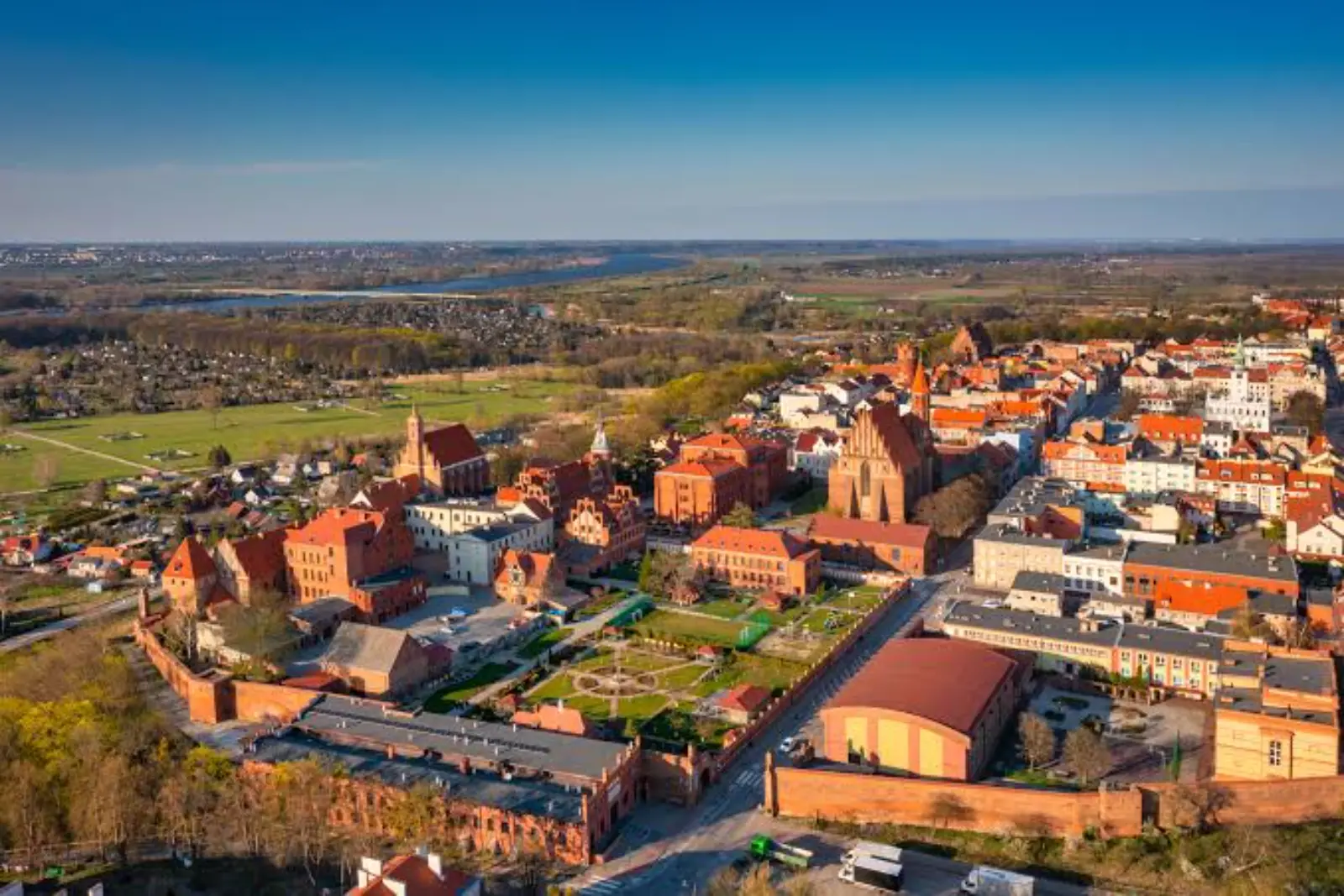
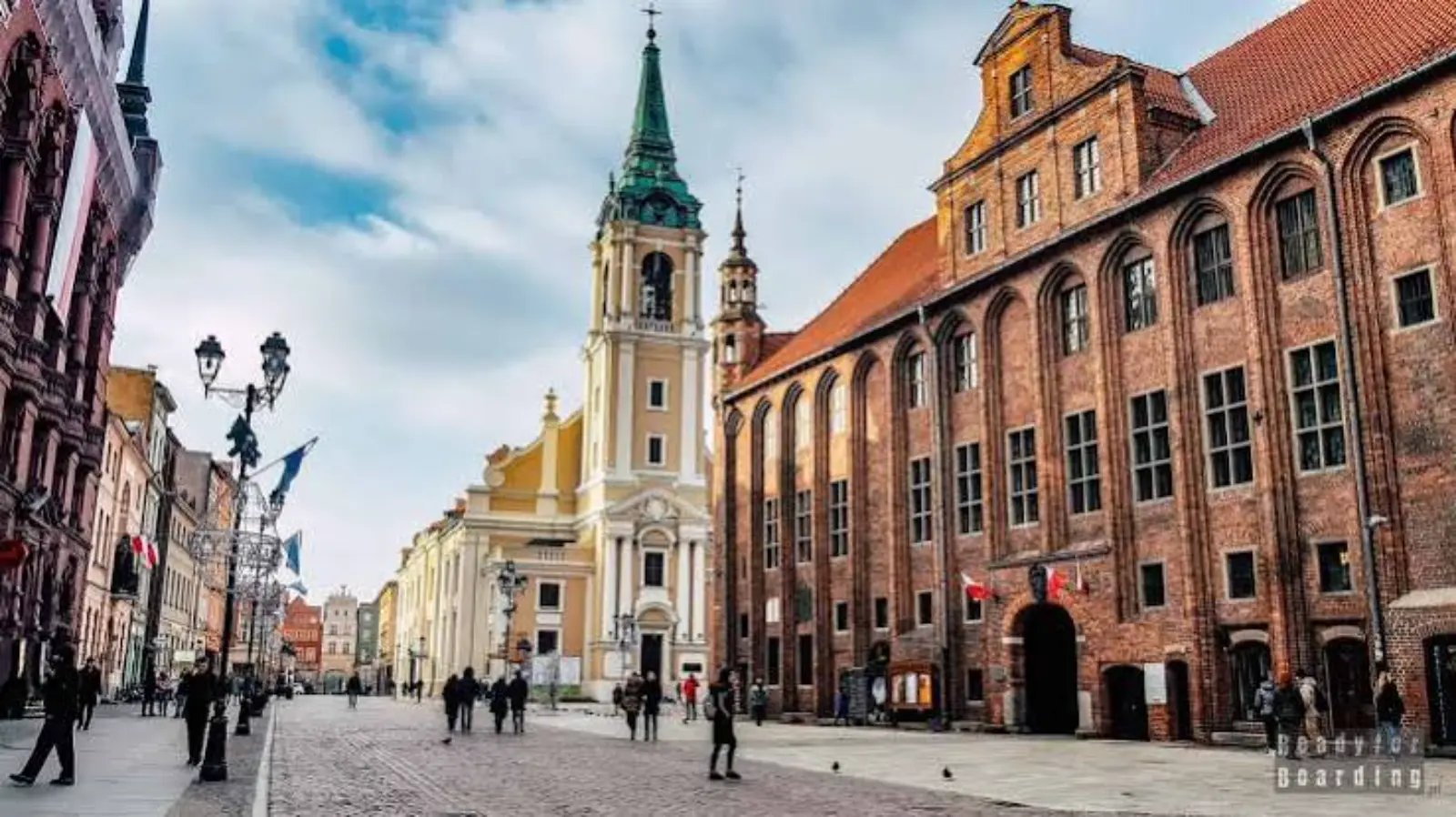
Medieval walls and six Gothic churches. A quiet little town with a view of the Vistula. Slow travel through Chełmno — one of the best-preserved Gothic towns in Poland.
Why Chełmno, differently
Chełmno is one of the oldest towns in Poland, situated on the high bank of the Vistula, with a panorama that takes your breath away. The town has preserved an almost complete medieval layout — defensive walls, six Gothic churches, a market square with a town hall. All this makes Chełmno one of the best-preserved Gothic towns in Poland — and one of the most underrated by tourists.
Slow travel through Chełmno is a journey through the centuries. A walk along the defensive walls is a lesson in history — from each tower a different view opens up: of the Vistula, of the surrounding hills, of the town's rooftops. Here, in the shadow of old walls, you can truly feel the spirit of the Middle Ages. Chełmno is also the town of the lovestruck — thanks to the relics of St. Valentine, which are kept in one of the local churches. This makes the town attract couples looking for a romantic atmosphere away from the crowds.
What to see
Chełmno is compact — the main sights are within walking distance. One day is enough to see it, but it is worth staying longer to feel the atmosphere.
Market square and town hall
- Main Market Square — the heart of Chełmno, surrounded by townhouses from different eras. In the centre, the town hall with a distinctive tower. Look at the townhouses — each has a different story.
- Town Hall — a Gothic-Renaissance building from the 16th century, one of the most beautiful town halls in Poland. Worth climbing the tower — a view over the whole town and the Vistula valley.
- House Under the Swan — one of the most beautiful townhouses in Chełmno, with a Renaissance facade.
- Well and statue of St. John of Nepomuk — a Baroque figure on the market square, one of the town's symbols.
Gothic churches
- Parish Church of the Assumption — the largest temple in Chełmno, a Gothic basilica from the 13th–14th centuries. The interior delights with vaults, altars and rich furnishings. Worth climbing the tower — a view over the town and the Vistula.
- Church of St. James and St. Nicholas — former Franciscan church, one of the oldest in the town. Interior with Gothic frescoes.
- Church of the Holy Spirit — former hospital church, today a museum. Worth seeing.
- Church of St. Martin — former Dominican nuns' church, today a concert hall.
- Church and Convent of the Sisters of Mercy — a Baroque monastic complex from the 18th century.
- Church of St. John the Baptist — former Cistercian church, today a parish church.
Defensive walls and gates
- Defensive walls — an almost complete ring of walls from the 13th–14th centuries, with towers and gates. Walk them all the way around (~2 hours) — different views from each side.
- Grudziądz Gate — one of the best-preserved town gates in Poland, with a distinctive tower. Worth climbing to the top — a view over the town and surroundings.
- Powder Tower — one of the most characteristic towers of the walls, with an exhibition on the history of fortifications.
- Parish church and walls — the best viewpoints over the panorama of Chełmno and the Vistula valley. Worth climbing the walls at sunset.
Surroundings (day trips)
- Bierzgłowo Castle — ruins of a Teutonic castle, ~30 km from Chełmno. Worth it for history and architecture.
- Grudziądz — a town on the Vistula, with a Gothic old town and granaries, ~30 km from Chełmno.
- Toruń — a Gothic town, ~40 km from Chełmno. Worth a day trip.
- Świecie on the Vistula — a small town with ruins of a Teutonic castle, ~40 km from Chełmno.
When to go
- April and May — the best time. The town blooms, fewer tourists, long days. Worth a walk along the walls.
- September and October — second best. Autumn colours, clear air, fewer people.
- July and August — peak season. Market square and churches crowded, but the town has summer energy. Come on a weekday.
- November–March — the town empties out, but is wintry. Worth it for those who want to see Chełmno without crowds.
Getting there
- By car: ~1 hour from Bydgoszcz (DK91), ~1 hour from Toruń (DK91), ~2 hours from Gdańsk (A1 and DK91).
- By train: station in Chełmno, with connections from Bydgoszcz (~1 hour), Toruń (~1 hour).
- By bus: PKS and private operators from Bydgoszcz, Toruń, Grudziądz.
Within the town, the centre is compact and most sights are within walking distance. But to see the surroundings (Bierzgłowo, Grudziądz), a car is useful.
How much time you need
A weekend (1 day) is the minimum — market square, cathedral, a walk along the walls.
Three days is realistic for a first visit. One day for the town itself, one for the walls and churches, one for a trip (Grudziądz or Toruń).
A week lets you explore the whole region — Chełmno, Grudziądz, Toruń, Bydgoszcz and surroundings.
What to eat and where to sleep
- Kuyavian-Pomeranian cuisine — gingerbread, Kuyavian żur, duck with apples. Worth trying in local restaurants.
- Chełmno gingerbread — a regional version of gingerbread, baked in Chełmno for centuries.
- Kuyavian żur — sour rye soup with white sausage and egg.
- Chełmno duck — roast duck with apples and marjoram.
- Beer from a local brewery — several craft breweries in the region.
- Coffee and cake — the market square has several good cafés, ideal for an afternoon break.
Accommodation: market square and surroundings (most convenient, but expensive), streets adjacent to the centre (cheaper, close to attractions), private rooms and guesthouses (mid-price), agritourism farms on the outskirts (quiet, cheaper, but further). Book ahead in summer season.
Practical tips
- Bookings — tickets for museums and the town hall tower are worth booking in advance, especially in season.
- Guided tours — Chełmno's history is complex, and without context many places look similar. Worth going with a guide.
- Defensive walls — walking the walls is easy, but slippery after rain. Wear comfortable shoes.
- Crowds — the market square and main attractions are crowded in season (May–September). Rise early and start sightseeing before the crowds.
- Parking — the centre has a paid parking zone, spaces are hard to find. Large car parks outside the walls, then a 5–10 min walk.
- Signal — good in the centre, weaker on the outskirts.