ARTICLE • October 10, 2026
Greater Poland Cuisine — Croissants, Pyry, and Goose
Greater Poland cuisine is potatoes in every form, croissants with white poppy seeds, and goose for St Martin's Day. Discover what is worth eating in the region — with specific places and prices.
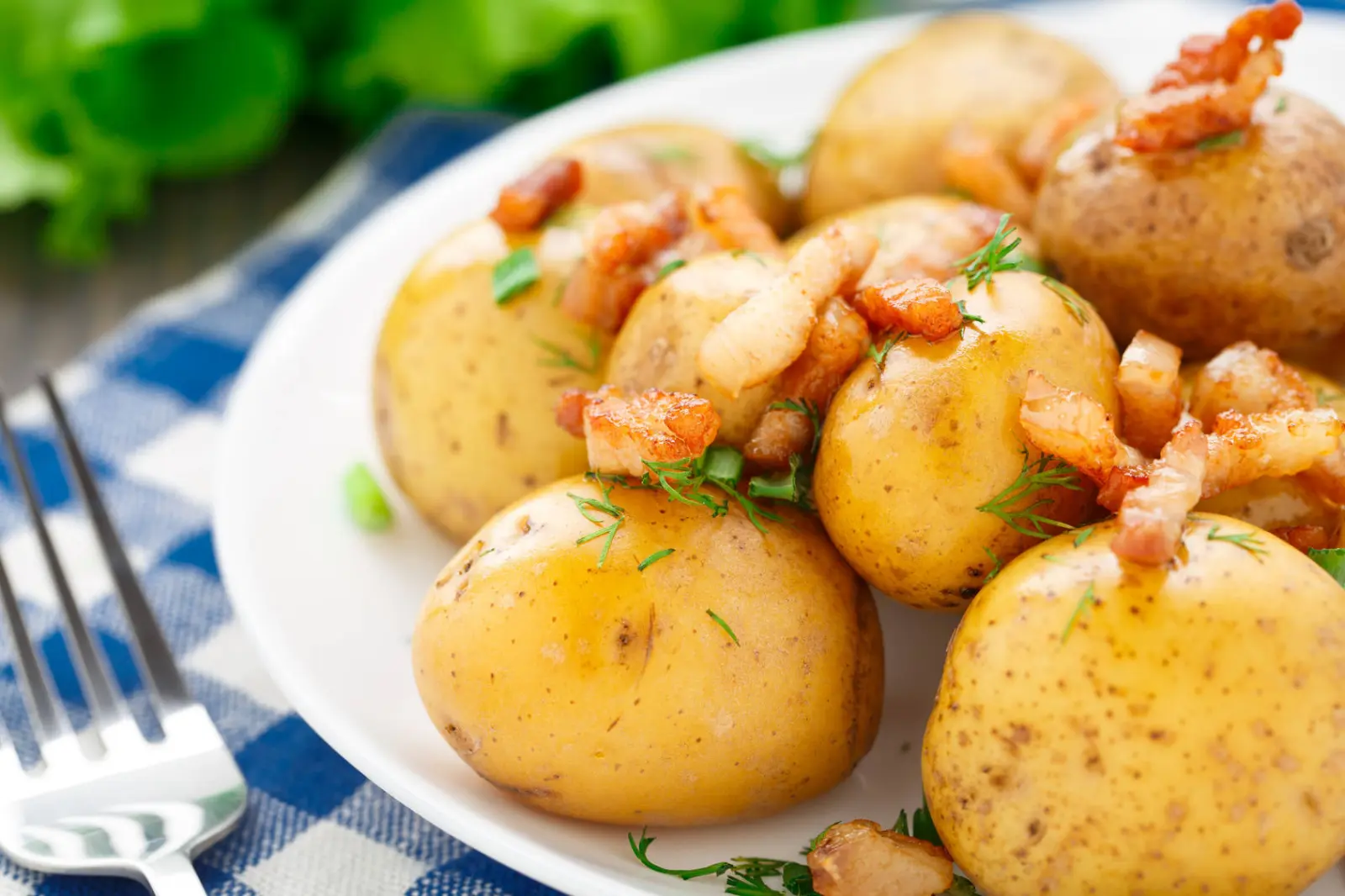
Greater Poland is a region where potatoes reign — called 'pyry' here. Pyry z gzikiem, pyry with sour cream, pyry with bacon, potato pancakes — all dishes that appear on Greater Poland tables almost daily. But Greater Poland cuisine is much more than potatoes. It is a region that for centuries belonged to Prussia, and then to Germany — hence the strong German influences in Greater Poland cuisine: goose, duck with apples, szneki z glancem, croissants. Add to that the agricultural specificity — Greater Poland is the most “agricultural” region of Poland, with fertile soils and large farms. The result is a hearty, fatty cuisine based on meat, potatoes, cabbage, and bakes — one of the most “conservative” regional cuisines in Poland, in which tradition is sacred.
This guide shows 6 dishes you must try in Greater Poland, and specific places in Poznań, Kalisz, Leszno, and Gniezno where you can eat them in an authentic, not touristy, version.
Bakes and Sweets
1. St Martin's Croissant
The icon of Poznań and one of the most recognizable regional bakes in Poland. Sweet croissant with white poppy seeds, dried fruit, and almonds, baked only on 11 November — St Martin's Day. The tradition of baking dates back to the 19th century, and the croissant is inscribed on the EU protected products list (protected designation of origin) since 2008. The history of the St Martin's croissant begins in 1891, when Poznań pastry chef Józef Melzer baked croissants for the poor on St Martin's Day. The tradition survived, and today the St Martin's croissant is one of the most recognizable symbols of Poznań. The original croissant has a horseshoe shape (in memory of St Martin's horse), filling of white poppy seeds, dried fruit (raisins, nuts, orange peel), and almonds, and the top is covered with icing and sprinkled with nuts. It is baked only on 11 November, and since 2008 it has an EU certificate — that is why real croissant can only be bought in certified pastry shops.
Price: 20–35 PLN for a large croissant in a certified pastry shop, 8–15 PLN for a smaller one. Where: Cukiernia Sowa (Poznań, ul. Święty Marcin 46), Cukiernia Michałek (Poznań, ul. Wrocławska 5), Cukiernia Krysman (Poznań, Stary Rynek 84).
2. Szneki z Glancem
Sweet yeast buns with streusel and icing. Popular for breakfast and afternoon tea throughout Greater Poland. A symbol of home baking that can be found in every Greater Poland bakery. The name comes from the Greater Poland dialect: “szneki” are buns (from German “Schnecken” — snails, from the shape of the dough), “glanc” is icing (from German “Glanz” — shine). Szneki z glancem is one of those dishes that Greater Poland owes to its German culinary heritage — similar buns (“Schnecken”) have been eaten in Germany for centuries, especially in Bavaria and the Rhineland. In the Greater Poland version, szneki are more “crumbly” and have a distinct, buttery flavour, and the icing is thinner and more transparent. In many Greater Poland homes, szneki are baked on Sunday for breakfast, and in bakeries they can be found all year round. In Poznań, szneki z glancem are virtually the hallmark of local bakeries — they can be bought in most pastry shops, but the best are in small, family bakeries in Jeżyce and Łazarz.
Price: 4–8 PLN per piece. Where: Piekarnia Piekuś (Poznań, ul. Głogowska 116), Cukiernia Sowa (Poznań), Piekarnia Jeżycka (Poznań, ul. Kraszewskiego 8).
Potato Dishes
3. Pyry z Gzikiem
Potatoes in their jackets with curd cheese, onion, and sour cream. One of the most characteristic dishes of the region — simple, filling, and deeply rooted in Greater Poland tradition. It is served in village inns and homes. Pyry z gzikiem is one of those dishes that Greater Poland owes to its agricultural tradition — potatoes were the basis of nutrition here since the 18th century, and curd cheese (gzik) was made in every farm. “Gzik” is Greater Poland dialect for curd cheese — the word comes from German “Quark” (curd cheese). In the classic version, pyry z gzikiem is served with potatoes in their jackets, curd cheese mixed with sour cream and onion, and with pickled cucumber or cracklings. In the rural version, bacon or lard is also added; in the restaurant version — served as a starter or side for meats. In many Greater Poland homes, pyry z gzikiem is an everyday dish — eaten for lunch, especially in summer and autumn, when potatoes are fresh.
Price: 15–25 PLN per portion in a tavern, 25–35 PLN in a restaurant. Where: Karczma Wielkopolska (Poznań, ul. Wroniecka 12), Bar Mleczny Apetyt (Poznań, ul. 27 Grudnia 8), Gospoda Poznańska (Poznań, Stary Rynek 71).
4. Potato Pancakes
Simple but excellent — pancakes made of grated potatoes, fried in oil or lard. They are served with sour cream, sugar, or mushroom sauce. In the Greater Poland version — with marjoram and bacon. Potato pancakes are one of those dishes that in Greater Poland are eaten primarily in autumn and winter — after the potato harvest. In the Greater Poland version, pancakes are more “meaty” — grated bacon and marjoram are added, which give them an expressive, rural flavour. They are served in several ways: sweet (with sour cream and sugar), savoury (with mushroom or meat sauce), as well as a side for meats. In the rural version, potato pancakes are baked on a sheet in a bread oven; in the restaurant version — fried in a pan. In many Greater Poland homes, potato pancakes are a lunch dish, especially in the autumn-winter period. Try them in milk bars and village taverns, where they are made on site, from hand-grated potatoes.
Price: 12–20 PLN per portion in a milk bar, 20–30 PLN in a tavern. Where: Bar Mleczny Apetyt (Poznań), Karczma Wielkopolska (Poznań), Gospoda Poznańska (Poznań).
Meats and Main Dishes
5. Goose for St Martin's Day
Roast goose with modra kapusta and dumplings. The classic St Martin's dinner, which appears in Greater Poland every autumn. Goose meat is fatty but delicate — worth trying at least once in a lifetime. Goose for St Martin's Day is one of those dishes that Greater Poland owes to German tradition — in Germany, goose for St Martin's Day (11 November) has been eaten since the Middle Ages, and the tradition passed to Poland with German settlers in the 18th and 19th centuries. St Martin's goose is a goose fattened throughout the year, slaughtered in early November, roasted with apples, marjoram, and onion. It is served with modra kapusta (red cabbage stewed with apple), with Silesian dumplings or kopytka, and with its own sauce. In the Greater Poland version, goose is roasted slowly (2–3 hours) in a bread oven or in an oven, basting it with its own sauce and beer. In the restaurant version, goose is sometimes served with cranberry or blueberry sauce. Goose for St Martin's Day is a festive dish — in Poznań it is eaten on 11 November, in restaurants and homes.
Price: 70–120 PLN per portion in a restaurant, 200–350 PLN for a whole goose by order. Where: Restauracja Wiejskie Jadło (Poznań, Stary Rynek 77), Karczma Wielkopolska (Poznań), Restauracja Pod Koziołkami (Poznań, Stary Rynek 95).
6. Duck with Apples
A traditional Greater Poland dish — duck roasted with apples, marjoram, and dumplings. It is served at holidays and family celebrations. In the rural version — with caraway and garlic. Duck with apples is one of those dishes that in Greater Poland have a long tradition — thanks to the German culinary heritage, in which roast duck with apples was popular throughout Prussia. In the Greater Poland version, duck is roasted slowly (2 hours) with apples (usually reneta or antonówka), marjoram, onion, and garlic. It is served with modra kapusta, with Silesian dumplings or kopytka. Duck with apples is a festive dish — in many Greater Poland homes it is eaten at Christmas and Easter, as well as at family celebrations. In the restaurant version, duck is sometimes served with cranberry or blueberry sauce, which gives it a sweet, expressive flavour. Try it in regional restaurants in Poznań and the surrounding area — especially in those that specialise in Greater Poland cuisine.
Price: 55–85 PLN per portion in a restaurant. Where: Restauracja Wiejskie Jadło (Poznań), Karczma Wielkopolska (Poznań), Restauracja Pod Koziołkami (Poznań).
Where to Eat — Specific Places
Poznań (Old Market Square and Jeżyce):
- Restauracja Wiejskie Jadło (Stary Rynek 77) — a classic of Greater Poland cuisine, goose, duck, pyry z gzikiem.
- Karczma Wielkopolska (ul. Wroniecka 12) — home-style Greater Poland cuisine, pyry, pancakes, goose.
- Bar Mleczny Apetyt (ul. 27 Grudnia 8) — a milk bar with regional classics, pyry z gzikiem, pancakes.
- Cukiernia Sowa (ul. Święty Marcin 46) — St Martin's croissants, szneki z glancem, regional bakes.
Kalisz, Leszno, Gniezno (smaller towns):
- Karczma Kaliska (Kalisz, ul. Główny Rynek 12) — Greater Poland cuisine in a home-style version, pyry, goose.
- Gospoda Leszczyńska (Leszno, ul. Rynek 8) — regional Greater Poland dishes, duck, pancakes.
- Restauracja Piastowska (Gniezno, ul. Chrobrego 12) — Greater Poland cuisine in an elegant version.
Practical Tips
- Buy the St Martin's croissant only in pastry shops with the EU certificate — the original croissant has a certificate and is sold only in pastry shops that have it. Supermarkets sell fakes.
- St Martin's goose order in regional restaurants in November (11 November) — that is the season. Out of season it is hard to find.
- Pyry z gzikiem is best in milk bars and village taverns, where gzik is made on site.
- Szneki z glancem buy in small bakeries, not in supermarkets. In bakeries they are made on site; in supermarkets they are often frozen.
- Duck with apples in restaurants is worth booking in advance — roasting takes 2 hours, and tables are taken.
- Restaurants on the Old Market Square in Poznań are more expensive and touristy. Go 2 streets further — to Jeżyce, Łazarz, Śródka — where the food is cheaper and better.
Summary
Greater Poland cuisine is agricultural cuisine — hearty, fatty, based on potatoes, meat, and bakes. With clear German and Prussian influences that gave it its character. Instead of fashionable dishes, you will find classics here: St Martin's croissant, pyry z gzikiem, goose for St Martin's Day, potato pancakes, duck with apples, szneki z glancem. Plan your trip to Greater Poland to try at least four of the six dishes — and preferably eat them in taverns and milk bars, where the cuisine is still home-style, not touristy. If you like regions with their own culinary identity, also check our pages on Silesian cuisine and Kashubian cuisine — the cuisine looks different there, but is equally interesting.