ARTICLE • October 7, 2026
Silesian Cuisine — Roulade, Dumplings, and Modra Kapusta
Silesian cuisine is substance, heartiness, and respect for tradition. Discover what is worth eating in Silesia — from roulade to kołocz, with specific places and prices.
Silesian cuisine is working-class cuisine — hearty, substantial, based on meat, potatoes, and cabbage. There is no finesse in it, but there is deep flavour and respect for tradition that has survived in Silesian homes to this day. Silesia belonged to Prussia for centuries, and then to Germany — hence the influences of German cuisine (roulade, karminadle, kołocz) and Czech cuisine (dumplings, cabbage). Add to that industry: mining, metallurgy, factories. Silesian cuisine is the cuisine of hard-working people — that is why it is fatty, nourishing, and substantial. Silesians say that “good food is the foundation”, and a dinner without meat is not a dinner. Silesian cuisine also has its own dialect — “modra kapusta” is red cabbage, “karminadle” are meat patties, “żymlok” is potato sausage with bread roll. This dialect still lives in Silesian homes, and with it — the cuisine passed down from generation to generation.
This guide shows 6 dishes you must try in Silesia, and specific places in Katowice, Gliwice, Zabrze, and Chorzów where you can eat them in an authentic, not touristy, version.
Main Dishes
1. Silesian Roulade
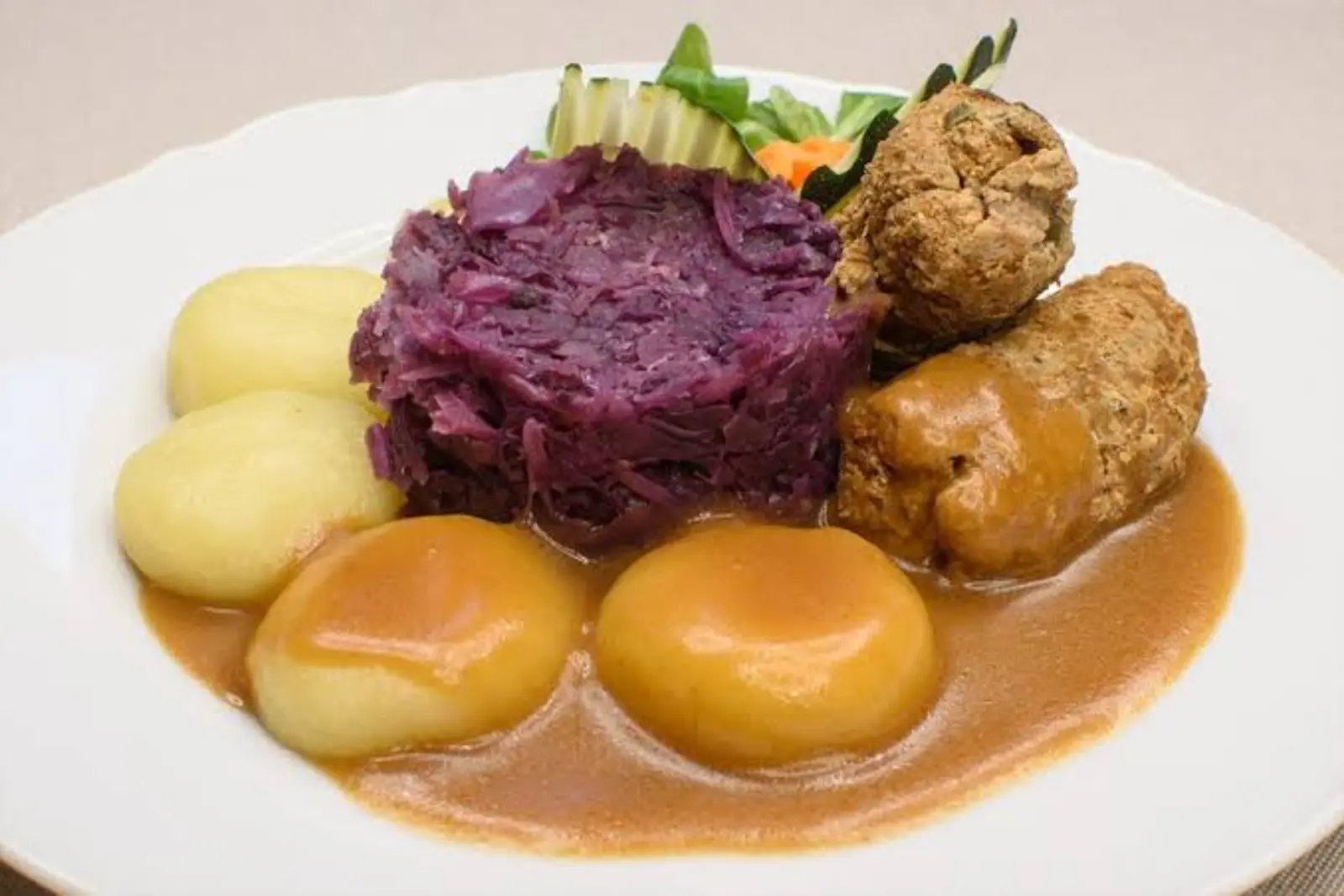
Beef rolled with bacon, onion, and cucumber, stewed in sauce. It is served with Silesian dumplings and modra kapusta (braised red cabbage). A classic of Silesian cuisine that tastes like a Sunday dinner at a Silesian grandmother's. Roulade is one of those dishes that in Silesia is eaten primarily on Sundays — it is labour-intensive, requires patience, and its preparation takes several hours. A thinly pounded slice of beef is rolled with slices of bacon, onion, pickled cucumber, and mustard, rolled into a roulade, tied with string or pinned with toothpicks, and then stewed in its own sauce for 2–3 hours. The sauce is made from the meat juices, vegetables, and spices — usually with the addition of marjoram, bay leaf, and allspice. In the Silesian version, roulade is served with Silesian dumplings and modra kapusta — a full, traditional dinner that in Silesia is eaten every Sunday and at every family celebration. In restaurants, roulade is sometimes served with dumplings and cabbage, but in the home version — with boiled potatoes and salad.
Price: 45–70 PLN in restaurants, 35–50 PLN in milk bars. Where: Restauracja Śląska (Katowice, ul. Mariacka 5), Marysin Dwór (Katowice, ul. Pszczyńska 315), Karczma Śląska (Chorzów, ul. Ryszki 4), Szyb Maciej (Zabrze, ul. Sienkiewicza 6).
2. Silesian Dumplings
Round potato dumplings with a characteristic indentation in the middle (hence the name: “dumplings with a hole”). They are served with meats, sauces, and goulash. The secret of good Silesian dumplings is the right proportions of boiled and raw potatoes and potato flour. Traditionally, dumplings are made from grated raw potatoes mixed with boiled ones, formed into balls, and a hole is made with a finger — this is not only aesthetics but also technique, thanks to which the dumplings cook evenly. Silesian dumplings are an inseparable element of a Silesian dinner — without them there is no roulade, goulash, or duck. In the home version, they are served with meat sauce; in the restaurant version — with various sauces, e.g. mushroom or roast sauce. Silesian dumplings differ from ordinary potato dumplings in that they are more compact and have a distinct, potato flavour. In many Silesian homes, they are made by hand, in large quantities — for the whole week.
Price: 12–20 PLN per portion as a side. Where: every regional restaurant in Silesia — Katowice, Gliwice, Zabrze, Chorzów.
3. Karminadle
Silesian meat patties — made of minced meat, bread roll, and egg, fried in a pan or stewed. They are served with potatoes, dumplings, or in sauce. A simple dish, but deeply rooted in Silesian tradition. Karminadle is one of those dishes that in Silesia is eaten every day of the week — at home, in a milk bar, in a restaurant. The name comes from the Silesian dialect and most likely from the German word “Karbonade” (cutlet). In the classic version, karminadle is prepared from minced beef and pork with the addition of a bread roll soaked in milk, egg, onion, and spices. Patties are formed, coated in breadcrumbs or flour, and fried in fat — or stewed in sauce. In the Silesian version, karminadle is served with boiled potatoes or Silesian dumplings, as well as with modra kapusta or sauce. This dish is cheap, filling, and very popular — in milk bars in Katowice you can get it for 15–20 PLN per portion with sides.
Price: 15–25 PLN per portion in a milk bar, 30–45 PLN in a restaurant. Where: Bar Mleczny in Katowice (ul. Mariacka 12), Restauracja Śląska (Katowice), Karczma Śląska (Chorzów), Szyb Maciej (Zabrze).
Sides and Soups
4. Modra Kapusta
Braised red cabbage with apples, onion, and vinegar. It is served with meats, especially roulade and duck. The sour-sweet flavour perfectly balances the fattiness of the meat. Modra kapusta is one of those dishes that in Silesia is eaten primarily in the autumn-winter period — after the cabbage harvest. In the Silesian version, cabbage is stewed with onion, apple, vinegar, sugar, and spices (bay leaf, allspice, caraway) for several hours until it becomes soft and aromatic. The name “modra” comes from the Silesian dialect — from the colour of the cabbage (modry in Silesian means blue, but also generally “different” from white). In the home version, modra kapusta is served with Silesian dumplings and roulade; in the restaurant version — with duck or roast. Note that red cabbage in Silesia is often homemade — bought at the market, pickled or stewed at home. In shop jars, it is already sweeter and less expressive.
Price: 12–20 PLN per portion. Where: Restauracja Śląska (Katowice), Marysin Dwór (Katowice), Karczma Śląska (Chorzów).
5. Żymlok
Silesian potato sausage with the addition of bread roll, bacon, and spices. It is served hot, with mustard or onion. A traditional Silesian dish that is still served on tables in the region. Żymlok is one of those dishes that in Silesia is prepared after pig slaughter (usually in the autumn-winter period), when fresh meat and blood are available. Unlike potato sausage from other regions of Poland, żymlok contains a bread roll (hence the name — from German “Semmel” — bread roll), which gives it a more “dumpling-like” consistency. The dough is made from grated potatoes, bacon, onion, bread roll, and blood, seasoned with salt, pepper, and marjoram, stuffed into casings, and baked in the oven. Żymlok is served hot, with onion, mustard, or horseradish. In the Silesian version, żymlok is often served for breakfast or supper — with bread and pickled cucumber.
Price: 15–25 PLN per portion. Where: Karczma Śląska (Chorzów), Restauracja Śląska (Katowice), local butcher shops in Silesia (Katowice, Zabrze, Gliwice).
Sweets
6. Silesian Kołocz
Sweet yeast cake with streusel and various additions — poppy seeds, cheese, fruit. It is served at weddings, holidays, and family celebrations. One of the most recognizable sweet pastries of the region. Silesian kołocz is one of those cakes that in Silesia is baked primarily for weddings — without kołocz there is no Silesian wedding. The yeast dough is made from flour, yeast, milk, eggs, and butter, formed into a rectangle or circle, and then the filling is spread on it: poppy seed, cheese, fruit (plums, apples, blueberries), or nut. The top is sprinkled with streusel made of flour, butter, and sugar. Kołocz is baked in large trays and then cut into pieces. In the Silesian version, the cake is called “kołocz” (not “kołacz”), and its preparation is often a family ritual — it is baked together, a few days before the celebration. It is best fresh, still warm, with a cup of coffee or tea. In pastry shops in Silesia, kołocz can be found all year round, but it is freshest in the wedding season (May–September).
Price: 30–50 PLN for a whole cake, 8–12 PLN per slice. Where: Cukiernia Gruszka (Katowice, ul. Mariacka 20), Cukiernia Bożena (Zabrze, ul. Wolności 12), Cukiernia Śląska (Gliwice, ul. Zwycięstwa 5).
Where to Eat — Specific Places
Katowice (centre and surroundings):
- Restauracja Śląska (ul. Mariacka 5) — a classic of Silesian cuisine, roulade, dumplings, modra kapusta.
- Marysin Dwór (ul. Pszczyńska 315) — Silesian cuisine in an elegant version, duck, roulade, kołocz.
- Bar Mleczny Katowice (ul. Mariacka 12) — a milk bar with regional classics, karminadle, dumplings, żymlok.
- Kuchnia Otwarta (ul. Staromiejska 6) — Silesian cuisine in a modern version.
Gliwice, Zabrze, Chorzów:
- Szyb Maciej (Zabrze, ul. Sienkiewicza 6) — a restaurant in a former mining shaft, Silesian cuisine.
- Karczma Śląska (Chorzów, ul. Ryszki 4) — home-style Silesian cuisine, żymlok, modra kapusta.
- Cukiernia Śląska (Gliwice, ul. Zwycięstwa 5) — Silesian kołocz, regional bakes.
Practical Tips
- Silesian roulade takes time (2–3 hours of stewing). Book a table in advance, especially on weekends.
- Silesian dumplings are best in milk bars — there they are made by hand, on site. In elegant restaurants, they are sometimes made from frozen stock.
- Modra kapusta in the home version is more expressive than in restaurants — ask whether the cabbage is homemade.
- Żymlok is mainly available in the autumn-winter period, after pig slaughter — outside this season it is hard to find.
- Silesian kołocz buy in regional pastry shops — not in supermarkets. Fresh, still warm, it tastes completely different.
- Restaurants in the centre of Katowice are more expensive and touristy. Go 2 streets further — to milk bars and taverns — where the food is cheaper and better.
Summary
Silesian cuisine is working-class cuisine — hearty, substantial, deeply rooted in the tradition of an industrial region. Instead of fashionable dishes, you will find classics here: roulade, Silesian dumplings, modra kapusta, karminadle, żymlok, kołocz. Plan your trip to Silesia to try at least four of the six dishes — and preferably eat them in milk bars and taverns, where the cuisine is still home-style, not touristy. If you like regions with their own culinary identity, also check our pages on Greater Poland cuisine and Kashubian cuisine — the cuisine looks different there, but is equally interesting.