
ARTICLE • October 16, 2026
Masovian Cuisine — Flaki, Krupnik, and Liver
Masovian cuisine is a mix of rural and Warsaw traditions. Discover what is worth eating in Warsaw and Masovia — from flaki to Jewish-style carp, with specific places and prices.
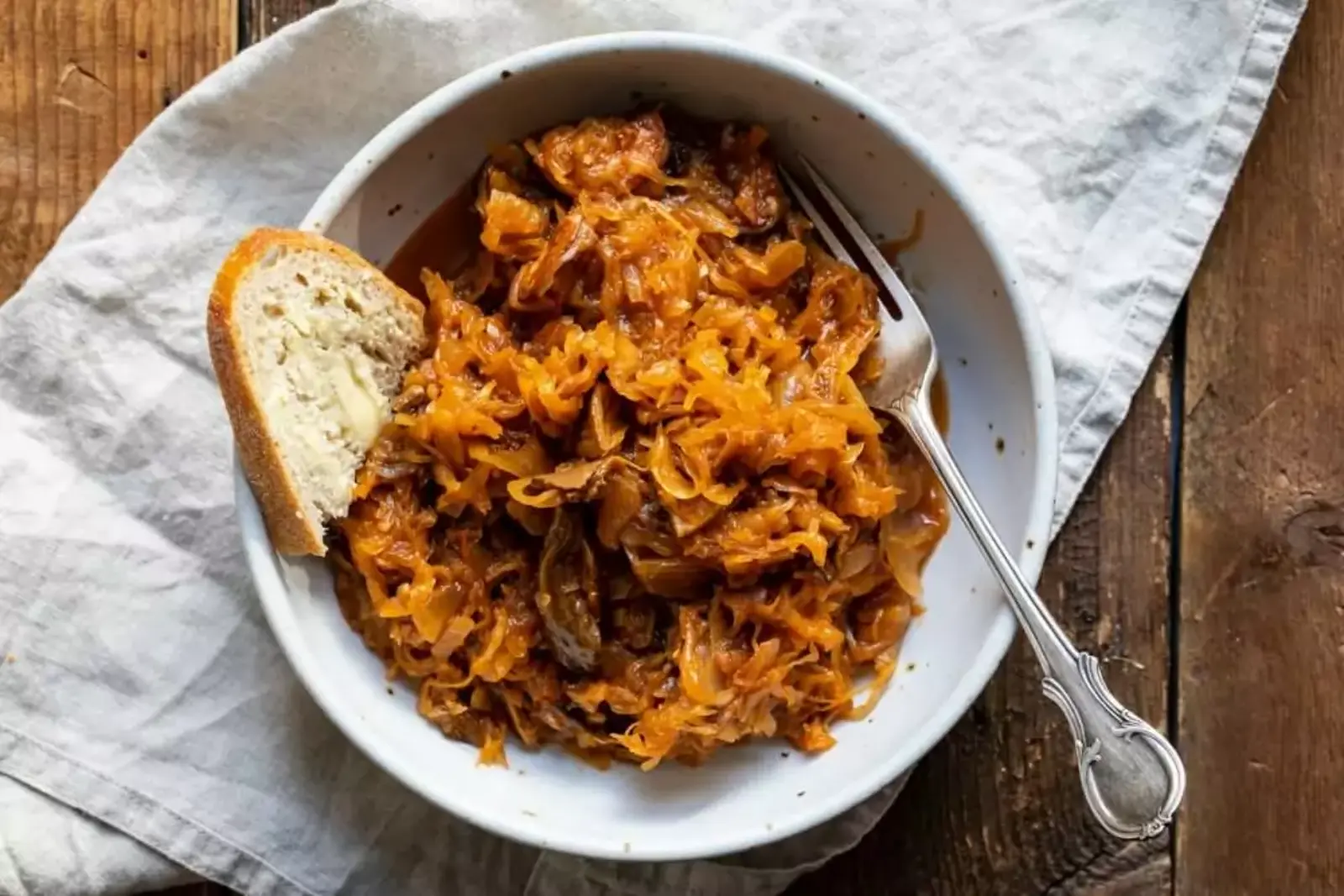
Masovian cuisine is the cuisine of a region where rural and urban traditions meet. On one hand, simple rural dishes — krupnik, groats, potatoes, sourdough bread — on the other, refined Warsaw cuisine — flaki, liver, duck, Jewish-style carp. Masovia was for centuries an agricultural region, but Warsaw — the capital since 1596 — attracted cooks from all over Europe: French, Italian, German. Add to that a strong Jewish community, which brought Jewish-style carp, gefilte fish, and bread to Warsaw cuisine. The result is one of the more interesting regional cuisines in Poland — rural in content, urban in form.
This guide shows 8 dishes you must try in Masovia, and specific places in Warsaw, Płock, Ciechanów, and Pułtusk where you can eat them in an authentic version.
Classics of Warsaw Cuisine
1. Warsaw Flaki
A classic of Warsaw cuisine and one of the most characteristic dishes of the capital. Beef tripe soup with vegetables, marjoram, and paprika. It is served with a bread roll or bread, often with grated cheese and nutmeg. A labour-intensive dish — the tripe must first be cooked for a long time (up to 6–8 hours), then cut into thin strips and stewed with vegetables. The history of flaki in Warsaw dates back to the 18th century, when it became one of the most popular city dishes — served in taverns, at markets, even at the royal court. Under communism, flaki was one of the few dishes that survived almost unchanged. Today it is a dish of elegant restaurants, but also of milk bars — depending on where you order it.
Price: 20–35 PLN in milk bars, 45–70 PLN in restaurants. Where: Bar Prasowy (Warsaw, ul. Marszałkowska 10/16), Restauracja Polka (Warsaw, ul. Świętojańska 2), Karczma Pod Kogutem (Warsaw, ul. Nowy Świat 64).
2. Poultry Liver
Fried poultry liver with onion and apple. It is served with potatoes and salad. A classic of Warsaw cuisine that has graced Warsaw restaurant tables for generations. Poultry liver is a dish from the burgher tradition of Warsaw — its history dates back to the 19th century, when wealthy Warsaw families served it for lunch, and poorer ones — at markets and in bars. The secret of good liver is short frying (2–3 minutes on each side) and the addition of apple, which gives it a sweet aftertaste and neutralises bitterness. In the Warsaw version, liver is served with onion stewed in butter, boiled potatoes, and sauerkraut salad.
Price: 25–45 PLN per portion. Where: Bar Prasowy (Warsaw), Karczma Pod Kogutem (Warsaw), Restauracja Polka (Warsaw).
3. Jewish-Style Carp
A traditional Warsaw dish, derived from Jewish cuisine. Carp in jelly with raisins, almonds, and spices. It is served at Christmas Eve and holidays. Jewish-style carp (gefilte fish) is one of those dishes that combine Jewish and Polish tradition — before World War II, Warsaw had one of the largest Jewish communities in Europe (about 350,000 people), and Jewish cuisine was an integral part of Warsaw cuisine. Jewish-style carp is made from minced carp meat, eggs, onion, and bread, formed into balls and cooked in fish broth with raisins, almonds, and spices. After cooling, the dish turns into jelly — hence the name “carp in jelly”.
Price: 40–70 PLN per portion. Where: Restauracja Polka (Warsaw), Karczma Pod Kogutem (Warsaw), restaurants in Muranów (Warsaw).
Meat Dishes
4. Masovian Duck
Roast duck with apples, marjoram, and caraway. It is served with modra kapusta and dumplings. In the Masovian version — with dried plums and honey, which give the meat a sweet aftertaste and a more intense colour. The duck is roasted slowly, at least 2 hours, and during roasting it is basted with its own sauce and honey. This is a dish from the court tradition — in Masovia, duck was served at noble courts and palaces, especially in the autumn-winter period. In the Masovian version, duck is sweeter than in other regions — thanks to honey and dried plums, which were never in short supply in Masovia.
Price: 60–95 PLN in regional restaurants. Where: Restauracja Polka (Warsaw), Karczma Pod Kogutem (Warsaw), Karczma Mazowiecka (Pułtusk, ul. Rynek 12).
5. Pierogi with Cabbage and Mushrooms
Traditional pierogi, which in Masovia have their own specificity — the filling is sweeter, with dried plums and onion. They are served at Christmas Eve, weddings, and family celebrations. The filling is made from sauerkraut and dried mushrooms (usually porcini or bay bolete), seasoned with marjoram, pepper, and onion. In the Masovian version, dried plums are also added, which give the pierogi a sweet aftertaste — a trace of Jewish cuisine, in which dried fruit was a frequent addition to savoury dishes. They are served with cracklings, onion, or sour cream.
Price: 20–35 PLN per portion. Where: Bar Prasowy (Warsaw), Pierogarnia na Bednarskiej (Warsaw, ul. Bednarska 28/30), Karczma Mazowiecka (Pułtusk).
Soups and Sides
6. Masovian Krupnik
Barley groat soup with vegetables and meat. In the Masovian version — with dried mushrooms and sour cream. Hearty, warming, perfect for cold days. The buckwheat groat variant is also popular in Masovia, especially in the autumn-winter period. Krupnik is one of the oldest soups in Polish cuisine — its history dates back to the Middle Ages. In Masovia, krupnik has its own specificity: it is thicker, with more groats and meat, and the addition of dried mushrooms gives it a deeper, forest aroma. In the rural version, krupnik is sometimes served with potatoes, which makes it even more filling.
Price: 12–20 PLN per bowl. Where: Bar Prasowy (Warsaw), Karczma Pod Kogutem (Warsaw), Karczma Mazowiecka (Pułtusk).
7. Apple Racuchy
Yeast pancakes with apples, fried in a pan. Popular in Masovia as a dessert or afternoon tea. They are served with powdered sugar or sour cream. Racuchy is one of those dishes that combine rural and urban cuisine — in Masovian villages, racuchy is fried in fat with apples from the home orchard; in Warsaw — in elegant restaurants, with jam and whipped cream. Masovia is a region of orchards — apples are one of the main fruits here, alongside plums and cherries. Apple racuchy is best in autumn, when apples are fresh and juicy.
Price: 15–25 PLN per portion. Where: Bar Prasowy (Warsaw), Karczma Mazowiecka (Pułtusk), local milk bars in Płock, Ciechanów.
8. Masovian Bread
Sourdough bread made from rye and wheat flour. Characteristic of Masovian villages, still baked in home ovens. It is served with all dishes, especially with butter and local honey. Masovian bread has a dark, moist crumb and a crispy crust — thanks to the long fermentation of the sourdough (up to 24 hours) and baking in a bread oven. Masovia is an agricultural region — wheat and rye have grown here for centuries, so bread has always been the basis of nutrition. In many Masovian villages, bread is still baked once a week — usually on Saturday. Masovian bread is also known for the addition of flaxseed and caraway, which gives it a distinctive flavour.
Price: 8–15 PLN per loaf. Where: Piekarnia A. Bikont (Warsaw, ul. Nowy Świat 64), Market at Koło (Warsaw, Saturday morning), local bakeries in Płock, Ciechanów, Pułtusk.
Where to Eat — Specific Places
Warsaw (Old Town, Powiśle, Śródmieście):
- Bar Prasowy (ul. Marszałkowska 10/16) — a legendary milk bar from 1954, flaki, krupnik, liver.
- Restauracja Polka (ul. Świętojańska 2) — Warsaw cuisine in an elegant version, Jewish-style carp, duck.
- Karczma Pod Kogutem (ul. Nowy Świat 64) — home-style Masovian cuisine, flaki, pierogi.
- Pierogarnia na Bednarskiej (ul. Bednarska 28/30) — the best pierogi in Warsaw.
Masovia (Płock, Ciechanów, Pułtusk):
- Karczma Mazowiecka (Pułtusk, ul. Rynek 12) — a classic of Masovian cuisine, duck, krupnik, racuchy.
- Restauracja Stary Rynek (Płock, ul. Stary Rynek 14) — Masovian cuisine in a modern version.
- Gospoda pod Zamkiem (Ciechanów, ul. Zamkowa 8) — home-style cuisine, bread from the oven.
Practical Tips
- Warsaw flaki is best in milk bars — there it is cheaper and more authentic than in elegant restaurants.
- Jewish-style carp is mainly available during the holiday season (Christmas Eve, Easter) and in restaurants in Muranów. Out of season it is hard to find.
- Poultry liver requires short frying — if it is dry and hard, it was fried too long. Pay attention when ordering.
- Masovian duck takes time (2 hours of roasting). Book a table in advance, especially on weekends.
- Masovian bread buy at the market on Saturday morning (Market at Koło, Warsaw) — then it is the freshest. On weekdays the selection is smaller.
- Restaurants in the Old Town of Warsaw are more expensive and touristy. Go 2 streets further — to Powiśle, Śródmieście — where the food is cheaper and better.
Summary
Masovian cuisine is the cuisine of a borderland — rural in content, urban in form. Hearty, deeply rooted in the region's tradition, but also open to external influences — French, Jewish, German. Instead of fashionable dishes, you will find classics here: flaki, krupnik, liver, duck, Jewish-style carp. Plan your trip to Masovia to try at least four of the eight dishes — and preferably eat them in places where the cuisine is still home-style, not touristy. If you like regions where food is part of the culture, also check our pages on Podlasie cuisine and Lublin cuisine — the cuisine looks different there, but is equally interesting.