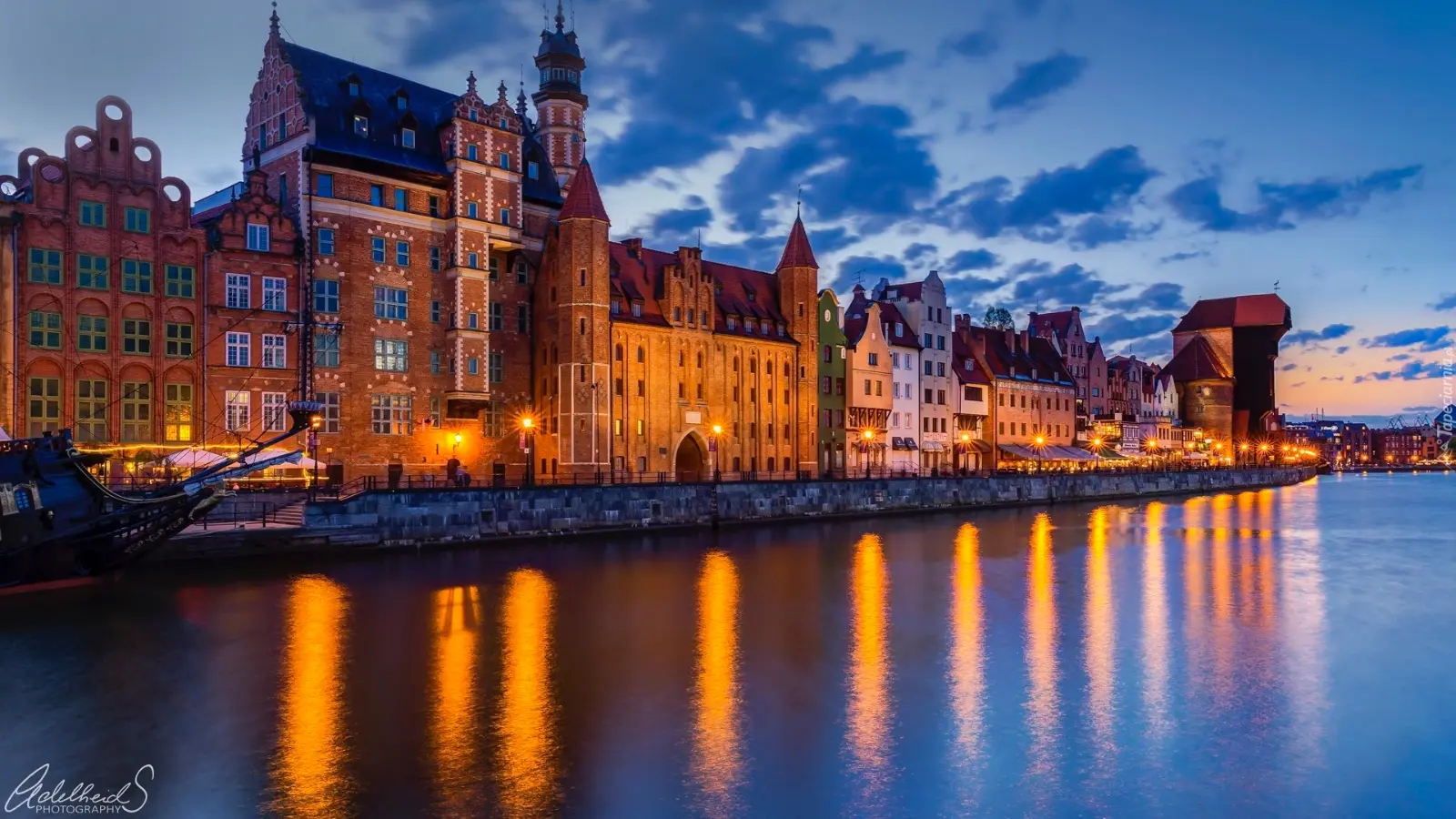
Brick Hanseatic streets, shipyard heritage and coffee beside the Motława. Slow travel through Gdańsk — a city that fuses Hanseatic past with industrial present.
Why Gdańsk, differently
Gdańsk is one of the few Polish cities that fuses three identities at once: Hanseatic (brick townhouses, amber, merchant traditions), industrial (the shipyard, Solidarity, rusty cranes) and maritime (beach, port, fishing cutters). Most visitors see only the first — Długi Targ, Mariacka Street and the Crane. But the real Gdańsk is all three at once.
Slow travel in Gdańsk is about learning to read these layers. Morning in the brick alleys of the Main Town, before the crowds arrive. Afternoon in the post-shipyard grounds — raw, industrial, full of history. Evening on the Motława, with coffee in the shadow of the cranes. Gdańsk is not a city to tick off. It is a city to walk through, layer by layer.
What to see
Gdańsk splits into several distinct parts: the Main Town (Hanseatic centre), Granary Island, the post-shipyard grounds, Oliwa (quiet, green), and Brzeźno and Stogi (beaches). Each has its own rhythm.
Main Town
- Długi Targ and Neptune's Fountain — the heart of Gdańsk, with the Artus Court and 17th-century townhouses. Almost empty in the morning, packed with tourists by noon. Rise early.
- Mariacka Street — the most beautiful street in Gdańsk, with front terraces and amber stalls. Craftsmen open their shops around 10 a.m.; at dawn it is a ritual for photographers.
- St Mary's Basilica — one of the largest brick churches in Europe, capacity 25,000. Climbing the tower (409 steps) gives the best view over the Main Town.
- The Crane and Długie Pobrzeże — a medieval port crane from the 15th century, symbol of Gdańsk. Now a branch of the National Maritime Museum.
- Main Town Hall — with a viewing tower and interior museum. Less famous than St Mary's Basilica, but with a comparable view.
- European Solidarity Centre — a museum dedicated to Solidarity, modern architecture, an exhibition on the struggle for freedom. Essential for understanding 20th-century Gdańsk.
Granary Island
- Granaries — restored 17th-century grain warehouses, now hotels, restaurants and apartments. A new part of the city, but with preserved character.
- Hotel Granary Island and surroundings — modern buildings integrated into historic granaries. Walk along the Motława and step inside.
- Bridge to Ołowianka — leads to the island with the Polish Baltic Philharmonic and the Central Maritime Museum.
Post-shipyard grounds
- Gdańsk Shipyard — the birthplace of Solidarity. Part of the site is open to visitors, with raw halls, cranes and historical boards. Go with a guide or an app.
- Solidarity Square and the Monument to the Fallen Shipyard Workers — three crosses with anchors, commemorating the victims of December 1970.
- Shipyard Management Building — the former office where the August Agreements of 1980 were signed.
- Museum of the Second World War — a monumental building with one of the most important exhibitions in Poland. Online booking recommended.
- European Solidarity Centre — mentioned above, next to the shipyard. Together with the WWII Museum, it forms a museum quarter worth a full day.
Oliwa and surroundings
- Oliwa — Park and Cathedral — a quiet, green district with a Baroque park and a cathedral with famous organs (organ concerts daily at 12:00 and 15:00, more often in summer).
- Wrzeszcz — a student district with a market, cafés and an atmosphere away from the tourist route.
- Westerplatte — where World War II began on 1 September 1939. Reached by water tram from the Main Town.
Beaches and sea
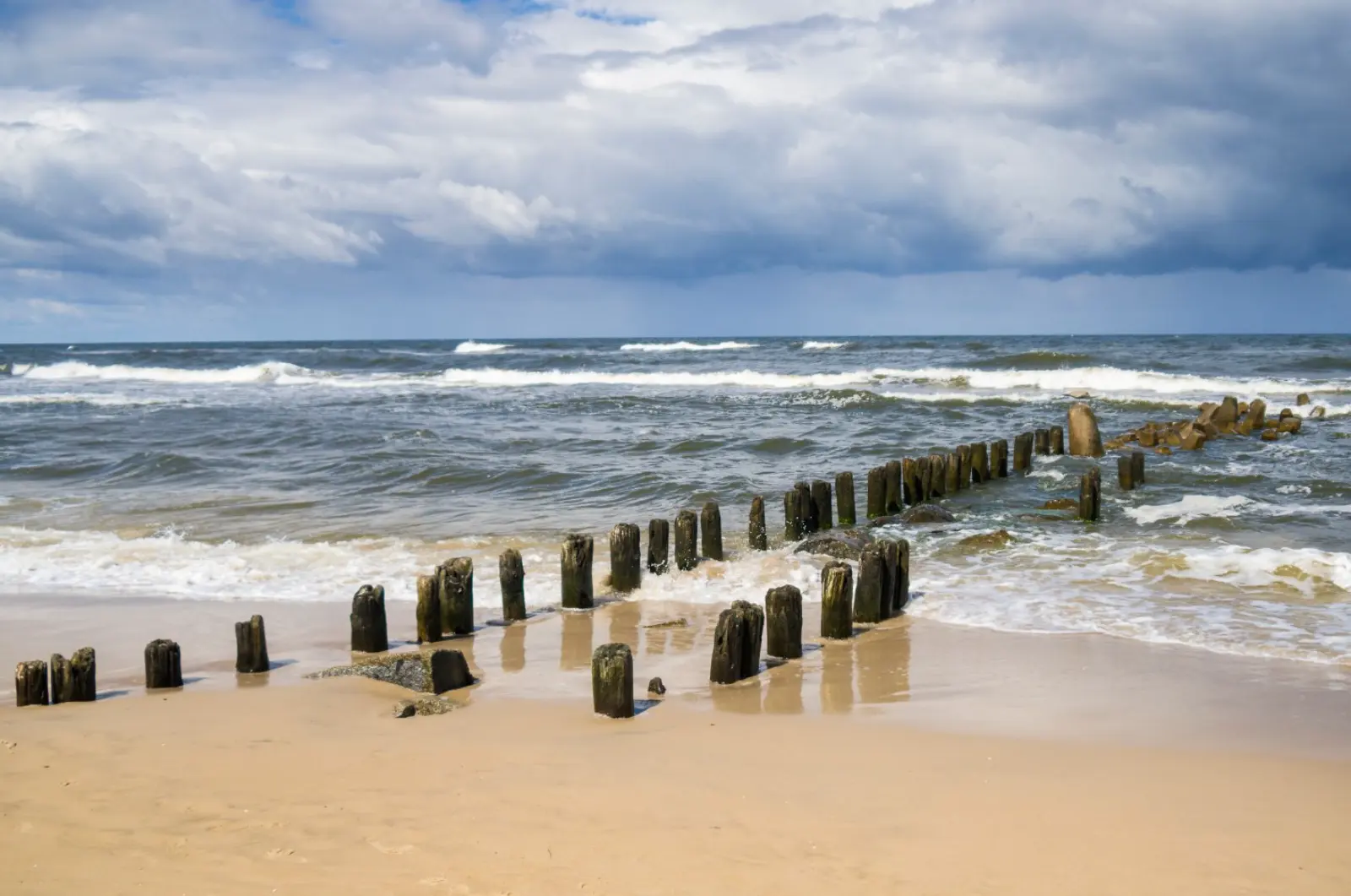
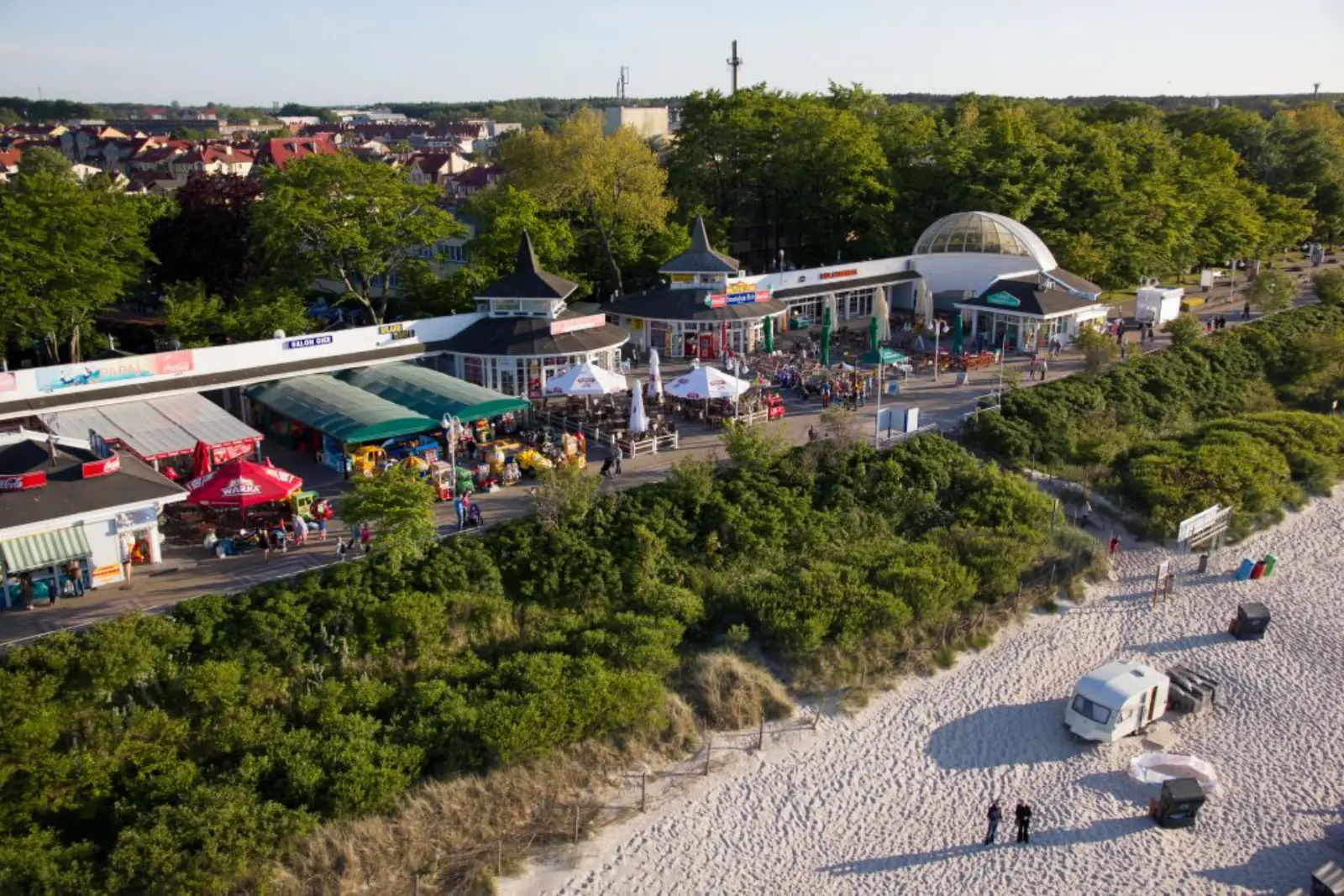
- Brzeźno — the closest beach to the centre (tram ~20 min). Pier and seaside park.
- Stogi — a lesser-known, quieter beach with port views.
- Sopot — 20 min by SKM train from Gdańsk, with the pier and Monciak (Bohaterów Monte Cassino street).
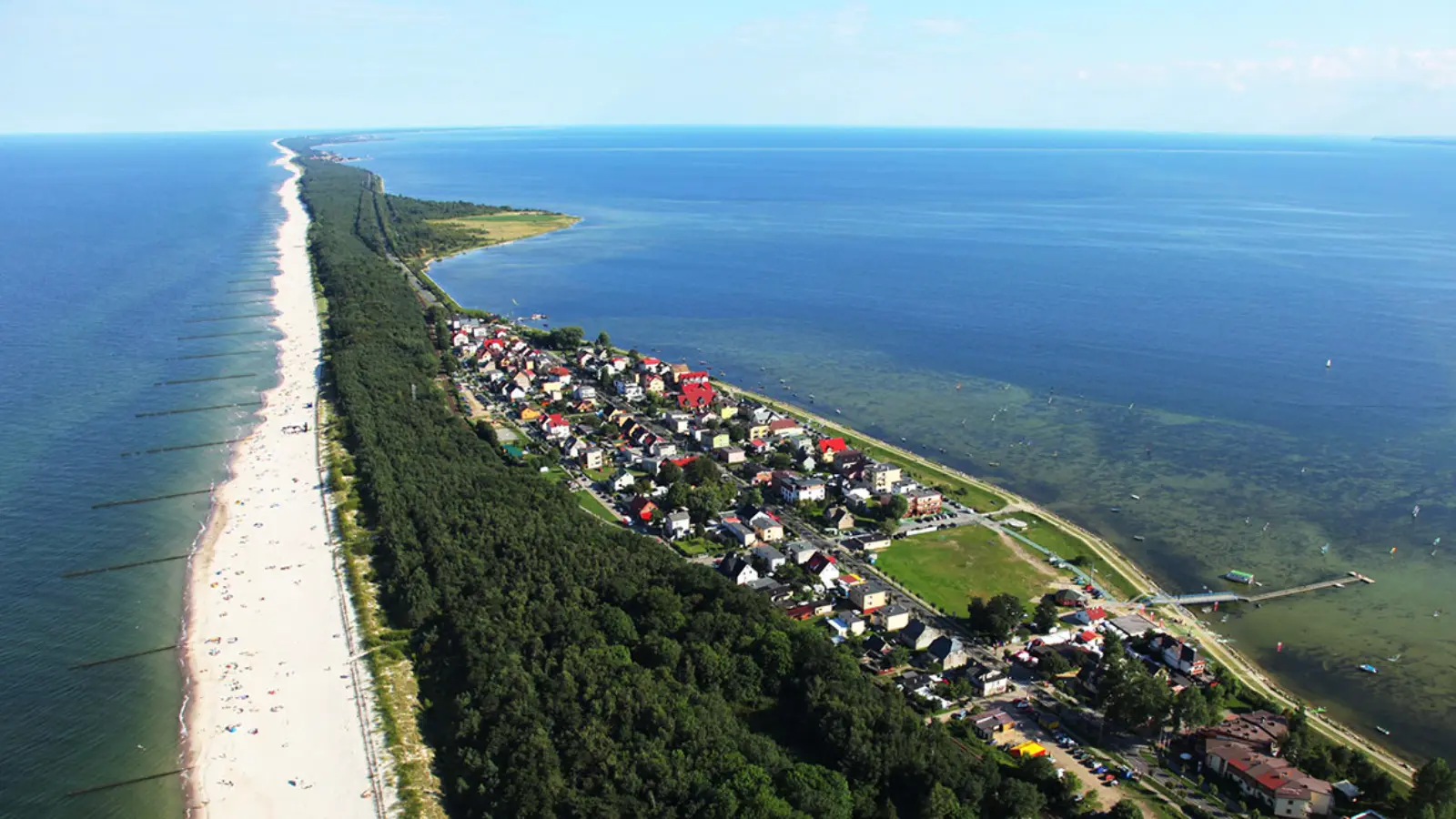
- Hel — the tip of the Hel Peninsula, ~1.5 hours by bus or train. Seal sanctuary and fishing harbour. Worth a full-day trip.
When to go
- May and June — the best time. The city blooms, beaches empty, days long. Weather can be capricious, but evenings stay light until 10 p.m.
- September and October — second best. Warm sea, fewer crowds, golden colours in Oliwa.
- July and August — peak season. Długi Targ crowded, prices high, beaches full. But this is festival time — St Dominic's Fair (August), Shakespeare Festival, Gdańsk Music Summer.
- November and December — Christmas market on Długi Targ (from late November). Beautiful, but cold and windy. Bring warm clothing.
- Winter — Gdańsk in winter can be harsh, but Oliwa and the Old Town look fairy-tale under snow. Museums are empty, prices low.
Getting there
- By plane: Gdańsk Lech Wałęsa Airport (GDN). From the airport to the centre by SKM train (~30 min) or bus 210 (~35 min).
- By train: Gdańsk Główny is one of Poland's key stations, with direct connections from Warsaw (~3 hours), Kraków (~6 hours), Poznań (~4 hours), Wrocław (~6 hours).
- By car: from Warsaw ~4 hours (S7), from Poznań ~3.5 hours (S5 and A1), from Wrocław ~5 hours (S8 and S5).
- By bus: Flixbus and other operators serve most Polish cities.
Within the Tricity, the SKM (Fast Urban Railway) runs on the Gdańsk–Sopot–Gdynia line. Tickets cost a few złoty, services every 10–20 min. The most convenient way to move between the three cities.
How much time you need
A weekend (2 days) is the minimum — Main Town, Granary Island, ECS and a walk along the Motława. Enough for a first impression, but not for everything.
Three days is realistic for a first visit. One day for the Main Town, one for the shipyard plus the WWII Museum, one for Oliwa plus Brzeźno or Sopot.
Four to five days lets you add Westerplatte, Hel, Wrzeszcz and several quiet afternoons in cafés. With children — the Hel seal sanctuary and the Sopot aquapark are musts.
What to eat and where to sleep
- Fish — Gdańsk sits by the sea, so fish is obvious. Herring in vinegar, smoked salmon, fried flounder, cod. Best in fish bars along the Motława and in Wrzeszcz.
- Kashubian cuisine — around Gdańsk, try ruchanki (yeast pancakes), kiszka z kaszy i krwi (blood and buckwheat sausage), and goose soup.
- Buckwheat pierogi — a variant popular in Pomerania, less known in the rest of Poland.
- Craft beer — Gdańsk has several good craft breweries (Browar PG4, Brovarnia Gdańska).
- Coffee — the coffee scene is weaker than Kraków or Wrocław, but there are good spots (Kofi Brand, Cafe A Kuku).
- Amber — not food, but worth noting: Gdańsk is the capital of Polish amber. Buy only from certified shops — avoid cheap stalls.
Accommodation: Main Town (most convenient, expensive, busy), Granary Island (new hotels, excellent location), Oliwa (quiet, close to nature), Wrzeszcz (cheaper, less touristy), Brzeźno and Stogi (close to the beach, further from the centre). Gdańsk has several good hostels in the Main Town and on Granary Island.
Practical tips
- Bookings — the Museum of the Second World War and the European Solidarity Centre require online booking in season. St Mary's Basilica — no booking, but tower access may have a queue.
- SKM ticket — buy via app (e.g. SkyCash) or at station machines. A 24h ticket works on all transport in the Tricity.
- Amber — prices vary widely. Genuine Baltic amber starts at several dozen złoty for a small piece. If the price is suspiciously low — it is probably fake.
- Weather — by the sea, it changes fast. Even in July, bring a windproof jacket. Summer storms happen, but are spectacular.
- Crowds — Długi Targ and Mariacka are packed from May to September. Rise early (7–8 a.m.) and start sightseeing before the crowds.
- SKM at rush hour — trains Gdańsk–Sopot–Gdynia are crowded in the morning and after 4 p.m. Off-peak they are comfortable.
- Parking — central Gdańsk has a paid zone, and spaces are hard to find. Leave the car at a P+R lot (e.g. by the stadium or in Zaspa) and take a tram.