ARTICLE • October 12, 2026
Lesser Poland Cuisine — Obwarzanek, Żurek, and Makowiec
Lesser Poland cuisine is a mix of Kraków, Podhale, and rural traditions. Discover what is worth eating in a region where East and West meet — with specific places and prices.
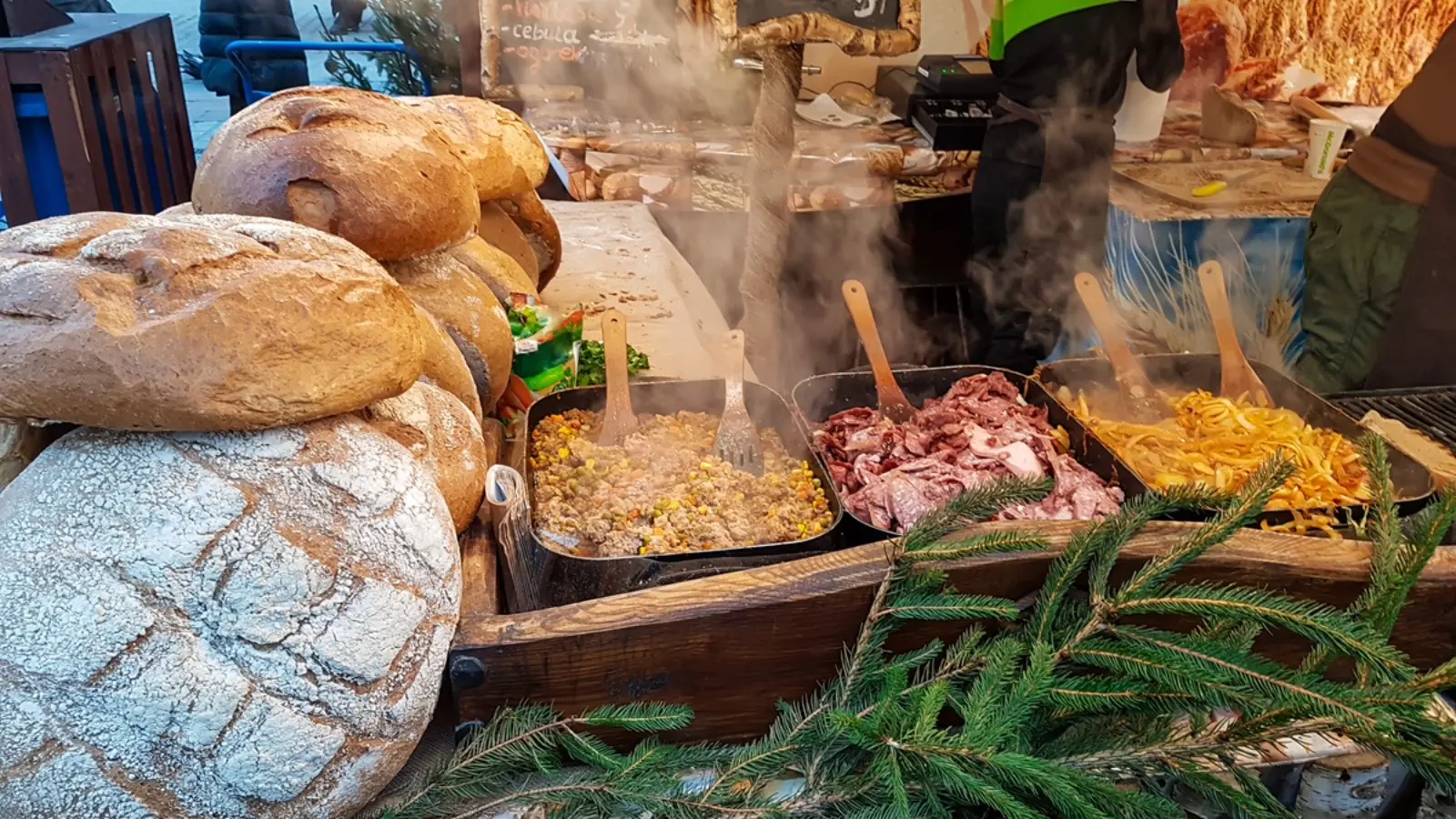
Lesser Poland cuisine is one of the richest regional cuisines in Poland. It combines the burgher tradition of Kraków, the pastoral tradition of Podhale, the rural tradition of the Low Beskids, and the influence of Jewish cuisine from Kazimierz. That is why it is so diverse — from refined dishes to simple rural fare. Lesser Poland is a region that for centuries was at the crossroads of trade routes: from Hungary through Podhale, from Ruthenia through the Sącz region, from the West through Kraków. Each of these directions left a trace on the plate: paprika and wine from Hungary, groats and mushrooms from Ruthenia, bakes and cold cuts from the West. Today Lesser Poland has perhaps the most diverse cuisine in Poland — from refined Kraków cuisine to pastoral shepherd's huts in the Tatras.
This guide shows 8 dishes you must try in Lesser Poland, and specific places in Kraków, Zakopane, Tarnów, and Nowy Sącz where you can eat them in an authentic version.
Kraków Cuisine — City Classics
1. Obwarzanek Krakowski
The symbol of Kraków and one of the most recognizable bakes in Poland. Inscribed on the EU protected products list since 2010. Sold on every street corner, best freshly baked — sprinkled with salt, poppy seeds, or sesame. It is a mandatory stop on every visit to Kraków. Obwarzanek has a history dating back to the 14th century — Kraków bakers received a royal privilege to bake it. The tradition has survived to this day — around 150,000 are sold daily in Kraków, mainly from the characteristic glass stalls on the Main Square, at Stary Kleparz, and at the railway stations.
Price: 2–4 PLN per piece. Where: stalls on the Main Square, Stary Kleparz (Saturday morning), PKP and MDA railway stations, Cukiernia Sowa (Krakowskie Przedmieście 66).
2. Kraków Żurek
Sour soup with rye leaven, served with white sausage, egg, and horseradish. In the Kraków version — in a hollowed-out bread loaf that soaks up the soup and becomes part of the dish. It warms and fills, perfect for cold days. Kraków żurek differs from other Polish żurki in that it is more expressive — the leaven is fermented longer, and the addition of horseradish gives it sharpness. In elegant restaurants it is served in bread, in milk bars — in a regular bowl, but with the same flavour.
Price: 15–25 PLN per bowl (30–45 PLN in the restaurant version in bread). Where: Bar Mleczny Flisak (Rynek Główny 27), Karczma Koko (ul. Gołębia 8), Kuchnia u Doroty (ul. Augustiańska 4).
3. Kraków Makowiec
Sweet yeast cake with poppy seeds, dried fruit, and icing. Served at holidays and family celebrations. A symbol of Lesser Poland home baking, available in every pastry shop in the region. Kraków makowiec stands out because the poppy seeds are ground on site, not bought ready-made — this gives a deeper, more intense flavour. In many Kraków pastry shops, makowiec is baked according to recipes passed down from generation to generation, with the addition of orange peel and walnuts.
Price: 25–40 PLN for a whole cake, 8–12 PLN per slice. Where: Cukiernia Michałek (ul. Starowiślna 25), Cukiernia Wanda (ul. Grodzka 34), Cukiernia Sowa (Krakowskie Przedmieście 66).
4. Dry Kraków Sausage
A ripening cold cut, made of pork and beef, with garlic and pepper. Inscribed on the EU protected products list. Served cold, as a snack or with bread. Dry Kraków sausage matures for several weeks in cool, airy rooms — this gives it an intense flavour and firm texture. It is one of the most famous Polish cold cuts, but its heart beats in Lesser Poland — in small meat plants in Kraków, Tarnów, and Nowy Sącz.
Price: 40–70 PLN per kilogram. Where: Zakłady Mięsne Kraków (ul. Ciepłownicza 22), Hala Targowa (ul. Grzegórzecka 3), Sklep Firmowy Kiełbasy Krakowskiej (ul. Lubicz 34).
Pastoral Cuisine — Podhale and the Tatras
5. Podhale Bryndza
Sheep cheese from Podhale, produced using traditional methods. Inscribed on the EU protected products list. Served with cranberry, bread, and honey. In the pastoral version — in shepherd's huts on mountain meadows, straight from the barrel. Bryndza is a cheese made from sheep's milk, maturing in wooden barrels for several weeks. Its flavour depends on the meadow where the sheep graze — the higher, the more intense. In the shepherd's huts on Hala Gąsienicowa, Hala Chochołowska, and Rusinowa Polana, you can buy bryndza directly from the shepherd.
Price: 30–50 PLN per kilogram in the hut, 20–35 PLN per 250 g in a shop. Where: Bacówka on Hala Gąsienicowa (Zakopane), Bacówka on Rusinowa Polana, Market at Stary Kleparz (Kraków).
6. Pierogi with Bryndza and Cranberry
A variation of pierogi with sheep cheese filling — a specialty of Lesser Poland restaurants in Zakopane and Kraków. Delicate, with a distinct cheese flavour and the sweetness of cranberry. Pierogi with bryndza appeared in Podhale only in the 20th century — before that, bryndza was eaten mainly raw, with bread. Today it is one of the most frequently ordered dishes in Zakopane taverns, and one of the few pastoral dishes that has entered the menu of elegant restaurants.
Price: 25–40 PLN per portion (8–10 pieces). Where: Karczma Zbójnicka (Zakopane, ul. Krupówki 22), Karczma Chochołowska (Zakopane, ul. Chochołowska 12), Kuchnia u Doroty (Kraków, ul. Augustiańska 4).
Rural and Borderland Cuisine
7. Lemko Fuczki
Pancakes with sauerkraut, fried in a pan. A Lemko dish, available in small bars in Kazimierz and the Low Beskids. Simple, filling, deeply rural. Fuczki is one of those dishes that travelled a long way — from Lemko rural kitchens in the Low Beskids, through post-war displacements, to Kraków's Kazimierz, where Lemkos settled after Operation Vistula (1947). Today fuczki is one of the most recognizable dishes of borderland cuisine in Kraków — cheap, filling, and authentic.
Price: 15–25 PLN per portion. Where: Kuchnia u Doroty (Kraków, ul. Augustiańska 4), Bar Mleczny na Kazimierzu (ul. Krakowska 10), Karczma Łemkowska in Zdynia (Low Beskids).
8. Duck with Apples
A traditional Kraków dish, served in elegant restaurants. Roast duck with apples, marjoram, and dumplings. In the modern version — with raspberry or cranberry sauce. Duck with apples is a dish from the burgher tradition of Kraków — its history dates back to the 17th century, when wealthy Kraków families served roast duck at ceremonial dinners. Today it is one of those dishes that combines tradition with modernity: classic duck, modern sauces. Book a table in advance — roasting takes about 2 hours.
Price: 60–100 PLN in elegant restaurants. Where: Wierzynek (Rynek Główny 15), Cyrano de Bergerac (ul. Sławkowska 26), Ancora (ul. Bulwarowa 31).
Where to Eat — Specific Places
Kraków (Old Town and Kazimierz):
- Bar Mleczny Flisak (Rynek Główny 27) — a milk bar in the heart of the Old Town, lunch 15–25 PLN.
- Kuchnia u Doroty (ul. Augustiańska 4) — home-style Lesser Poland cuisine, fuczki, żurek, pierogi.
- Milkbar Tomasza (ul. Świętego Tomasza 24) — the most famous milk bar in Kraków.
- Wierzynek (Rynek Główny 15) — the oldest restaurant in Kraków, operating since 1364.
Zakopane and Podhale:
- Karczma Zbójnicka (ul. Krupówki 22) — a classic of highlander cuisine, pierogi with bryndza, duck.
- Bacówka on Hala Gąsienicowa — bryndza straight from the barrel, oscypki, żętyca.
- Karczma Chochołowska (ul. Chochołowska 12) — home-style Podhale cuisine.
Tarnów, Nowy Sącz, Low Beskids:
- Karczma Łemkowska in Zdynia (Low Beskids) — fuczki, kwaśnica, proziaki.
- Restauracja Stary Młyn (Nowy Sącz, ul. Lwowska 64) — Sącz cuisine, pierogi with bryndza.
- Gospoda pod Aniołem (Tarnów, ul. Krakowska 5) — Lesser Poland cuisine in a home-style version.
Practical Tips
- Buy obwarzanki in the morning — by afternoon they are stale in the stalls. The freshest are on the Main Square and at Stary Kleparz, around 7:00–9:00 AM.
- Kraków żurek is best in milk bars and taverns, not in elegant restaurants — there it is sometimes "slimmed down" and less expressive.
- Buy Podhale bryndza in shepherd's huts — in Zakopane shops it is more expensive and often less fresh. The huts on Hala Gąsienicowa and Rusinowa Polana sell directly from the shepherd.
- Dry Kraków sausage buy in small meat plants or at Hala Targowa — not in supermarkets. The price is higher, but the quality is incomparable.
- Fuczki is a borderland dish — best in small bars in Kazimierz, not in restaurants on the Main Square.
- Duck with apples in elegant restaurants is worth booking 2 days in advance — roasting takes time, and tables are taken.
Summary
Lesser Poland cuisine is one of the richest regional cuisines in Poland — it combines the burgher tradition of Kraków, the pastoral tradition of Podhale, the rural tradition of the Low Beskids, and the Jewish tradition of Kazimierz. Instead of fashionable dishes, you will find classics here: obwarzanki, żurek, makowiec, Kraków sausage, bryndza, fuczki. Plan your trip to Lesser Poland to try at least five of the eight dishes — and preferably eat them in places where the cuisine is still home-style, not touristy. If you like borderland regions, also check our pages on Podlasie and Roztocze — the cuisine looks similar there, but with its own accents. And if you are specifically interested in Kraków, see our separate guide to Kraków cuisine.