
ARTICLE • October 12, 2026
Wooden architecture of the Carpathians — churches, cottages and the route that links them
In the Carpathians wood was cheaper than brick and handled winter better. The result: hundreds of churches and houses that survived because nobody had the money to replace them. Today it is one of the most interesting routes in Poland.
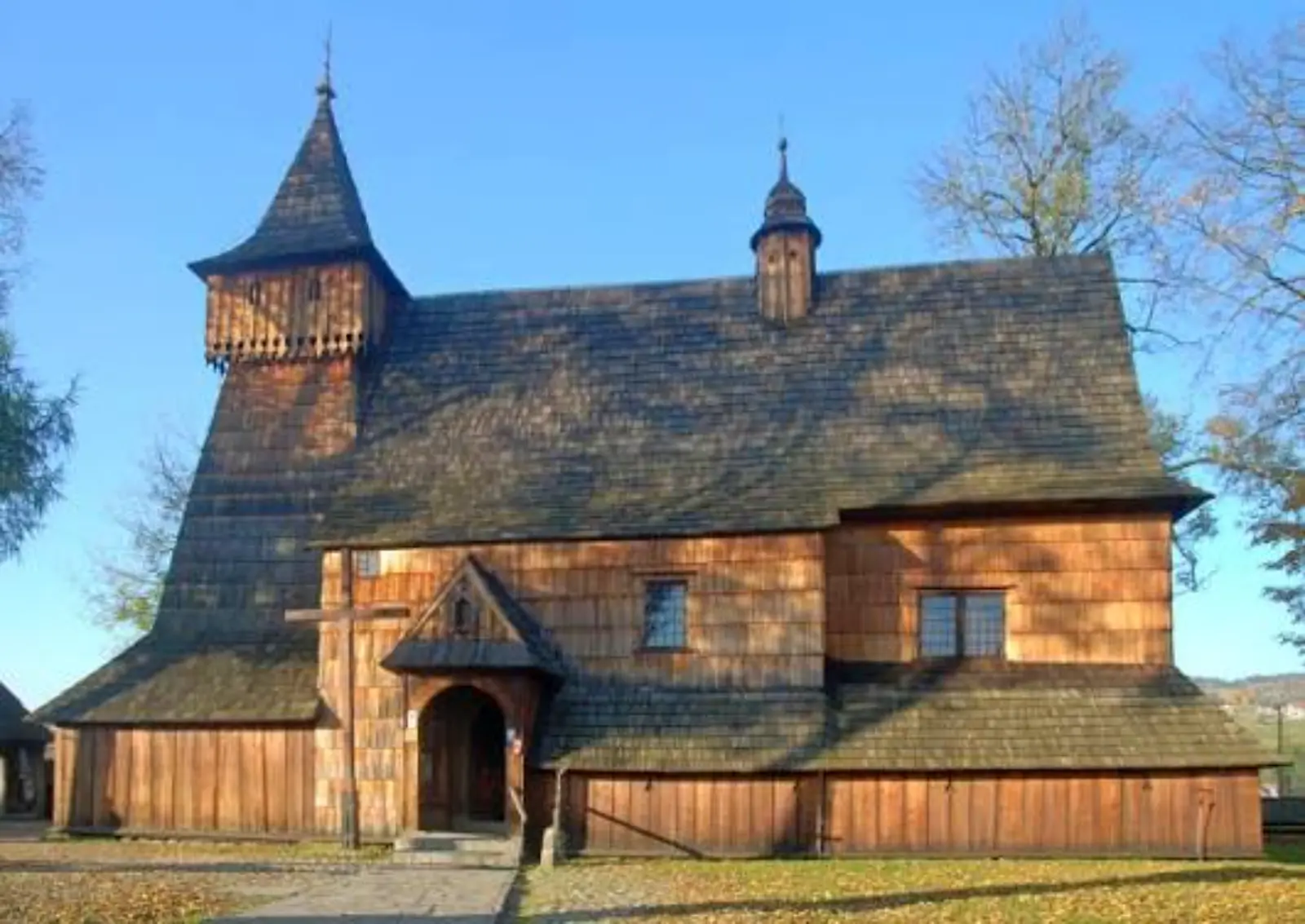
The Wooden Architecture Route is a simple idea: instead of one museum, objects scattered across the region that together tell the story of building in wood. In Lesser Poland and Subcarpathia there are several hundred — from small village churches to ones with rich painted interiors.
Why wood
In the mountains people built with what was at hand. Wood was available, light and quick to work, and a log house held heat better than masonry. That is why the Carpathians — not the plains — became Poland’s heartland of wooden architecture.
This is architecture that needs no famous names: its value lies in proportion, construction and the way a building sits on a slope.
Lemko churches — UNESCO and silence
Lemkovyna is a region in the Lower Beskids where the Lemko population lived before the war. What remains are churches — often wooden, with distinctive domes and iconostases.
Several of them (including Powroźnik, Kwiatoń and Owczary) were inscribed by UNESCO in 2013 as part of the “Wooden Tserkvas of the Carpathian Region”. Plan to see two or three rather than all: these are places where you slow down.
More: Lemkovyna and the church route.
Churches that look like houses
Wooden churches in Lesser Poland can be surprisingly modest outside and rich within. It is the usual order: structure first, painting later. Interiors with polychromy covering entire walls impress more than the façade.
The route also includes lesser-known objects — chapels, bell towers, granaries. Sometimes they are more interesting because they are not by the main road.
Cottages and villages where people live
The biggest trap in visiting wooden architecture is treating villages as open-air museums. They are places where people still live — so you do not walk into yards uninvited, and you take photos with respect.
It is also a chance to see a real Carpathian village: apiaries, orchards, wells, roads without asphalt.
Practical
The route has no single trail — it is a network of objects, so pick a region and travel by car. Trains reach Nowy Sącz, Gorlice or Krynica, but most churches need local transport.
Start: wooden architecture route.
When to go
May–September is best. In winter roads to some churches are impassable and buildings are closed. Check whether a given church is open for visitors — many open on request or in season.